


livewall
← All articles
Employee Experience15 January 2026·Livewall

Why frontline workers need a different onboarding design than office staff

Onboarding built for desk workers doesn't work for store staff or shift workers. Here is how to design an experience that fits how frontline employees actually work and learn.

preboardinghr-techretail

Most onboarding programmes assume new employees have a desk. A laptop, a company email address, and a quiet afternoon to click through a series of modules. That is the reality for office staff. For store employees, shift workers, and everyone else on the frontline, the reality looks completely different.

They start their first day in the middle of the action. They may not have a corporate email address. They work rotating shifts, across multiple locations, often without a fixed workplace. And yet they receive the same onboarding as someone starting a desk job. That is precisely where things go wrong.

At Livewall, we design and build onboarding experiences for large consumer brands in retail and related sectors. The pattern we see repeatedly: organisations invest heavily in a polished onboarding environment, but give too little thought to who is actually going to use it and when.
Livewall perspective

Frontline workers don't lack motivation. They need an onboarding that fits their work rhythm, their device, and their reality.

What office onboarding gets wrong for the frontline

Office onboarding is typically designed around availability and calm. There is time for detailed modules, twenty-minute videos, and long policy documents. The employee can pause, rewind, and take notes.

Frontline workers don't have that luxury. They learn on the job, between customers, at the end of a shift. Expecting them to sit still for a twenty-minute e-learning module means you don't understand their day.

There are four concrete differences that should shape your onboarding approach:

Device. Most frontline employees use their personal phone. No laptop, no desktop PC. The experience needs to work smoothly on a small screen, without complex logins or installations.

Time. They learn in small bursts. Five minutes before a shift, ten minutes on a break. Long modules simply don't fit. Shorter, self-contained pieces of content work far better.

Context. Office employees build knowledge they apply later. Frontline employees apply knowledge immediately, in real time, on the shop floor. Onboarding needs to match that: practical, recognisable, and directly applicable.

Connection. For store staff, the bond with colleagues and the team is often the strongest reason to stay. Good onboarding actively builds that connection before the first working day.

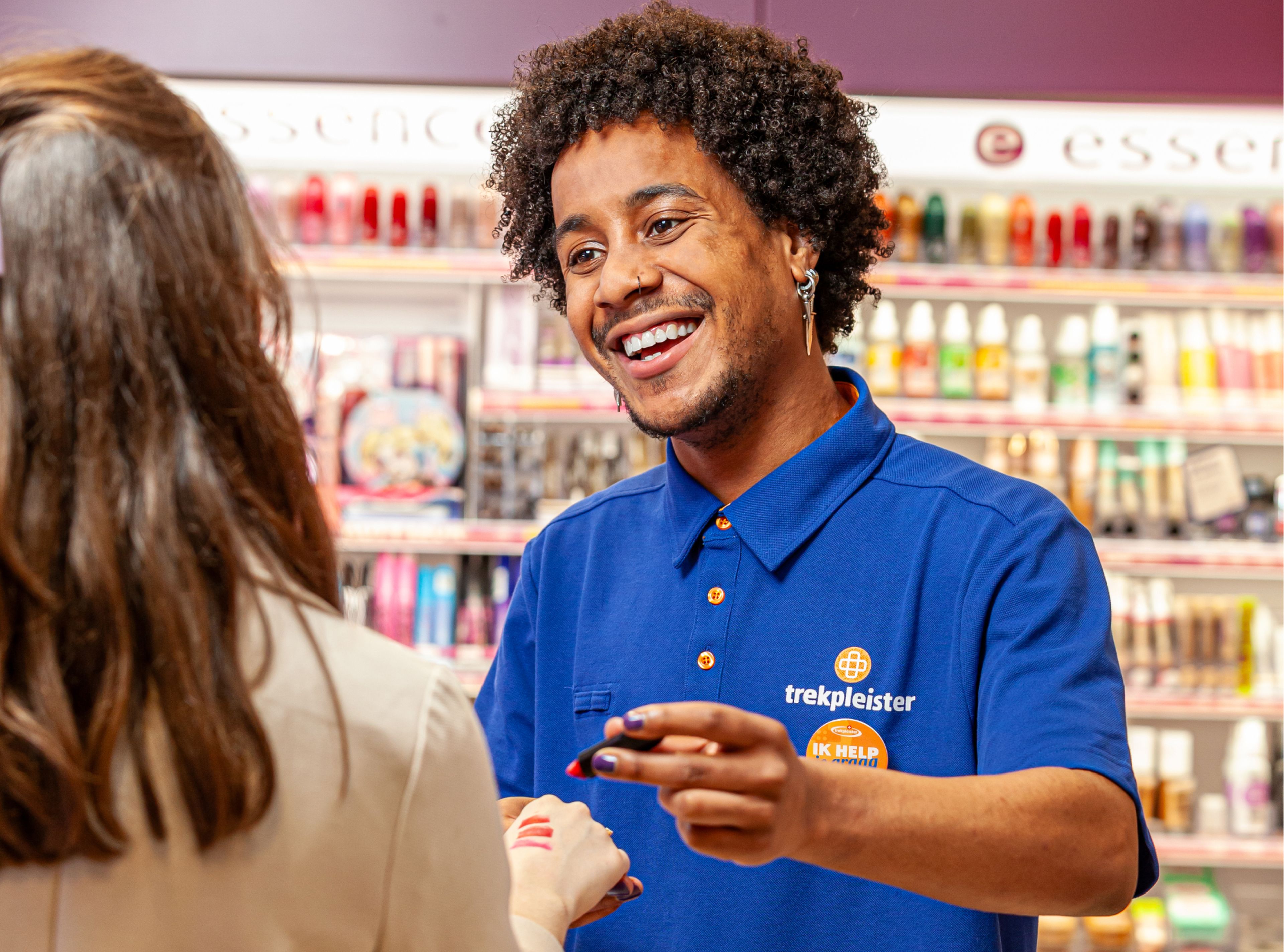
Trekpleister preboarding tool for new store employees

The preboarding tool for Trekpleister: designed so employees feel connected to the brand and their future team before day one.

Preboarding: the most underestimated step

The window between signing and starting is critical. For office employees it might be a few weeks, but for retail workers it can stretch to a month or longer, especially for seasonal hires.

In that window, you lose new employees if you do nothing. They sign up with a competitor. They have second thoughts. They don't feel welcome.

Good pre-boarding tools fill that gap in a light, accessible way. Not heavy learning content, but a warm welcome. Information about the team, the store, and the first day. A short introduction from the manager. Something that makes the new employee feel like they already belong, before they walk through the door for the first time.

With Trekpleister we worked on exactly this challenge: how do you make new store employees feel connected to the brand and their future colleagues, well before day one? The digital onboarding experience we built sits on their phone, takes minutes to complete in one sitting, and is designed to feel personal rather than procedural.

What actually works: design for the work rhythm

The best onboarding for frontline employees shares a set of characteristics.

Short, self-contained units. Each piece has a clear start and end. You can stop and continue later without losing the thread. Three minutes on till procedures beats a fifteen-minute module on store operations every time.

Mobile-first, always. Not a separate mobile version as an afterthought. The experience is designed for a phone from the outset. Larger buttons, less text per screen, no heavy load times.

Human tone. Frontline employees see straight through corporate language. A personal video from the store manager, an informal introduction to the team, an honest description of what a shift looks like: that works far better than a glossy welcome film from the marketing department.

Relevant content, not everything at once. Give people only what they need for the first week. Health and safety policy, secondary benefits, and the annual report can wait. What will help this employee function tomorrow? Start with that.

25%of new employees leave before or during their first week when no preboarding is in place
2xhigher retention for new employees who went through a structured preboarding experience
< 5 minaverage session length that works for frontline employees on mobile

Gamification: motivation without condescension

A common trap in frontline onboarding is the idea that you need to motivate people with rewards and games. That is partly true, but the execution determines whether it works or backfires.

Game mechanics work well when they reinforce the content. A short quiz after an explanation improves retention. A progress indicator gives direction. A small acknowledgement after completing a section feels good.

What doesn't work: gamification that amounts to earning mandatory points for reading text. That feels like an additional task, not an enjoyable experience. The new employee completes it because they have to, not because it helps them.

With McDonald's Condiment Rush, we saw how gamified learning can genuinely work for store employees: kitchen operations turned into fast, recognisable gameplay that employees return to naturally. The learning curve is short, repetition is high, and it feels like playing rather than studying.

The technical side: simplicity is not optional

For HR teams accustomed to comprehensive LMS platforms, it can be tempting to use the same infrastructure for frontline employees. That is almost always a mistake.

Frontline workers have no patience for systems that load slowly, require multiple login steps, or look like a shrunken desktop site on a phone. Every barrier in the technical experience is a reason to drop off.

We recommend keeping access as frictionless as possible: a direct link via SMS or WhatsApp, no account creation required for initial sessions, and saved progress that works across any device. Simplicity here is not a nice-to-have. It is a prerequisite.

At Livewall, the pre-boarding tools we build are engineered to work for everyone, regardless of device or the employee's level of digital confidence. The same rigour applies to Partou preboarding, where childcare staff receive a personal digital welcome that works before their first day, on their own terms.

Livewall perspective

The question is not whether you have a digital onboarding experience. The question is whether it is an experience built for the people who actually need to use it.

Livewall

Onboarding that works for your frontline

At Livewall we design and build preboarding and onboarding experiences for retail, healthcare, and other sectors with large frontline workforces. If you want to know what better onboarding looks like for your organisation, we would like to hear about it.

Get in touch with our team

What we do

Livewall builds brand experiences that people actually remember — interactive campaigns, loyalty platforms, digital products, and employer branding for ambitious brands.

Our work

We've worked with HEMA, Stabilo, Wehkamp, Efteling, 9292 and many others. Every project starts with the same question: what would make someone actually want to do this?

Talk to us

Working on something similar? We'd love to hear about it.

Contact Livewall →