


livewall
← All articles
Engagement3 March 2026·Livewall

What makes a campaign microsite perform

A campaign microsite is not a landing page. It is a dedicated participation environment. Here is what separates the ones that drive measurable results from the ones that sit empty.

campaignsweb-appsbrand-activation

It starts with a definition problem

A campaign microsite is not a shortened version of your website. It is not a landing page with a form at the bottom. It is a standalone digital environment built around a single objective: getting people to do something.

That sounds obvious. But in practice, most campaign microsites miss this. They become information pages with a call-to-action bolted on, rather than participation environments that pull people in and keep them there.

At Livewall, we design and build campaign microsites for brands that need measurable results. We have seen consistently which decisions determine whether a microsite performs or sits empty. Here is what we know.
Livewall perspective

The best campaign microsites are not built to inform. They are built to trigger behavior.

Participation over information

The first design decision is also the most consequential: are you telling people something, or are you giving them something to do?

Brands that choose participation build mechanics that require active involvement. A game, a personalised result, a challenge to share with others, a choice that changes the outcome. People who do something on a microsite retain the brand experience three to five times more effectively than people who simply read.

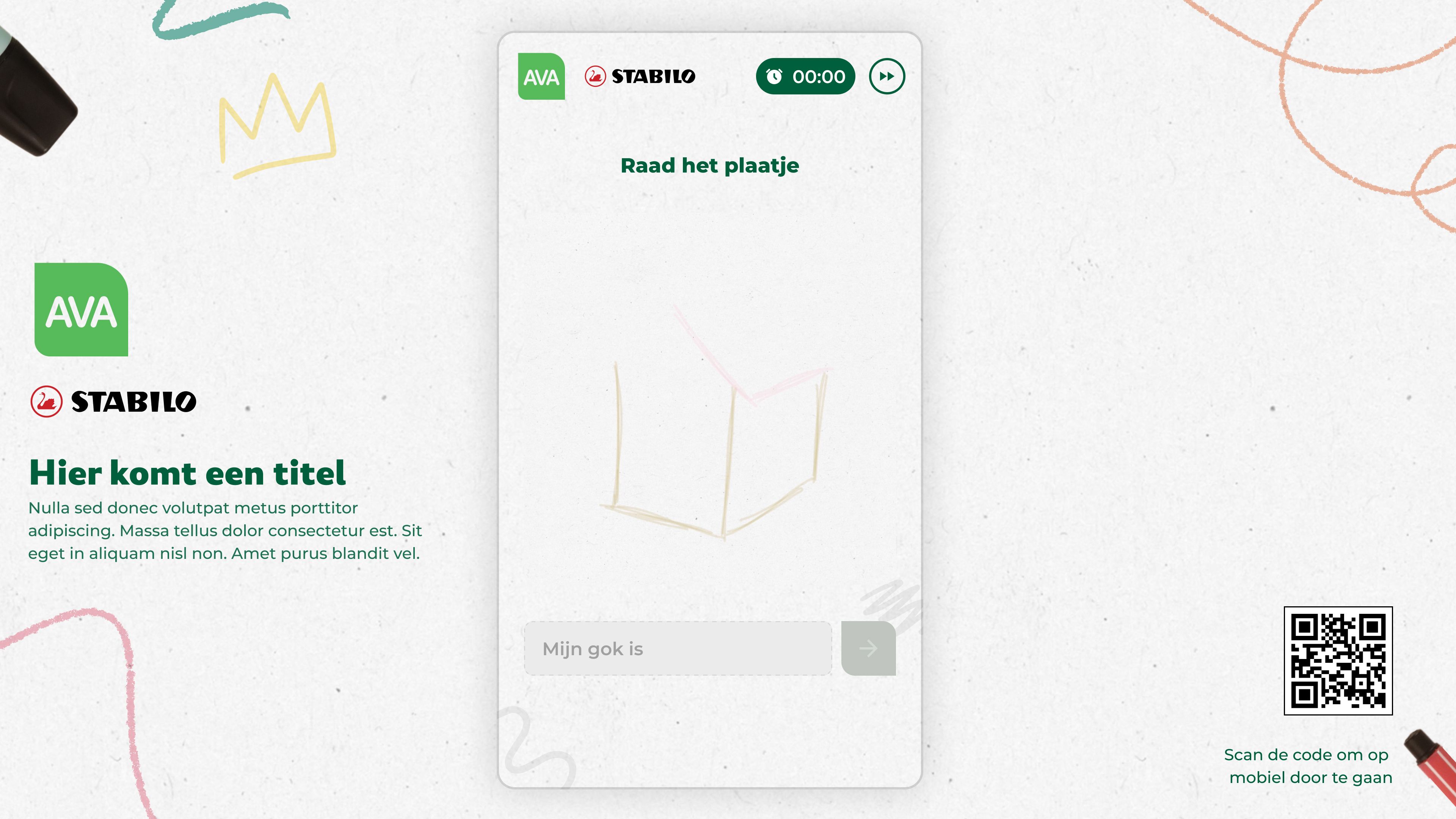
That principle plays out across categories. For Stabilo Pictionary, we built a live drawing and guessing mechanic where participants played together and came back daily for new rounds. It was not a product information page. It was a reason to return.

For Mitsuba Spice Rush, we turned a trade show product introduction into a fast, addictive game that pulled visitors directly into the brand experience. No brochure. Gameplay.

Technical quality is not a detail

A microsite that loads slowly on mobile is a microsite people abandon. That sounds obvious, but in practice technical quality is often the last thing campaign budgets protect. Time and money go into concept and visual design. The build gets rushed or bought cheap.

What we know at Livewall after building dozens of interactive campaigns: load time and mobile performance are direct participation factors. Every extra second of load time costs entries. An animation that stutters on a mid-range phone breaks the experience completely.

This is why strategy, design, and engineering sit in one team at Livewall. Not because it is convenient, but because a microsite that looks great and performs badly fails its purpose.

Stabilo Pictionary campaign microsite with live drawing mechanic

Stabilo Pictionary: participation built into the mechanic, not added on top.

Daily return requires a reason

One visit is not campaign success. The microsites that genuinely perform build in a reason to come back. That could be a daily game, a time-limited unlock, a collection mechanic, or a leaderboard that shifts.

For Wehkamp Wanna Have Days, we built a daily unlock mechanic where visitors returned each day to discover new cards with discounts and prizes. The result was a repeat visit rate well above campaign benchmarks.

The same principle appeared in Heineken Player 0.0 with Max Verstappen, where the campaign microsite was built around progression and recurring interaction moments that kept fans active throughout the campaign window.

The mechanic does not need to be complex. It needs to give people a genuine reason to return.

3-5xbetter brand recall when audiences participate vs. passively read
40%higher conversion on microsites with daily return mechanics built in
1 secextra load time is enough to lose a significant share of participants

Data collection as part of the experience

A well-designed microsite collects valuable data. But it does it in a way that feels like part of the campaign, not a form to fill in.

Think of a quiz that captures preferences, a game that registers choice behaviour, or a personalised result that only appears after sign-up. The participant gives consent and data, but experiences it as participation.

That is what first-party data mechanics actually means in practice. Not a cookie banner, but a flow where data and experience move together.

For brands using campaigns to enrich customer profiles, the microsite is one of the most effective tools available. Provided it is built properly.

Social shareability is a design decision

Campaigns that grow organically build the share moment into the design. Not a button at the bottom of the page. A result worth sharing.

A personalised outcome after a quiz. A score that can be challenged. A created item that feels genuinely unique. For Martin Garrix Dream Team, we built personalised share cards that participants distributed across social media. The campaign spread across fourteen countries partly because the share moment became a goal in itself.

Shareability is not an addition. It is a design decision that needs to be made at the concept stage, not added in post-production.

The checklist

A campaign microsite performs when:

  • The core is participation, not information. People do something.
  • Technical quality is protected. Fast on mobile, no stuttering animations.
  • A return mechanic exists. Daily, weekly, or per campaign phase.
  • Data collection is built into the participation flow, not bolted on afterwards.
  • Shareability is designed, not added as an afterthought.

None of this is secret knowledge. But it gets ignored more often than it gets applied. The difference between a microsite that performs and one that sits empty rarely comes down to budget. It comes down to decisions made early in the process.

Livewall

Build a microsite that actually performs

At Livewall, we build campaign microsites from strategy through to launch. If you want to know what a participation environment for your next campaign could look like, we are ready to think it through with you.

Get in touch with our team

What we do

Livewall builds brand experiences that people actually remember — interactive campaigns, loyalty platforms, digital products, and employer branding for ambitious brands.

Our work

We've worked with HEMA, Stabilo, Wehkamp, Efteling, 9292 and many others. Every project starts with the same question: what would make someone actually want to do this?

Talk to us

Working on something similar? We'd love to hear about it.

Contact Livewall →