


livewall
← All articles
Employee Experience16 April 2026·Livewall

Internal communications: how to design for frontline staff who aren't desk-bound

Internal comms designed for office workers rarely reaches shop floor staff. Here's how to design communication that works for the majority of your workforce.

employer-brandinghr-tech

The problem isn't the message, it's the channel

Most organisations with a large frontline workforce share the same blind spot. Their internal communications work fine for the 20% who sit at a laptop all day. The other 80%, the store assistants, warehouse operatives, field technicians, never see the message in time. Or at all.

This isn't a content problem. It's a design problem.

At Livewall, we've spent years building pre-boarding tools and onboarding experiences for large retail chains and organisations with substantial frontline populations. The same pattern comes up repeatedly: companies build their internal comms around the tools and habits of desk workers, then hope the rest will follow. They don't.

Livewall perspective

Internal communications that don't reach your people isn't communication. It's a document that makes you feel better about yourself.

Three design choices that change the outcome

1. Build for the phone, not the desktop

Frontline workers don't have a work email they actively open. They have a phone. Communication delivered via an app, SMS, or a simple mobile platform has a far higher chance of being read than an Outlook newsletter.

This sounds obvious, but most internal comms tools are designed primarily for desktop. The mobile experience is an afterthought. You see it in the numbers immediately: low open rates, no interaction, no response.

2. Keep it short and concrete

Frontline staff aren't reading your update between meetings. They're reading it (if they read it at all) between customers, or in the break room. You have maybe 30 seconds.

So: one message, one action, one moment. Not an eight-topic newsletter. Not a PowerPoint they have to click through.

3. Give line managers a role

The most reliable communication channels for frontline staff aren't the HR portal or the intranet. They're the team leader or store manager. Design your communication so it can be easily forwarded or shared verbally. Give managers a one-minute briefing they can use in a team huddle before a shift starts.

Trekpleister preboarding tool on mobile device

For Trekpleister, we built a preboarding tool designed from the ground up for mobile use by store staff.

What preboarding teaches us about ongoing internal communications

The gap between a well-designed preboarding platform and a good internal communications tool is smaller than most HR teams think. The same principles apply: mobile-first, visual, short, action-oriented.

What companies often miss is that frontline staff attention isn't guaranteed. They're not receiving your company news in a quiet moment. They're dealing with customers, products, colleagues. If you have something to say, you're competing with everything else happening at that moment.

That calls for communication designed as if attention has to be earned. Not because it should be, but because that's the only approach that actually works.

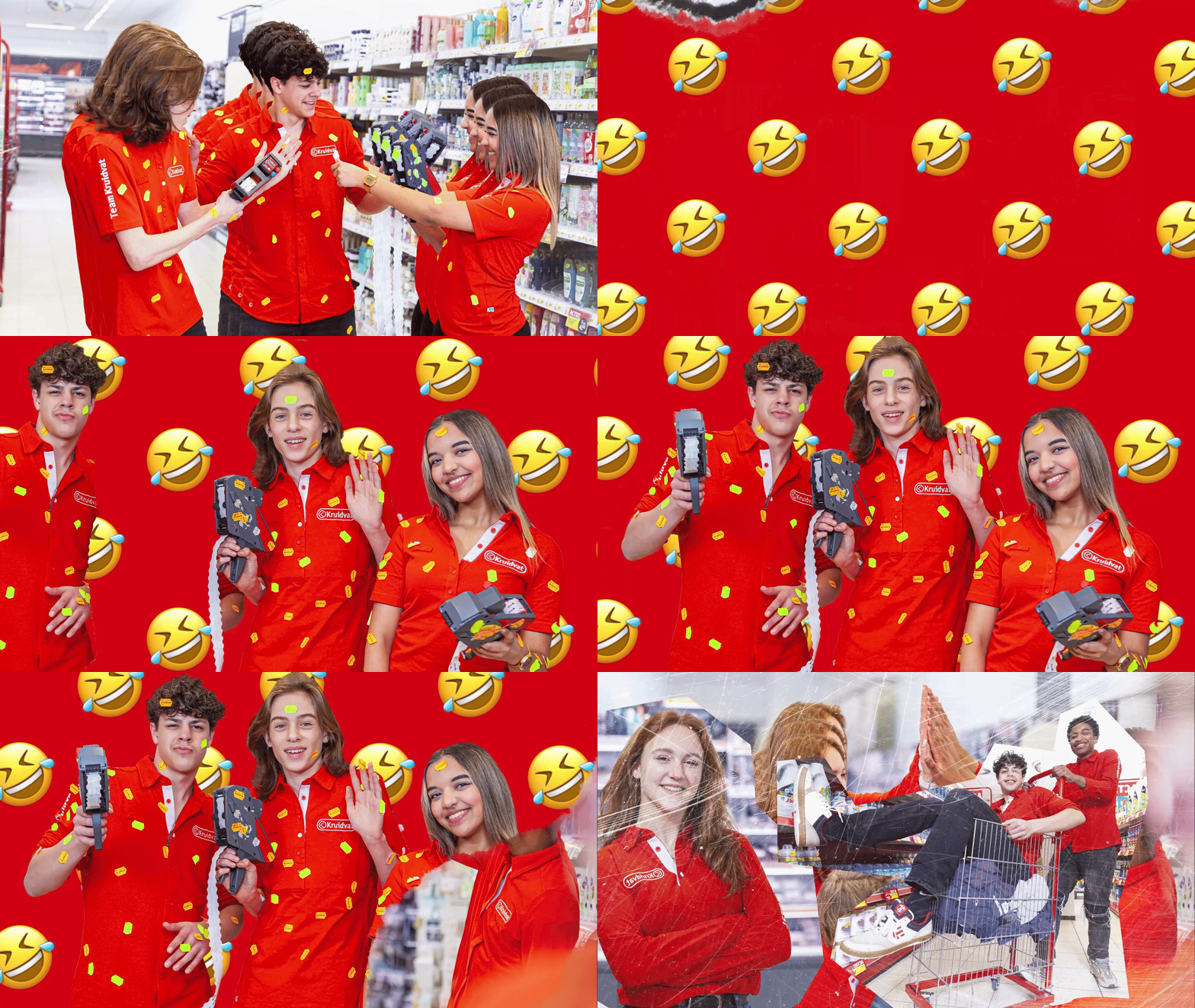
For Kruidvat Preboarding, we built a platform that prepares new store employees via their own phone before day one. Completion rates were significantly higher than traditional formats like printed welcome packs. The difference is entirely in the design, not the content.

80%of the global workforce is deskless, without regular access to email or intranet
3xhigher engagement with mobile-first communication compared to email
40%higher retention among employees who feel well-informed in their first 90 days

From preboarding to always-on communication

The design principles that make preboarding work for frontline staff are the same ones that make ongoing internal communications work. Short content units. Mobile-native delivery. Visuals that render well on a small screen. One clear next action per message.

For Partou Preboarding, we built a digital journey for new childcare staff that combined personal content, practical steps, and a digital buddy to create a sense of connection before day one. That same logic applies to a product launch update, a safety reminder, or a schedule change. The format has to earn the read.

At Livewall, we design internal communications around how people actually work, not how HR teams wish they worked.

Gamification in internal communications: careful but effective

One underused tool in frontline internal communications is gamified learning. Not as a replacement for clear communication, but as a complement to it.

For McDonald's, we built Condiment Rush, a training game for kitchen crew in the UK. Instead of reading a manual, staff practised daily tasks through fast-paced gameplay. Engagement was consistently higher than with traditional training methods, and knowledge retention improved significantly.

The same logic applies to safety briefings, product knowledge updates, or policy changes on the shop floor. Make it interactive, make it brief, and design it so people want to engage rather than feel obliged to.

For the Efteling Recruitment Platform, we created an employer brand experience where candidates could explore what it's really like to work at the park before applying. That same storytelling approach, showing rather than telling, works just as well for existing employees.

Livewall

Reach your shop floor, warehouse, and frontline staff for real

Livewall designs internal communications built around how frontline people actually work. Mobile-first, short-form, and designed to earn the read. Get in touch to talk about what's not working in your organisation right now.

Get in touch with our team

What we do

Livewall builds brand experiences that people actually remember — interactive campaigns, loyalty platforms, digital products, and employer branding for ambitious brands.

Our work

We've worked with HEMA, Stabilo, Wehkamp, Efteling, 9292 and many others. Every project starts with the same question: what would make someone actually want to do this?

Talk to us

Working on something similar? We'd love to hear about it.

Contact Livewall →