

livewall
← All articles
Engagement6 January 2026·Livewall

What branded games teach us about attention

People will spend 10 minutes playing a game they would spend 10 seconds ignoring as an ad. Here is what that tells us about designing for attention in a scroll-first world.

gamificationbrand-activationcampaigns

There is a simple truth most marketing teams quietly ignore: people give their attention to what they find genuinely interesting, not to what you want them to see.

A well-designed branded game does not fight that logic. It works with it. The player chooses to play. They are not waiting for it to be over. They want to know what comes next.

At Livewall, we design and build branded games for brands that understand this distinction. Not as a gimmick, but as a serious communication format. What we have learned about how attention actually works applies far beyond games.

Livewall perspective

Attention is not something you buy. It is something you earn by making something worth paying attention to.

Why a game beats an ad

The answer is in how the brain responds to control. An ad makes you a passive recipient. A game gives you agency: you make decisions, you see consequences, you want to do better.

That involvement is not superficial. Play data consistently shows that people spend significantly longer inside a branded game than with any other campaign format. They come back. They share it. They tell people about it.

A second mechanism is the drive to complete. Once someone starts something that requires them to succeed or improve, stopping takes mental effort. An ad demands nothing. A game demands everything.

Three things branded games do better than other campaign formats

1. They measure genuine interest. Play behaviour is honest behaviour. You cannot fake enjoying something if you stop after thirty seconds. High session time in a branded game means real engagement, not curated scroll behaviour.

2. They build brand associations without anyone noticing. When a brand becomes part of an enjoyable experience, the brain connects the two. Not consciously, but durably. Advertising works through repetition. A game works through experience.

3. They collect first-party data in a way people accept. Gathering data through a game feels different from filling in a form. You play, you share your name for the leaderboard, you reveal preferences through the choices you make. That produces richer data, and consent is built in by design.

10xlonger dwell time in a branded game compared to a standard banner campaign
3xhigher return rate with gamified activations built around daily mechanics
60%+of players voluntarily share results or invite others to play

What you can learn from game design, even without building a game

You do not need to build a full game to apply these principles. The core of game design comes down to a few ideas that work in almost any campaign.

Give people something to do. A campaign that asks for participation scores higher on engagement than one that only expects viewers. That could be a quiz, a choice, a prediction, a challenge. Anything that requires action.

Make progress visible. People want to know how far they have come. A progress bar, a collectible item, a counter. It signals that every action has value.

Use variable rewards. What you always know you will get loses its pull quickly. What you might win keeps you engaged. That is why collect-and-win mechanics and daily reveals work as well as they do.

At Livewall, we apply these principles across gamified activations for brands in retail, entertainment, FMCG and finance. The execution differs per brand, but the logic is always the same: design for action, not for attention.

The difference is in the design, not the budget

A common assumption: branded games are expensive and complex. Some are. But the principles that make them effective are not.

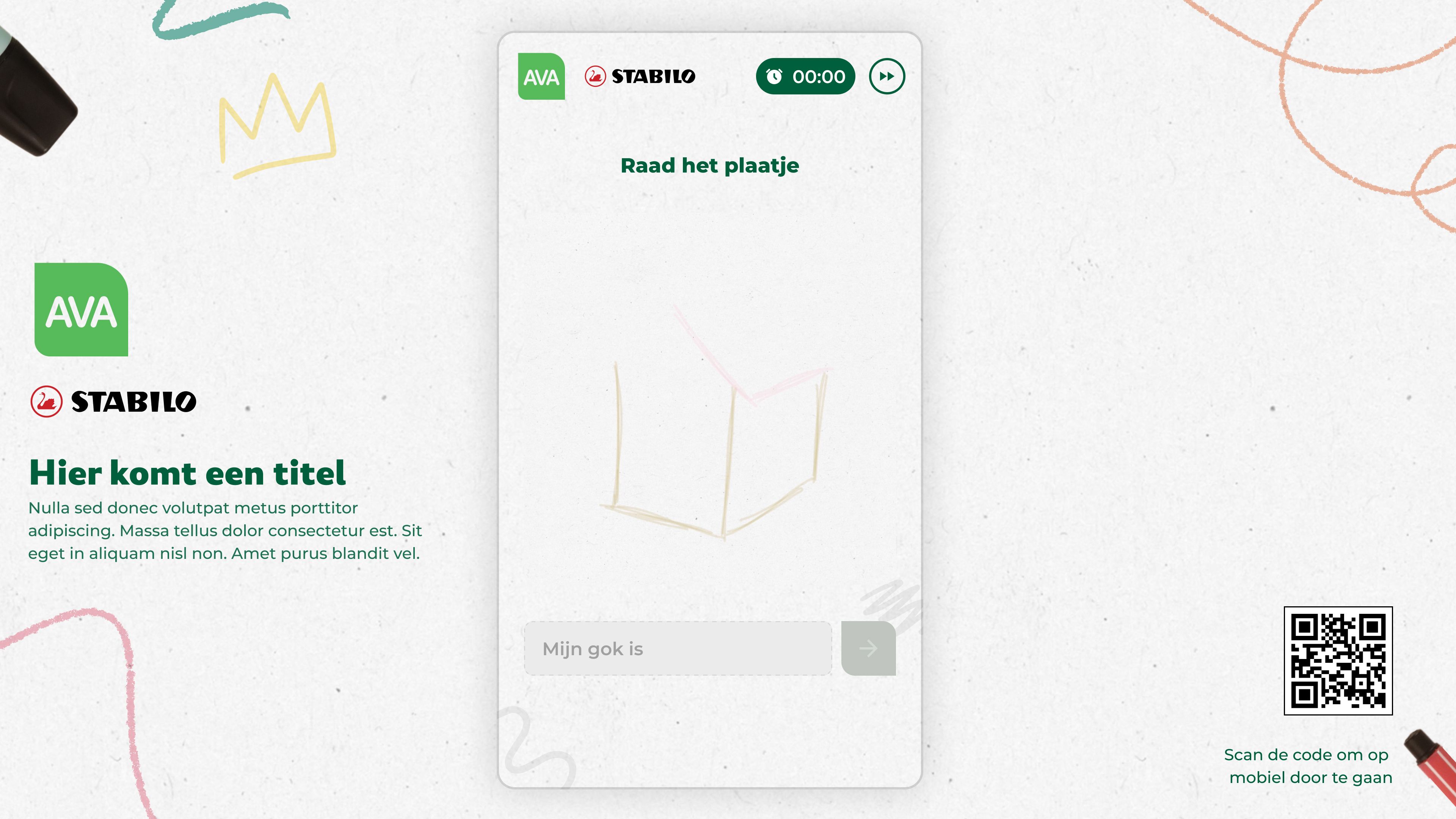
A well-designed campaign built around drawing and guessing, like Stabilo Pictionary, works for the same reasons as a large Minecraft universe for Doritos. It is the mechanics that matter: action, feedback, progress, reward.

The question is not whether you can build a game. The question is whether your campaign asks people to do something, or only to look at something.

Stabilo Pictionary campaign atmosphere

Stabilo Pictionary: participation through drawing and guessing, not watching.

Livewall

Want to know what a branded game could do for your campaign?

At Livewall, we build branded games that earn attention rather than buy it. Get in touch and we will explore what the right format looks like for your brand.

Get in touch with our team

What we do

Livewall builds brand experiences that people actually remember — interactive campaigns, loyalty platforms, digital products, and employer branding for ambitious brands.

Our work

We've worked with HEMA, Stabilo, Wehkamp, Efteling, 9292 and many others. Every project starts with the same question: what would make someone actually want to do this?

Talk to us

Working on something similar? We'd love to hear about it.

Contact Livewall →