


livewall
← All articles
Employee Experience12 March 2026·Livewall

Pre-boarding app design: what to include and what to leave out

Pre-boarding apps fail for two reasons: too little content that feels irrelevant, or too much content that overwhelms. Here's how to find the right scope.

preboardinghr-techemployer-branding

A new hire accepts an offer. Then they wait, sometimes four or five weeks, before their first day. During that time, most organisations go silent. No contact, no information, no sense that anything is happening. That gap is exactly where a pre-boarding app can do its best work.

But the app itself is not enough. What goes inside it determines whether someone feels genuinely welcomed or quietly overwhelmed. At Livewall, we've built pre-boarding tools for retailers, care organisations, and large employers across the Netherlands and beyond. We've seen what works. The most common mistake is treating the app like a digital induction: every piece of information that would normally land on day one gets loaded in all at once.

That misunderstands what pre-boarding is for. It bridges the waiting period. It does not replace onboarding.
Livewall perspective

Before day one, new hires don't need to know everything. They need to feel welcome and confident that they made the right call.

What belongs in a pre-boarding app

A personal welcome moment. The app should open with something that says: you were chosen, we're glad you're here. That could be a short video from the manager, a message from the team, or a simple animated welcome card. The format matters less than the feeling it creates.

Practical information about day one. What time to arrive, where to go, what to bring. This category of content measurably reduces first-day anxiety. Keep it specific and short. Not a general overview of the company, but direct answers to the questions someone lies awake thinking about the night before.

A light introduction to the work environment. Not a full tour, but enough to picture what a typical day looks like. A photo or brief video of the location outperforms three paragraphs of text every time.

A glimpse of the immediate team. Who's on the team? What does a normal shift or day look like? This lowers the social threshold significantly. We consistently see that new hires who already know something about their direct colleagues before day one integrate faster and feel more settled earlier.

What to leave out

Anything that can wait until day one. Employee handbooks, compliance training, product knowledge modules, extended company history. This content belongs in onboarding, not pre-boarding. Including it before someone even knows where to park their bike adds burden instead of confidence.

Information that goes stale quickly. Shift rosters, current project details, system documentation. By the time someone reads it, it has already changed. Content like this creates confusion, not trust.

Long unstructured text. A pre-boarding app gets read on a sofa, on a phone, between other things. Short paragraphs, visuals, and clear section headings make the difference between something people finish and something they abandon. This is not a staff manual.

Too many open paths. An app with twenty separate modules and no clear sequence leaves people adrift. Guide the flow. New hires want to be led through an experience, not asked to navigate one.

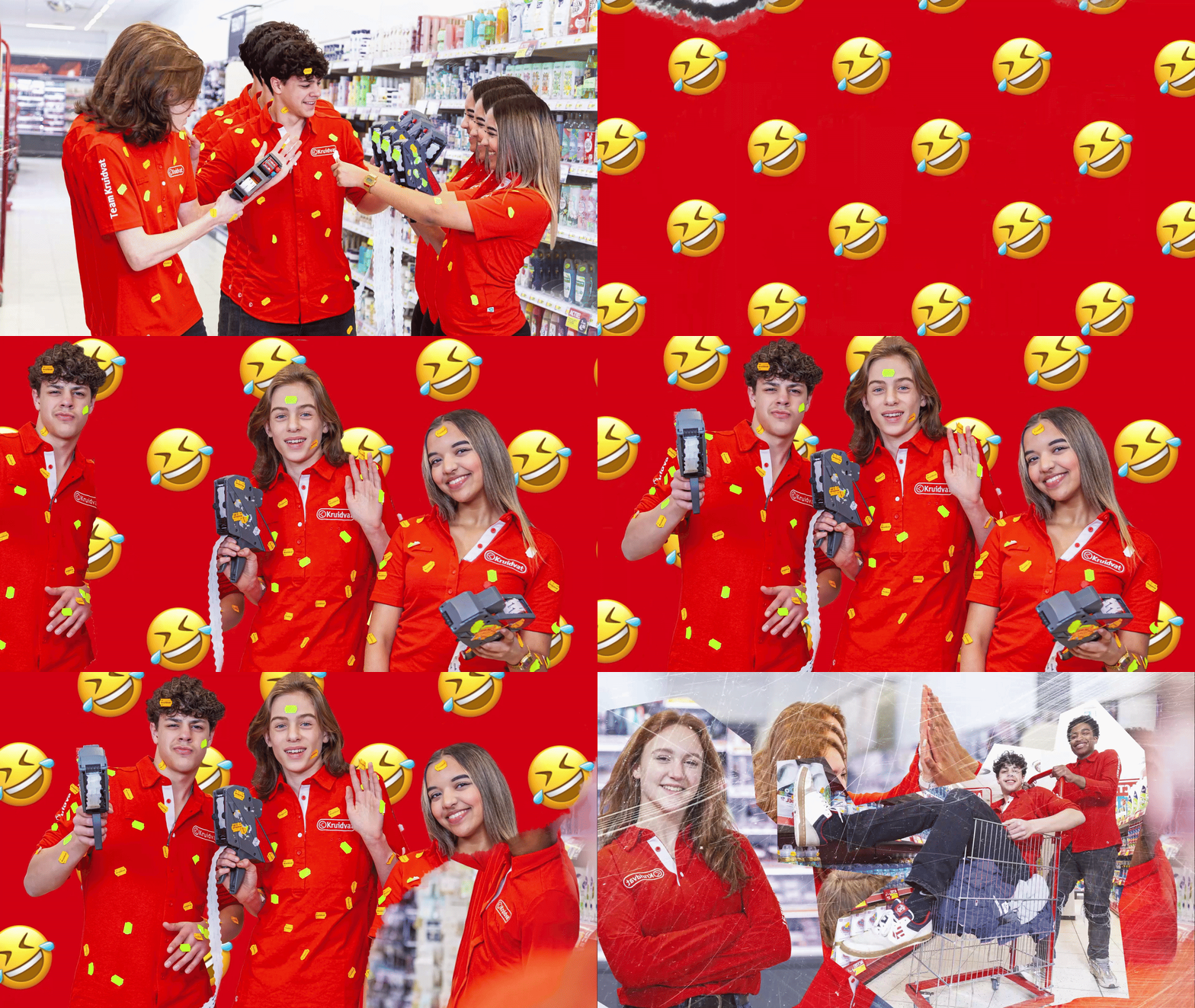
Kruidvat pre-boarding platform on mobile

Pre-boarding works best on mobile, with a clear flow and content built for short attention windows.

Scope determines success

A simple question helps define the right content strategy: what does a new hire need to know, feel, and be able to do on the evening before day one?

Know: practical details, location, timings, who will be waiting. Feel: welcome, certain, part of something. Be able to do: nothing extraordinary, but not feel lost in the first few hours.

If a piece of content does not serve one of those three purposes, it does not belong in the pre-boarding app. That sounds obvious but rarely plays out that way. Every department wants to contribute. HR wants to explain the benefits package. Operations wants to add the safety protocol. Leadership wants to share the mission statement. Without a defined scope, the app becomes a digital dumping ground for everything the organisation finds important, instead of what the new hire actually needs.

At Livewall, we always start with the new hire's situation, not the organisation's agenda. How long is the waiting period? What type of role is this? A shop floor employee starting in three weeks has very different needs to a head-office hire with a two-month notice period to serve.

Interaction beats information

A pre-boarding app that only delivers information works less well than one that also asks something of the user. Small interactions, making a choice, answering a question, discovering something by tapping through, shift people from passive reading to active engagement.

We see this consistently across our projects. When there is even a light interactive layer over the content, or when people need to fill something in or make a selection, completion rates rise and reported feelings of engagement improve. That layer does not need to be complex. A short quiz about the organisation, a team introduction question, or an interactive map of the location is enough.

This connects directly to our approach to pre-boarding tools: not a PDF in a new wrapper, but a real experience that matches the expectations of people who use good apps every day.

fewer no-shows on day one among employees who complete pre-boarding
62%of new hires feel stronger connection after a personal welcome moment
3 weeksaverage waiting period where pre-boarding has the most measurable impact

Technology follows content

A common mistake is starting with the technology. Which platform? Which integrations? How many languages? These are valid questions, but they come later.

Start with the content strategy. What information, in what order, for which audience? Only then does the choice of technical setup follow. Some organisations need nothing more than a straightforward mobile web app. Others require ATS or HRIS integrations, multi-location logic, or multilingual content. The right architecture depends on the scale and the process, not on a default solution.

Livewall builds pre-boarding tools from end to end: content strategy through to technical delivery. We work with organisations in retail, healthcare, and professional services, and adapt scope to fit the specific hiring and waiting process. We also design onboarding experiences as the natural continuation once day one arrives.

Livewall

Ready to redesign your pre-boarding app?

At Livewall, we start with the new hire, not the technology. We help you define the right scope and build a pre-boarding app that genuinely prepares people for day one.

Get in touch with our team

What we do

Livewall builds brand experiences that people actually remember — interactive campaigns, loyalty platforms, digital products, and employer branding for ambitious brands.

Our work

We've worked with HEMA, Stabilo, Wehkamp, Efteling, 9292 and many others. Every project starts with the same question: what would make someone actually want to do this?

Talk to us

Working on something similar? We'd love to hear about it.

Contact Livewall →