

livewall
← All articles
Employee Experience17 March 2026·Livewall

How to design a working-at website for a brand candidates do not know

Employer brands without consumer recognition need to work harder to earn candidate trust. Here is how to design a working-at website that builds credibility from a standing start.

employer-brandinghr-techux

A candidate lands on your working-at website for the first time. They have never seen your brand on a supermarket shelf, a billboard or a social feed. They arrived through a job board or a LinkedIn ad. Within ten seconds they decide whether to read on or close the tab.

That is the starting condition for working-at websites built for brands without consumer recognition. No benefit of the doubt. No brand familiarity doing the heavy lifting. No emotional shortcut.

At Livewall, we design and build employer branding platforms for organisations that are not household names but do serious work and need serious people. What we keep learning is that the rules for this category differ meaningfully from the playbook for well-known consumer brands.

Livewall perspective

Brands without name recognition cannot afford to be vague. Every section needs to answer a question the candidate already has but has not yet asked.

Do not open with the brand. Open with the candidate.

The most common mistake we see: leading with a brand story. 'We are a leading company in...' or 'Our people are our greatest asset.' Those sentences land flat when the visitor has no existing feeling about you.

Start with what the candidate is looking for instead. Which role? Which team? Which location? Get vacancies into view early, or offer a clear split by department or specialism. Give the visitor a reason to stay before you earn the right to tell your story.

Our approach to working-at websites is always: candidates want to know whether they belong here, not whether the company is good enough. The first job of the page is to help them answer that question.

Trust is built with evidence, not claims

For a well-known brand, a strong opening proposition works fine. 'Make a difference at...' lands more easily when a candidate already has a positive association. For an unknown brand, it is not enough. You need evidence. Concrete and credible.

This can take several forms.

Employee stories are the most direct kind of proof. Not stock photography with generic quotes, but real people who put their name to it, describe what they actually do, and explain why they stayed. Video works especially well here, but a face, a name and a genuine quote is already a major step up.

Specific detail about the work builds enormous credibility. Not 'a dynamic environment', but: what tools do you use, who are your direct colleagues, what does a typical week look like? The more specific the detail, the more believable the claim.

Cultural data points also help. Average tenure, percentage of internal promotions, team size. These figures give candidates a concrete handhold where they would otherwise have nothing to go on.

Your EVP needs to be sharp, not broad

Organisations without consumer recognition are sometimes tempted to play it safe with a wide proposition. 'Great place to grow', 'team that supports you', 'room for development.' Every employer says this.

A working-at website for an unknown brand needs a specific EVP. One that fits the kind of people you want to attract and that is honest about what genuinely sets you apart. Sometimes that means a niche proposition that puts some candidates off. That is fine. The right candidates will recognise themselves in it.

Livewall works with organisations on EVP development starting from one question: what makes this employer genuinely different? Not what you want to claim, but what your employees say when you ask them honestly.

That honesty is an advantage, not a risk. Candidates who arrive with accurate expectations stay longer and perform better.

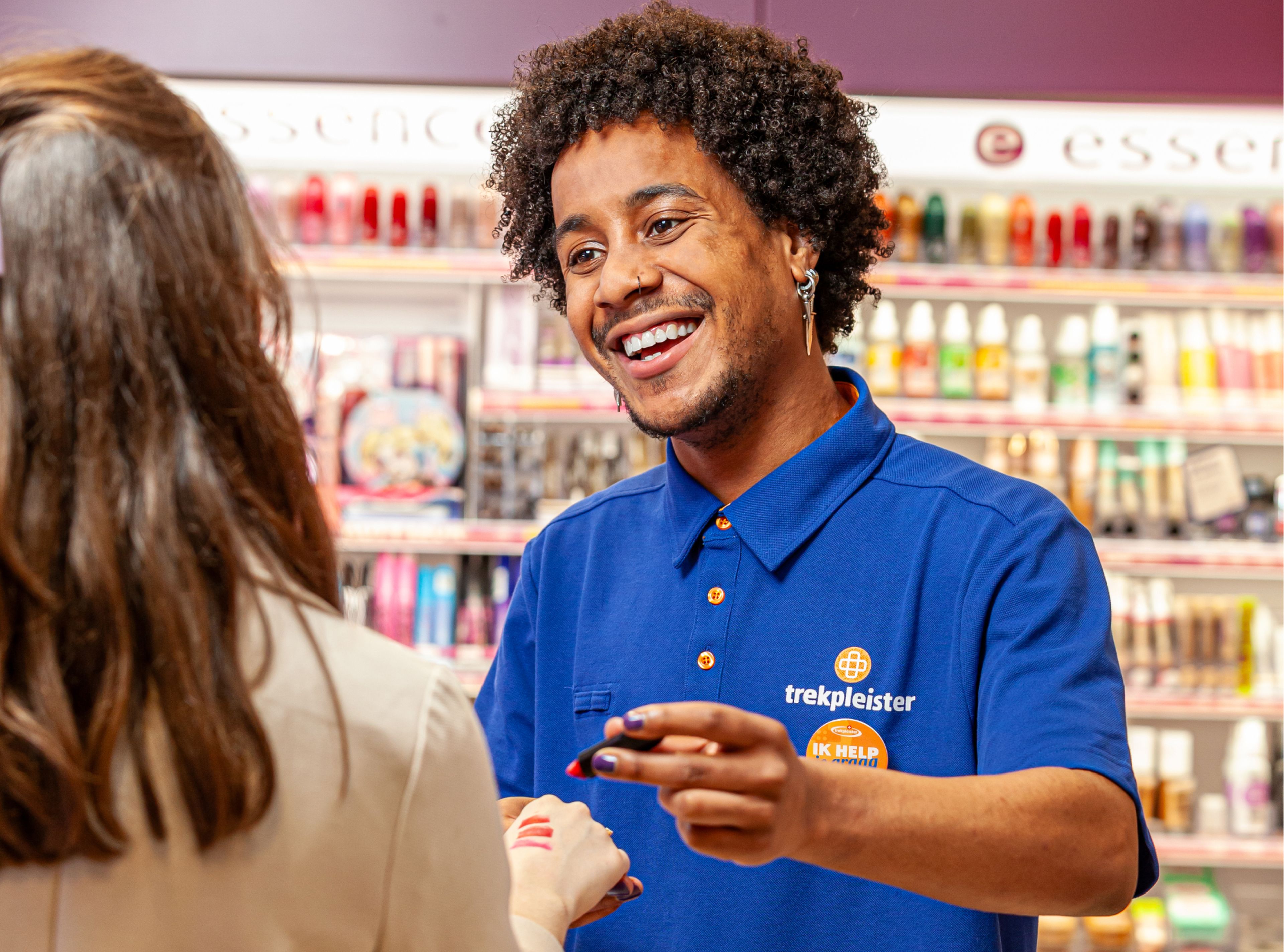
Trekpleister preboarding tool for new employees

A good working-at experience does not stop at the application. For Trekpleister we built a preboarding tool that connects new employees with the brand before day one.

UX: make it easier than your competitor

Well-known brands get the benefit of the doubt when a page loads slowly or a mobile menu is clunky. Candidates are motivated enough to push through.

For an unknown brand the threshold for dropping off is lower. The UX needs to be better, not the same. A few specific points:

Vacancies need to be easy to find. Filter by location, department or contract type. Not a flat list of twenty roles with no structure.

Mobile is the primary experience. Most candidates visit via phone, especially when coming from social media or a job board. That does not just mean responsive. It means: is the experience actually good on mobile?

Reduce friction in the application. Requiring a CV upload and a cover letter for a first conversation is a barrier you can lower. Especially for audiences less accustomed to formal application processes.

Good UX and UI design for working-at websites is not about impressive interactions. It is about removing friction at every point where a candidate wants to do something.

72%of candidates visit the working-at website before applying
3xhigher conversion on working-at sites with real employee stories versus stock imagery
68%of candidates drop off when the mobile experience is poor

Bring the employer to life beyond the vacancy

A working-at website is only complete when it also shows something of the environment, the culture and what day-to-day life actually looks like. Not as marketing language, but as context for the decision a candidate has to make.

This can take the form of a culture page, a behind-the-scenes look, a 'day in the life' format or a timeline of the onboarding journey. The goal is always the same: help the candidate picture what it is like to work here.

For organisations that invest in pre-boarding, it pays to make that visible on the working-at website too. Show candidates that the commitment does not stop at the signed contract.

Consistency matters more than polish

A working-at website is not a standalone project. It is part of a broader employer brand strategy. The tone, the imagery and the stories on the website need to match what is on LinkedIn, what recruiters say in calls, and what new employees experience when they start.

For brands without consumer recognition, that consistency is especially important. You have no brand equity to absorb inconsistency. Every mismatch between the promise on the website and the reality on the floor costs you twice: people leave and they tell others.

At Livewall we always start working-at projects with one question: does the story you want to tell actually hold up? Only then do we build the site.

Livewall

Build a working-at website that earns its keep

No consumer brand recognition? Then every page, every story and every interaction has to earn the candidate's trust. Livewall helps you design and build working-at websites that convert from a standing start.

Get in touch with our team

What we do

Livewall builds brand experiences that people actually remember — interactive campaigns, loyalty platforms, digital products, and employer branding for ambitious brands.

Our work

We've worked with HEMA, Stabilo, Wehkamp, Efteling, 9292 and many others. Every project starts with the same question: what would make someone actually want to do this?

Talk to us

Working on something similar? We'd love to hear about it.

Contact Livewall →