


livewall
← All articles
Engagement10 January 2026·Livewall

How to design a brand activation for trade shows and events

Trade shows are noisy. Here is how to design a brand activation that draws a crowd, creates a memorable experience, and collects the data you actually need.

brand-activationgamificationphygital

At a trade show, you are not just competing with your direct rivals. You are competing with fatigue, distraction, and fifty other stands fighting for the same thirty seconds of attention. A pull-up banner and a bowl of sweets will not cut it.

The brand activations that actually work are designed around one simple principle: give people something to do. Not something to look at. Not something to read. Something to participate in.

At Livewall, we design and build brand activations for trade shows, live events, and seasonal campaigns. We have seen what draws a crowd and what sends people walking past. Here are the principles that make the difference.
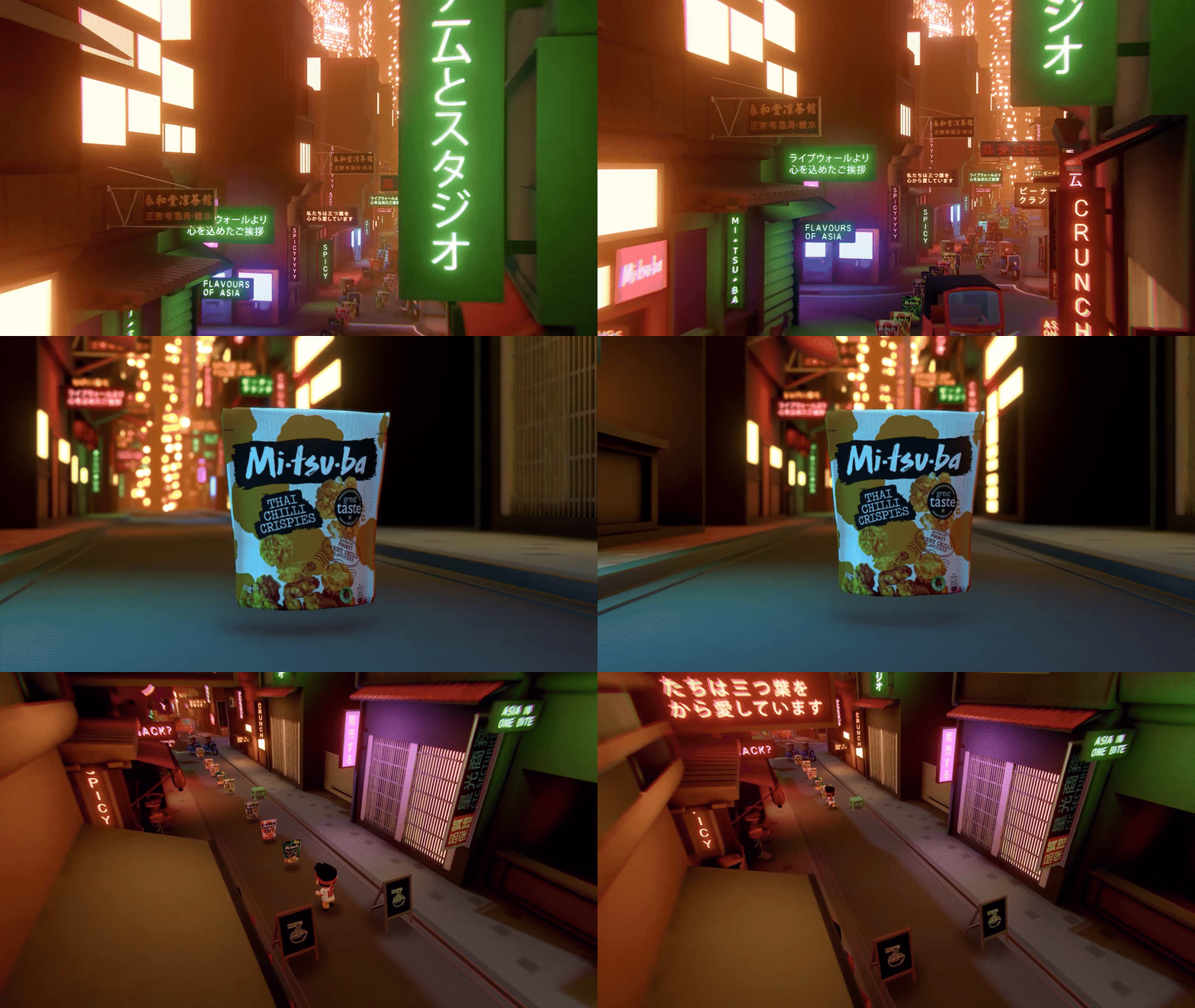
Mitsuba Spice Rush gamified brand activation at a trade show

Mitsuba Spice Rush: a playful digital game that turned trade show visits into product discovery

Start with behavior, not with the concept

Most briefs start with 'we want to stand out'. That is not a starting point. It is a wish. The real question is: what behavior do you want to trigger?

Do you want people to try a product? Collect leads? Get visitors to share something on social? Or simply keep them at your stand long enough to have a real conversation?

Every activation has a primary objective. Without a clear one, you end up with a fun idea that produces nothing measurable.

When we design gamified activations, we always start with three questions:

  1. What does the visitor do?
  2. What do they get in return?
  3. What does the brand gain?

Getting those three in balance is the real design work.

Livewall perspective

An activation that draws a crowd but collects no data is entertainment, not marketing. Both have value. Do not confuse them.

The mistake most stands make

They build the activation around their product instead of around the visitor. The result is a demo that only makes sense if you already know what the product does.

The best activations work the other way around. They start with something the visitor enjoys, recognises, or wants to win, and bring the brand into that space.

For Mitsuba, we built Spice Rush: a fast, addictive game built around the brand's umami flavour story. Visitors were not playing to learn about a product. They were playing because the game was genuinely fun. The brand was woven into the mechanics, not bolted on at the end.

That is the distinction. Brand experience as the context for enjoyment, not as a layer on top of a sales pitch.

Phygital: the digital layer over the physical moment

Trade shows offer something pure digital campaigns never can: physical presence. People are there. They can touch things, hear things, feel the atmosphere. Use that.

The power is in the combination. A physical element that triggers a digital experience, or the reverse. That is phygital: the interplay between a tangible moment and a digital layer that amplifies, extends, or captures it.

In practice this can look like:

  • A QR code on a product or stand object that launches a mini-game on the visitor's phone
  • A large touchscreen installation that displays live scores and winner names
  • A kiosk that sends a personalised result or reward via email immediately after participation

The digital component does something the physical cannot: it collects data, enables personalised follow-up, and extends the experience beyond the event itself.

3xmore stand visitors at activations with game mechanics compared to passive stands
68%of event leads proved higher quality when collected through interactive participation
4 minaverage dwell time at well-designed gamified activations on trade show floors

Collecting data without making it feel like a form

Every trade show activation should produce data. Not just the business cards you have been collecting for a decade, but real, usable intelligence: who was there, what interested them, what they played, what they won.

The skill is collecting data as part of the experience, not as a condition for entry. An activation that requires filling in a form before you can play loses participants before they even start.

A better model: make the entry point frictionless, then ask for contact details at the moment motivation is highest, right before or after the reward. 'You have won. Where should we send your prize?'

That is first-party data collected with consent, in context, at a moment that feels logical.

For Stabilo, we built a live drawing and guessing activation that drove participation, repeat visits to the stand, and clean data collection through a mechanic people genuinely wanted to engage with.

Scalable activations: from trade show to ongoing campaign

A well-designed trade show activation does not have to stop when the event ends. The digital component can carry on as an online campaign, a lead nurture flow, or a social mechanic.

Livewall designs activations that work on the show floor but travel well. The core mechanic, whether that is a game, a quiz, or a challenge, can be reused on social, in email, or as a standalone microsite for the next campaign cycle.

That makes the investment more efficient and the activation more valuable. You are building something with a life beyond the stand, not just a one-day experience.

Livewall

Designing a brand activation for your next trade show or event?

At Livewall, we work from concept through to launch. We design activations that draw a crowd, drive participation, and collect data you can use afterwards. Tell us about your next event.

Get in touch with our team

What we do

Livewall builds brand experiences that people actually remember — interactive campaigns, loyalty platforms, digital products, and employer branding for ambitious brands.

Our work

We've worked with HEMA, Stabilo, Wehkamp, Efteling, 9292 and many others. Every project starts with the same question: what would make someone actually want to do this?

Talk to us

Working on something similar? We'd love to hear about it.

Contact Livewall →