

livewall
← All articles
Employee Experience29 January 2026·Livewall

How gamified training improves knowledge retention at scale

When training becomes play, completion rates rise and retention improves measurably. Here is the evidence base behind gamified learning and how to design it for scale.

gamificationhr-techemployer-branding

Standard e-learning has a problem. Employees click through it, answer the mandatory questions, and forget most of the content within two days. Not because they lack motivation, but because the format simply does not work with how memory actually functions.

Gamified learning addresses this directly. By weaving game mechanics, immediate feedback, progress indicators, and spaced repetition into training content, it changes the way information is processed and retained. The result: higher completion rates, better knowledge retention, and measurable behaviour change on the floor.

At Livewall, we design and build gamified training experiences for organisations that take learning seriously, not as a checkbox exercise, but as a lever for real behaviour change at scale.

Livewall perspective

People remember what they actively do, not what they passively read. Gamified learning turns knowledge transfer into an activity, not an obligation.

Why traditional training falls short

The average completion rate for mandatory e-learning sits below 30 percent. Even when employees finish the module, the brain retains only a fraction of what was presented, especially without follow-up repetition or practical application.

This comes down to how memory works. Passive information consumption, without feedback or meaningful context, fades quickly. Active processing, where a person makes choices, experiences mistakes, and sees correct responses reinforced, leads to more durable encoding.

Game mechanics tap directly into these processes. Points and levels give structure to progress. Immediate feedback after a choice reinforces the learning moment. Time pressure in a mini-game heightens attention. Daily challenges create the spaced repetition that locks knowledge in place.

40%higher knowledge retention in gamified training formats compared to traditional e-learning
3xhigher completion rates when training includes game elements
60%of employees prefer learning through interactive formats over static modules

How to design gamified learning that actually works

The most common mistake organisations make: they add points and badges to an existing e-learning module and call it gamification. It does not work. Gamified learning does not start with mechanics. It starts with behavioural objectives.

Define the target behaviour first. What should an employee do differently after the training? Not 'they need to know the product', but 'they need to proactively guide customers to the right product category'. That is the behaviour you want to anchor.

Choose mechanics that practise that behaviour. A quiz tests knowledge. A scenario simulation practises behaviour. The distinction matters. Digital simulations and role-play environments are harder to build, but deliver measurably better transfer outcomes.

Design for repetition. One-time training disappears. Short daily challenges of two to five minutes, tied to real situations from the job, are far more effective than a single one-hour module. This is the microlearning principle, and gamification makes it compelling to return every day.

Make progress visible. Not only to the employee, but to managers. Dashboards that show who has completed what, where mistakes recur, and which knowledge is fading, give HR and line managers the data to intervene early.

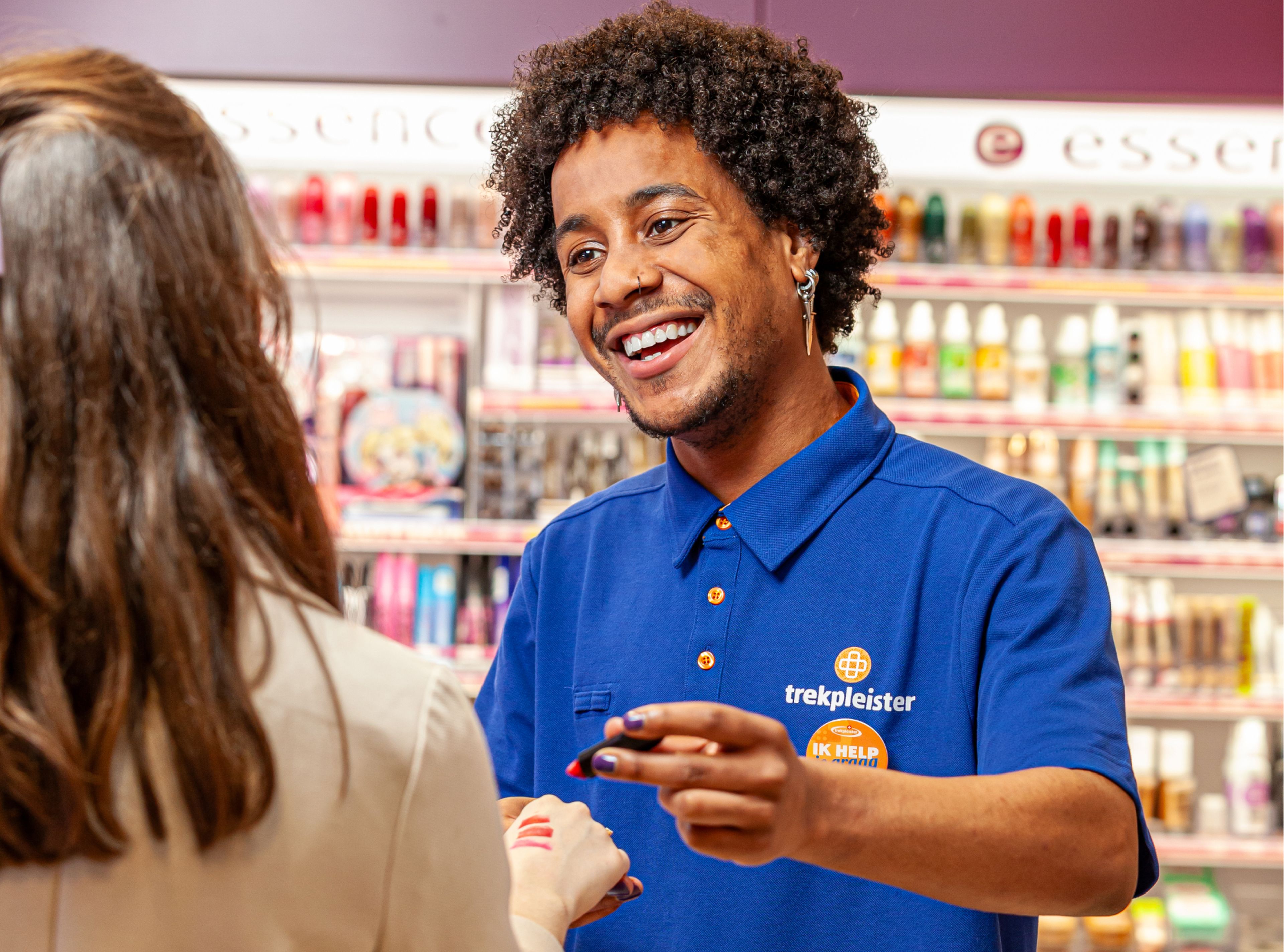
Trekpleister digital preboarding learning environment

Trekpleister Preboarding: new employees start their learning journey before day one

Deploying at scale: where it gets more complex

Gamified training for ten employees and for ten thousand employees are fundamentally different challenges. At scale, several factors need to be resolved upfront.

Accessibility on every device. Retail and hospitality staff do not have laptops. They have a phone, a shared tablet, or a few minutes between shifts. Mobile-first is not a preference, it is a baseline requirement.

Multilingual content. Large organisations operate across languages. Content needs to be localisable without losing the gameplay experience. This requires a technical architecture that treats translation as a first-class concern from day one.

Integration with HR systems. Progress data only has value when it surfaces in the systems managers and HR already use. Connecting to an LMS, HRIS, or even a simple reporting export is not an afterthought.

Content that stays current. Product ranges change. Processes evolve. A gamified learning environment is worthless if the content is stale. Plan content governance from the start: how will material be updated, versioned, and rolled out without a full development cycle each time.

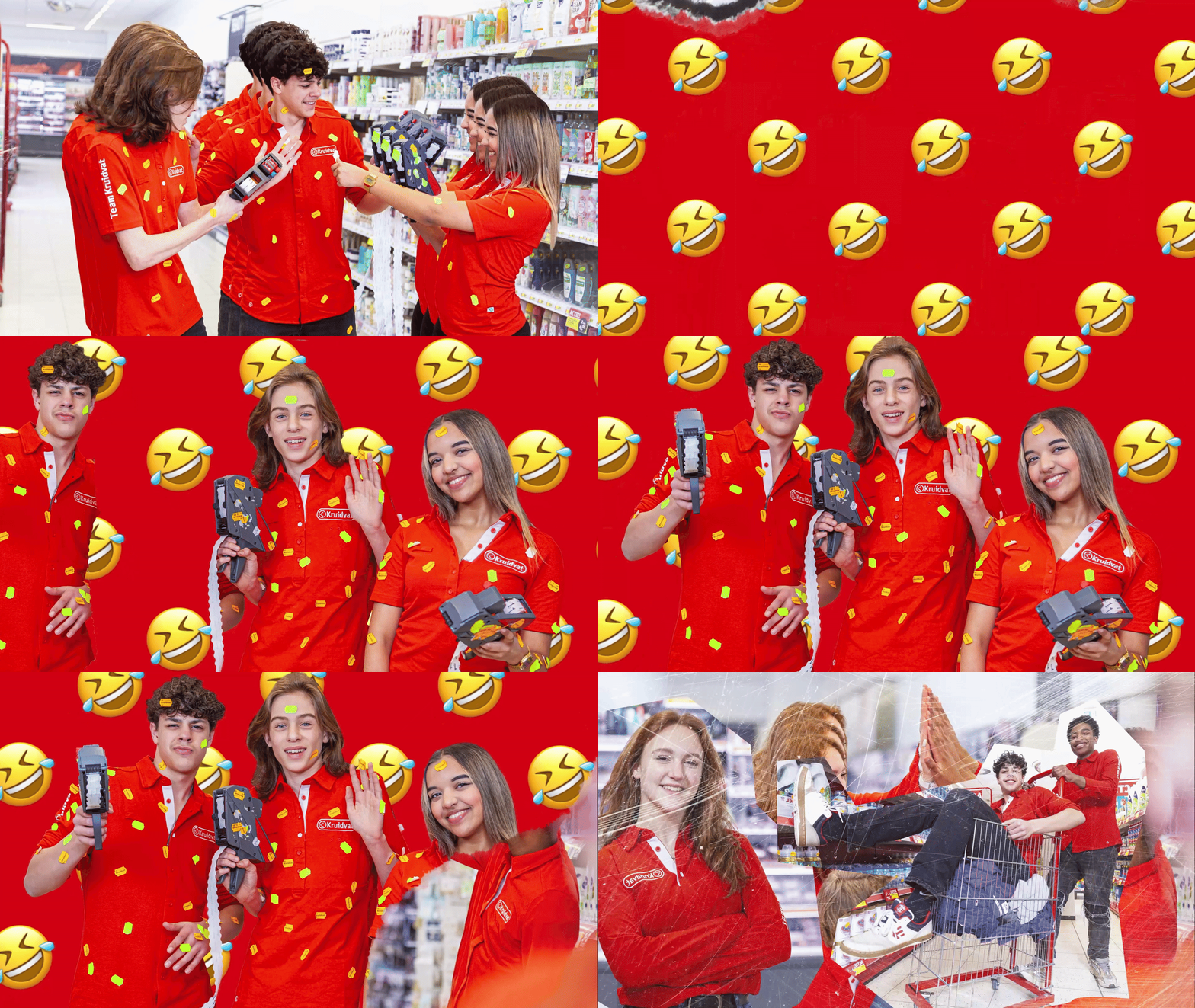
Livewall has built these kinds of programmes for organisations including McDonald's, Trekpleister, and Kruidvat. The scale differs, the challenges are consistent.

What it delivers

Gamified learning is not an end in itself. It is a tool. The question is always: which behaviour needs to change, and how do we measure it?

Organisations that apply gamified learning well report higher completion rates, fewer errors in critical processes, and faster time-to-contribution for new employees. Knowledge retention at thirty days is measurably higher than with traditional e-learning, especially when a repetition layer is built into the design.

There is also a less direct benefit. Employees who have positive learning experiences are more engaged with their work overall. Gamified learning contributes to the broader employer branding of an organisation. It signals that the business invests in its people in ways that match how people actually consume information today.

For HR leaders building scalable learning systems, the question is no longer whether gamification works. The research is clear. The question is how to design it so it serves your specific objectives, your workforce, and your operational context.

Livewall

Want to know what gamified learning can do for your organisation?

Livewall designs and builds training experiences employees actually use. From behavioural objectives to live product, for any scale.

Get in touch with our team

What we do

Livewall builds brand experiences that people actually remember — interactive campaigns, loyalty platforms, digital products, and employer branding for ambitious brands.

Our work

We've worked with HEMA, Stabilo, Wehkamp, Efteling, 9292 and many others. Every project starts with the same question: what would make someone actually want to do this?

Talk to us

Working on something similar? We'd love to hear about it.

Contact Livewall →