

livewall
← All articles
Employee Experience17 March 2026·Livewall

How gamified onboarding helps new hires in complex product environments

When new staff need to learn dozens of products before they can serve customers, traditional training manuals don't cut it. Here is how game mechanics solve the complexity problem.

gamificationpreboardinghr-tech

Retail, pharmacy, quick service restaurants: industries where new staff are expected to know dozens of products on day one. The customer asks, and the employee needs to have the answer. A folder of product sheets or a click-through e-learning module won't get them there.

At Livewall, we've built gamified onboarding experiences across retail chains, pharmacy groups and foodservice brands. What we've found is consistent: game mechanics don't just make learning more engaging. They change how people retain complex information. Small steps, immediate feedback, a clear goal. That structure maps directly onto what you need when the product catalogue runs to twenty pages.

Traditional training asks new hires to absorb large volumes of information passively. Gamification for onboarding flips that around. You learn by doing, by failing without consequences, by unlocking the next level when you're ready for it.
Livewall perspective

People remember what they did, not what they read. Gamification turns product knowledge into experience.

Why complex product environments are a distinct challenge

Not every onboarding problem is the same. A new software developer learns one system deeply. A pharmacy employee needs to combine product categories, active ingredients, contraindications and promotion rules, all at once. The depth of information is different, but so is the time pressure: they're already serving customers on day two.

That tension is where most training programmes fall apart. Organisations want fast readiness. The learning curve is steep. Classic solutions respond with volume: push as much information through as possible in as little time as possible. The result is an overwhelmed employee who still can't explain the difference between two competing products when a customer asks.

Gamed pre-boarding tools solve this through prioritisation. Not everything at once. The bestselling products first, then category extensions, then the exceptions. Exactly like a game with difficulty levels.

Which game mechanics work best for product training

Not every game mechanic fits every learning objective. That is something we have learned at Livewall across projects in retail, foodservice and healthcare.

Progression and levels work well for broad product knowledge. The new hire starts with top-selling products and unlocks more categories step by step. This gives structure and prevents information overload.

Quizzes with immediate feedback are powerful for factual knowledge: ingredients, dosage, product combinations. Getting an answer wrong is fine, as long as the explanation follows immediately. That builds active knowledge, not just passive recognition.

Scenarios and decision points are most valuable for customer conversations. The employee receives a simulated customer question and has to choose how to respond. This trains not just product knowledge but the right framing too.

Streaks and reminders keep engagement high during the gap between signing and starting. Those weeks before day one are valuable, but traditional onboarding ignores them completely.

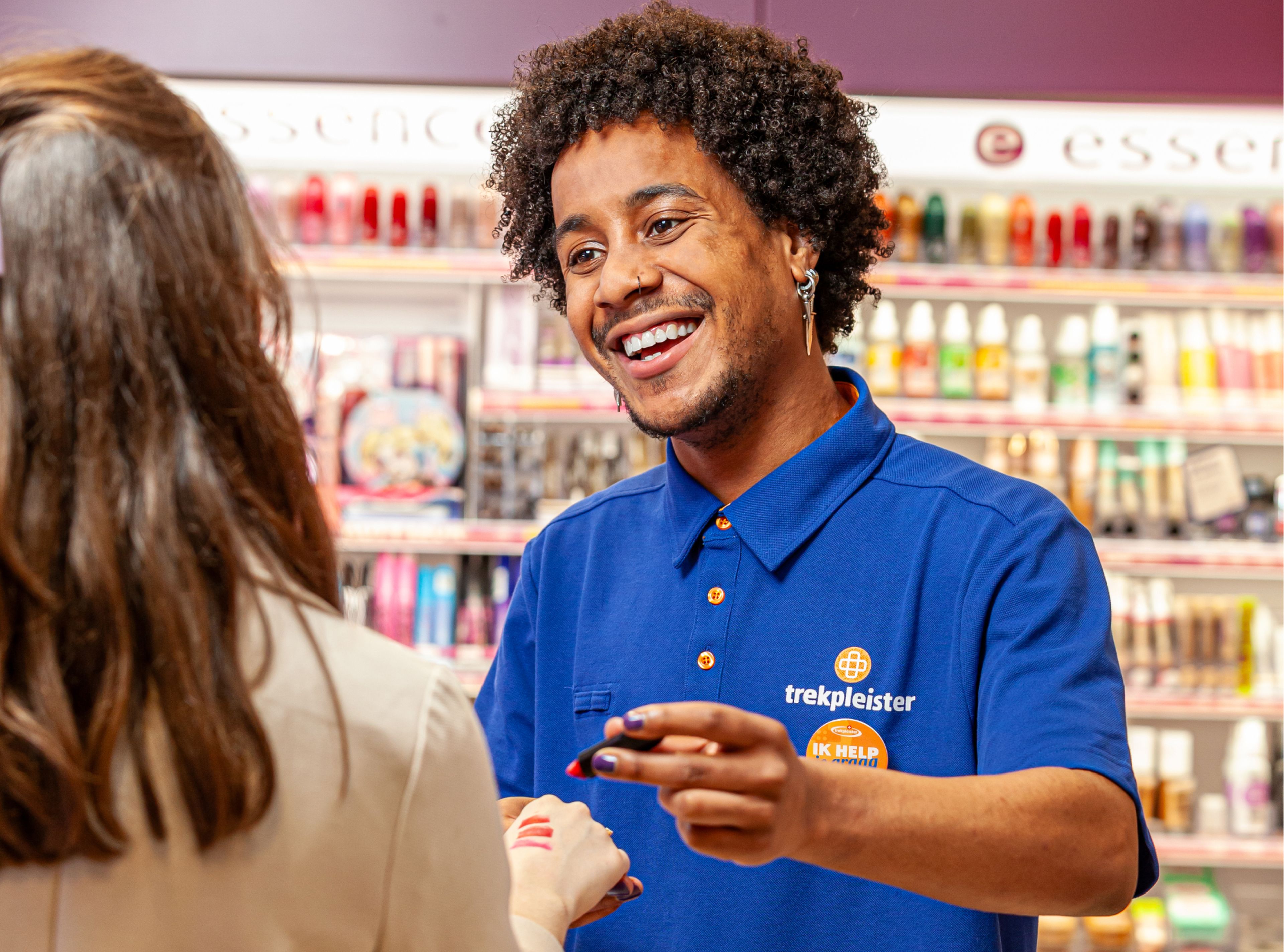
Trekpleister preboarding tool: new employees learn products through a gamified digital platform before day one

Trekpleister preboarding: product knowledge before day one

higher knowledge retention in gamified training vs. traditional e-learning
40%faster time to independent performance for new hires
85%completion rate for gamified preboarding modules

Gamified learning in foodservice: from manual to gameplay

The challenge in quick service restaurants is even sharper than in retail. Products change regularly, limited-time offers rotate in and out, and staff need to switch between tasks quickly. Training has to be fast to deliver and easy to update.

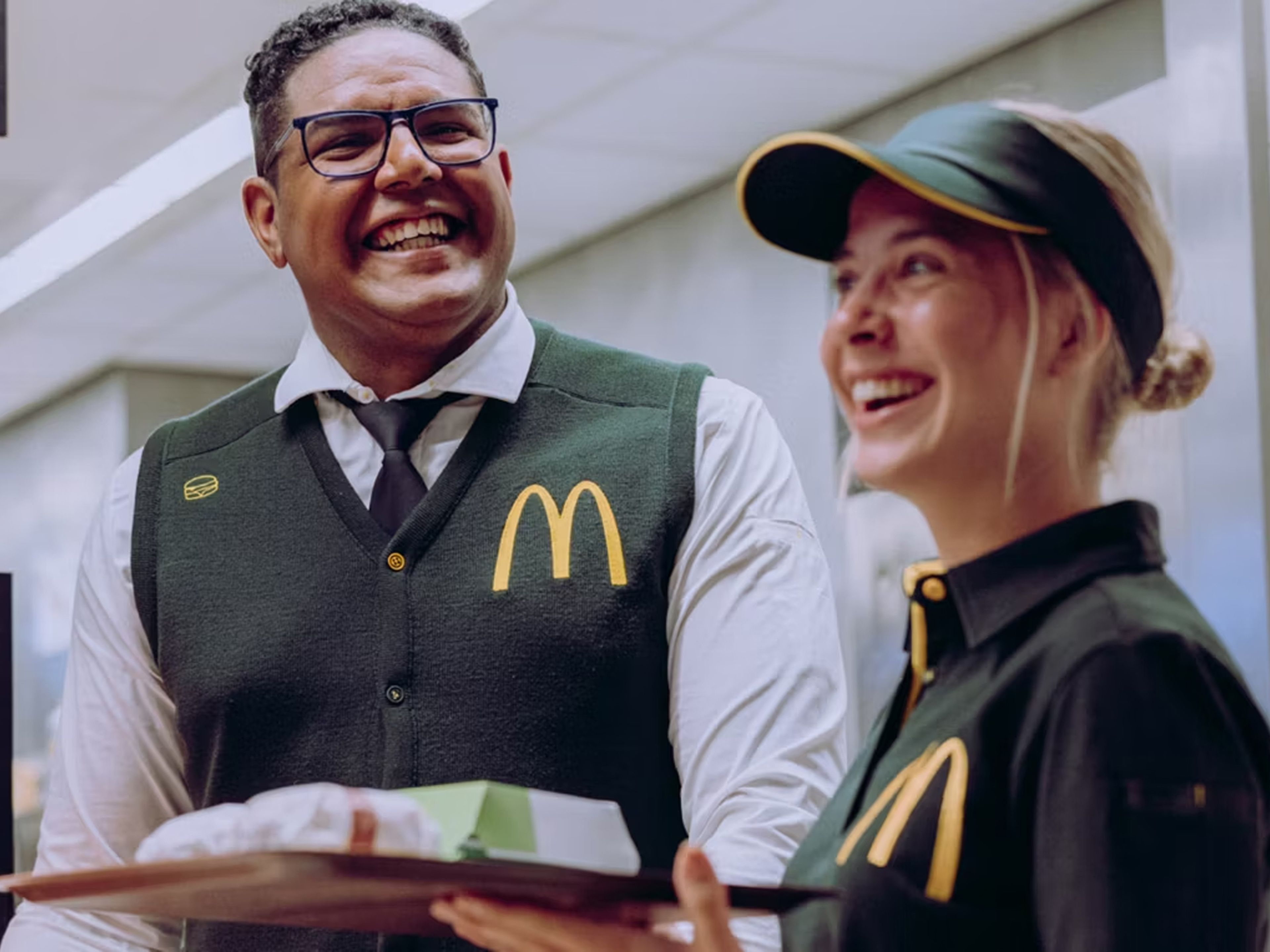
A good example of how gamified learning addresses this: new staff practise kitchen operations as gameplay rather than looking them up in a manual. Speed, sequence, combinations. Each action is repeated until it becomes second nature.

The weeks before day one are your most valuable training window

Most organisations wait until the first working day to start training. That wastes the strongest motivational window you have. The weeks between signing a contract and starting are when new hires are most curious, most eager and, critically, have time to spare.

A well-designed preboarding journey captures that energy. Not with a heavy information dump, but with short playable modules that build familiarity with products, processes and colleagues. When they walk in on day one, they already feel at home.

This also reduces early turnover. Employees who feel connected before they start are less likely to drop out. In industries with high churn, like retail and hospitality, that is a measurable impact.

Livewall perspective

The weeks before day one are the most motivated weeks a new hire will ever have. Use them.

Livewall

Ready to make onboarding work for complex product environments?

At Livewall, we design and build gamified onboarding and preboarding experiences for retailers, foodservice chains and other organisations with wide product catalogues. Tell us about your challenge.

Get in touch with our team

What we do

Livewall builds brand experiences that people actually remember — interactive campaigns, loyalty platforms, digital products, and employer branding for ambitious brands.

Our work

We've worked with HEMA, Stabilo, Wehkamp, Efteling, 9292 and many others. Every project starts with the same question: what would make someone actually want to do this?

Talk to us

Working on something similar? We'd love to hear about it.

Contact Livewall →