


livewall
← All articles
Engagement3 February 2026·Livewall

Participation marketing vs passive reach: why engagement beats impressions

Reach tells you how many people saw your campaign. Participation tells you how many cared. Building for the latter takes a different approach entirely.

campaignsbrand-activationsocial-media

Impressions are easy to buy. Engagement is not.

A banner seen by fifty thousand people that nobody clicked has achieved reach and nothing else. A campaign where a thousand people played, created, or shared something has built a relationship. That is the gap between passive reach and real participation.

At Livewall, we design and build interactive campaigns, games, and brand activations for brands that want more than visibility. What we consistently see: brands that invite their audiences to participate get structurally better returns from their campaign budgets than brands that only broadcast.

Livewall perspective

A campaign where people do something, win something, or share something stays with them far longer than a campaign where they simply see something.

What makes participation marketing different

Passive reach is one-directional. You place an ad, someone scrolls past it, done. There is no interaction, no choice, no investment from the user. Brand recall is low. Intent to return is near zero.

Participation marketing flips that logic. The user does something: plays a game, answers a question, scores points, sends a message, shares a result. That active involvement creates three things passive reach never delivers:

  • Brand recall. People remember what they did, not what they saw.
  • Behavioural data. Every choice a user makes is a data point you can act on.
  • Organic reach. People share what they find worth sharing. Passive ads rarely qualify, but a personal result or challenge does.

This is why interactive campaigns consistently outperform traditional display on recall and conversion metrics, even when total reach is lower.

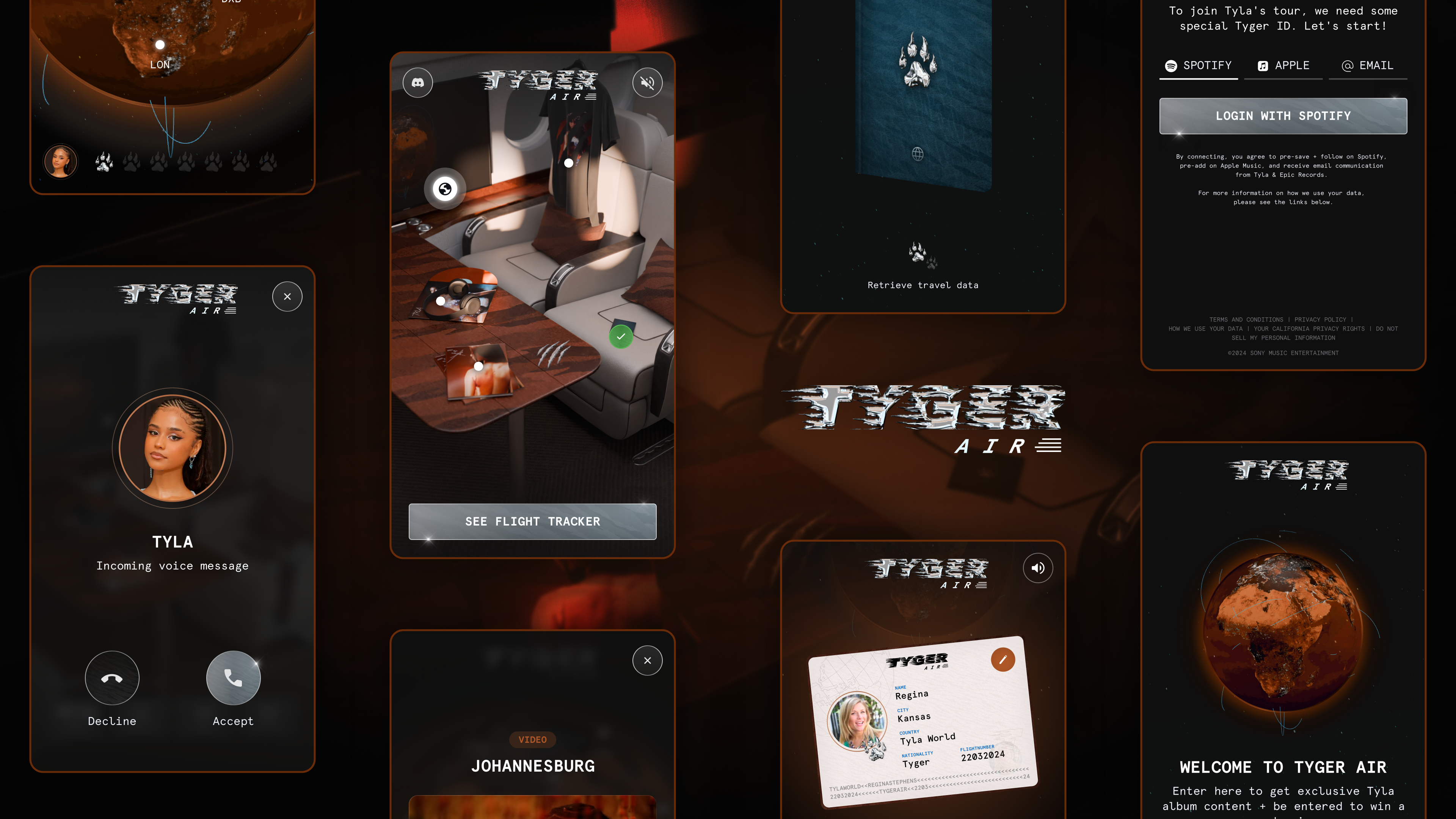
Tyger Air: immersive 3D fan experience for Tyla featuring gamification and interactive digital passports

Tyger Air for Tyla: turning passive fans into active participants through digital passports and gameplay.

The problem with reach as a primary KPI

Reach is an appealing metric. It is easy to report and the number always looks impressive. But reach says nothing about what people did after seeing your campaign.

The same is true for impressions. A million impressions sounds great in a presentation, but if nobody clicked through, bought anything, or shared anything, what did you actually achieve?

The question Livewall asks at every campaign briefing is straightforward: what do you want people to do? Not see, but do. That answer shapes the architecture of the activation. The difference lies in the design intent from the very start.

For brand activations we build for brands like Heineken, Feyenoord, and Doritos, the first design question is always: what action should the user complete, and what makes it worth completing?

Activevs passive: people remember what they do, not what they see
3-5xhigher brand recall with interactive campaigns versus display advertising
First-partybehavioural data you can only collect through participation, not reach

Three principles for designing real participation

Not every interactive campaign automatically delivers engagement. Poor gamification is worse than none. There are three principles that determine whether participation actually works.

1. The barrier must be low and the reward must be obvious. If users do not immediately understand what to do or why it is worth doing, they leave. A game, quiz, or challenge must be clear within five seconds. Not after an explanation, but instantly.

2. The action must feel like their own. The best example here is personalised results and share cards. People do not share what a brand makes, they share what they themselves made or achieved. The Martin Garrix Dream Team campaign worked exactly this way: fans built their own fan identity from Spotify data and shared the result organically across 14 countries.

3. Repetition must be rewarded. Single-session participation is fine. Recurring participation builds a relationship. Daily mechanics, progression, collectibles, or a leaderboard give users a reason to return. That is the difference between a one-off activation and a gamified loyalty campaign that runs across weeks.

Participation marketing and first-party data

There is another argument for participation that is growing stronger by the year: data.

Every user who actively engages with your campaign gives you information. What they chose, how long they played, where they dropped off, what they shared. Those are first-party behavioural data points you cannot buy through ad platforms.

With passive reach, you know someone saw your ad. With participation marketing, you know what someone chose, which category interested them, and how long they stayed invested. That is a fundamentally different quality of intelligence.

First-party data mechanics are now a core part of how Livewall designs campaigns. Not as an end in themselves, but as a natural by-product of a well-built participation campaign. When you give users something they genuinely want to do, they hand you the data as a side effect.

When to choose participation, and when to choose reach

This is not an either-or question. Reach still matters. But reach is a distribution tool to bring people to your activation, not the goal of the campaign itself.

Choose participation marketing deliberately when:

  • You want to build brand recall, not just visibility
  • You want to collect first-party behavioural data
  • You want organic reach through sharing
  • You want a relationship that outlasts the campaign window

Keep investing in reach as a distribution mechanic, but measure your campaign on participation, repeat visits, shares, and data, not on impressions. That is the core of participation marketing, and it is exactly what Livewall helps brands build day in, day out.

Livewall

Ready to build a campaign people actually participate in?

At Livewall, we design interactive activations, games, and campaigns that turn reach into real engagement. We are happy to think through what works for your brand and audience.

Get in touch with our team

What we do

Livewall builds brand experiences that people actually remember — interactive campaigns, loyalty platforms, digital products, and employer branding for ambitious brands.

Our work

We've worked with HEMA, Stabilo, Wehkamp, Efteling, 9292 and many others. Every project starts with the same question: what would make someone actually want to do this?

Talk to us

Working on something similar? We'd love to hear about it.

Contact Livewall →