


livewall
← All articles
Loyalty1 June 2026·Livewall

Loyalty programme for FMCG brands: the case for gamified engagement

FMCG brands have a loyalty problem: low involvement, high switching. Gamified engagement mechanics create the moment of attention that lets loyalty actually form.

loyalty-programsfmcggamificationretail

FMCG is a category built against loyalty. Consumers buy fast, switch freely, and make brand decisions without much thought. The relationship between shopper and brand is thin by design. A traditional points programme does nothing to change that, because it assumes a level of involvement that simply isn't there.

That doesn't mean loyalty is impossible in FMCG. It means you have to earn it differently. Not by rewarding purchases, but by creating moments of genuine engagement that happen to sit alongside them.

At Livewall, we design and build loyalty programs for FMCG brands that start from behaviour, not transactions. The goal isn't another points mechanic. It's a reason for consumers to actively choose involvement with your brand.
Livewall perspective

A loyalty program for FMCG brands doesn't start at the checkout. It starts at the moment a consumer decides to pay attention.

Why FMCG loyalty is structurally different

In financial services or telecoms, switching costs are high. In fast-moving consumer goods they're close to zero. There's no contract to break, no migration to complete, no history to lose. The consumer can change brands on a shelf impulse.

This makes conventional loyalty programme design almost irrelevant in FMCG. Points-per-purchase models assume that customers already have a reason to care. In a category where the purchase decision happens in three seconds in a supermarket aisle, that assumption fails immediately.

The fix isn't to tweak the rewards structure. It's to step back and ask a more honest question: what would make a consumer want to interact with this brand, at all, outside a shopping trip? That's where gamified engagement becomes the answer.

A well-designed gamified experience gives consumers a reason to actively participate. That active participation builds brand familiarity, preference, and purchase intent in a way that a passive points balance never will.

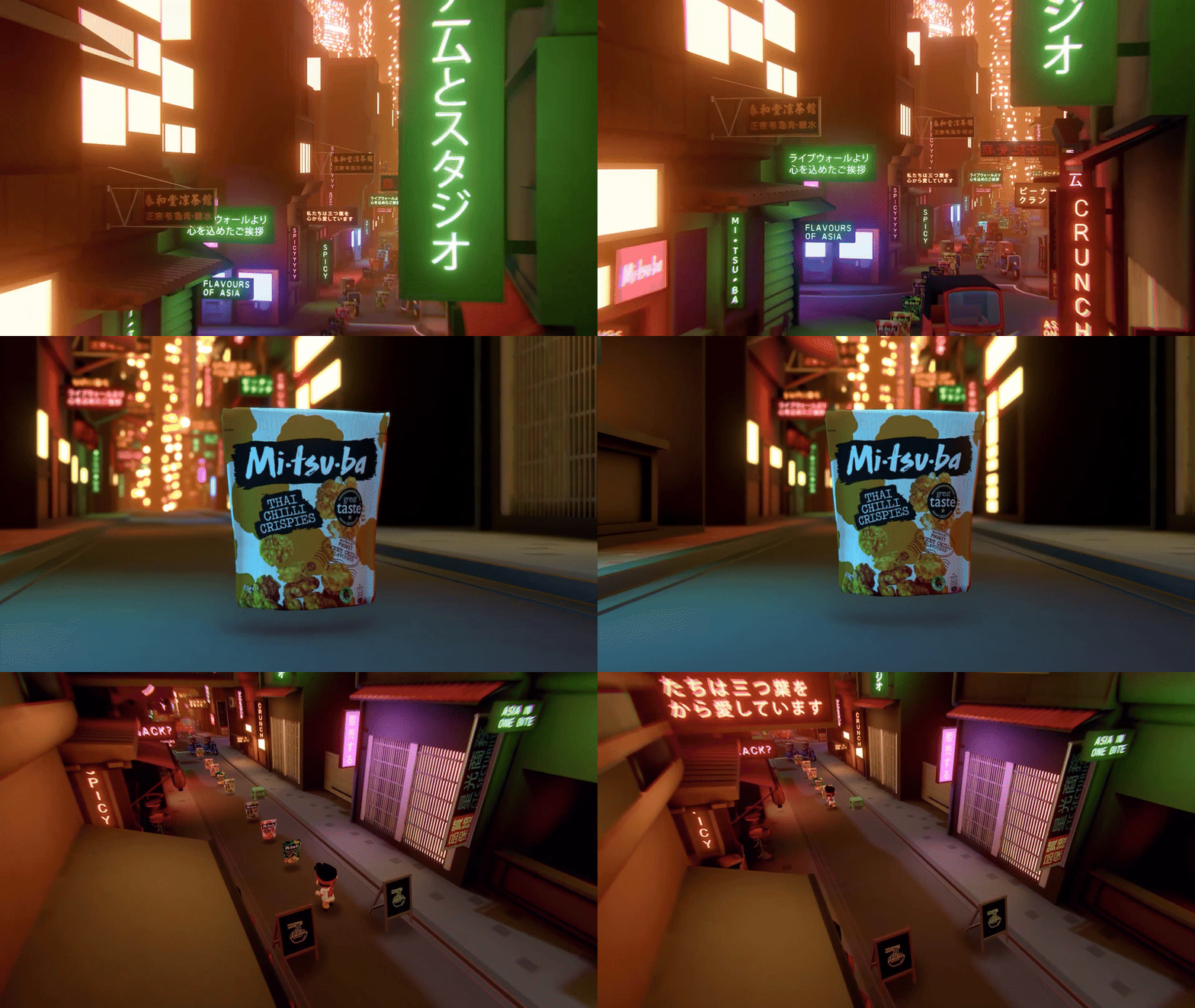
Mitsuba Spice Rush gamified brand activation for FMCG

Mitsuba Spice Rush: a playful digital game driving product discovery and brand engagement at trade events

What gamified engagement actually adds

Gamification in this context isn't about adding badges to a points programme. It's a different design philosophy for how a brand builds a relationship with consumers.

A well-executed gamified loyalty programme for FMCG tends to have a few consistent characteristics:

Low barrier to entry. Participation needs to be clear in five seconds. No lengthy onboarding, no complex earning rules. One action, one outcome.

Reasons to return outside the purchase occasion. Daily challenges, time-limited events, new content. Engagement that doesn't depend on a shopping trip.

Rewards that reinforce the brand. Not generic gift cards. Prizes, experiences, and unlockables that connect back to what the brand stands for. Relevance of reward is as important as the mechanic itself.

First-party data as a byproduct. Every interaction is a signal. Preferences, behaviours, category interests. That data makes future CRM and paid media significantly more effective.

These elements together create something a standard FMCG points programme cannot: a genuine reason for consumers to choose to engage with your brand.

3xhigher participation frequency in gamified loyalty programmes vs purely transactional models
2xmore first-party data per participant compared to standard registration mechanics
65%of active participants show increased brand preference after engaging with a gamified brand experience

Cases that show the mechanics in practice

The principles are clear enough in theory. What does it look like when it actually runs?

For HEMA, we built Stapelgek, a gamified loyalty activation that turned everyday purchases into a reason to play. Customers had a reason to open the app daily, independent of any shopping need. That daily return behaviour is exactly where brand familiarity and preference are built over time.

For Wehkamp, Wanna Have Days showed how a gamified seasonal mechanic drives consistent return. Customers came back each day to unlock new digital cards with discounts, gifts, and prizes. The game brought them back when they otherwise wouldn't have thought about the brand. That increased frequency led directly to higher conversion.

With Doritos, we saw how a branded game experience can connect an FMCG brand to a cultural moment at scale. The combination of an engaging mechanic with brand content produced involvement that advertising spend alone could never achieve.

Building a gamified loyalty programme for FMCG

The design process starts with an honest question from the consumer's perspective: why would someone participate? Not what the brand wants from them, but what they actually get from it beyond a chance to win something.

From that starting point, you work toward a mechanic. That mechanic needs to fit the brand profile, the target audience, and the channel. A gamified activation for a younger audience on social is a fundamentally different product from an app-based loyalty programme for a broad grocery consumer.

We generally recommend starting campaign-first: a time-limited gamified activation, measure what works in practice, then scale toward a structural programme. This way you build a custom loyalty programme validated by real user behaviour rather than assumptions.

At Livewall, we combine strategy, design, and technical build in one team. That means the system is designed from the start to collect data, scale, and integrate with existing CRM infrastructure rather than being bolted on afterwards.

The first-party data advantage

An underrated benefit of gamified FMCG loyalty is what it generates in consumer data. In a world without third-party cookies, behavioural signals from owned channels are among the most valuable marketing assets a brand can hold.

Every gamified interaction is a data point. Which challenge did someone choose? Which product category attracted them? Which reward motivated completion? These patterns reveal consumer preference in ways that purchase history alone cannot.

Building first-party data mechanics into the loyalty programme design means each engagement session also enriches consumer profiles. That makes paid media more targeted, CRM segmentation deeper, and product launch communications more relevant. It's the long-term commercial case for gamified loyalty that extends well beyond the campaign window itself.

Livewall

Ready to approach loyalty differently for your FMCG brand?

At Livewall, we design loyalty programmes that work from consumer behaviour. From initial concept to live platform, with strategy, design, and technology in one team. Get in touch to talk through what would work for your brand.

Get in touch with our team

What we do

Livewall builds brand experiences that people actually remember — interactive campaigns, loyalty platforms, digital products, and employer branding for ambitious brands.

Our work

We've worked with HEMA, Stabilo, Wehkamp, Efteling, 9292 and many others. Every project starts with the same question: what would make someone actually want to do this?

Talk to us

Working on something similar? We'd love to hear about it.

Contact Livewall →