

livewall
← All articles
Employee Experience8 February 2026·Livewall

How to design an EVP workshop that produces something actually usable

EVP workshops often produce wall-covering outputs that nobody uses in practice. Here is how to structure the process so it generates a proposition that actually works in recruitment.

employer-brandinghr-tech

Most EVP workshops end the same way. Three days offsite, a presentation covered in sticky notes, a values pyramid and a tagline half the room cannot recall a week later. The output ends up in a shared folder, and the recruitment team goes back to writing job ads on instinct.

This is not a motivation problem. It is a structure problem. At Livewall, we work on EVP development for organisations ranging from retail chains to entertainment brands. What we consistently see is that most workshops are set up too broadly and try to force consensus too early. The result is a proposition that works for everyone and stands out for no one.

Here is how to do it differently.
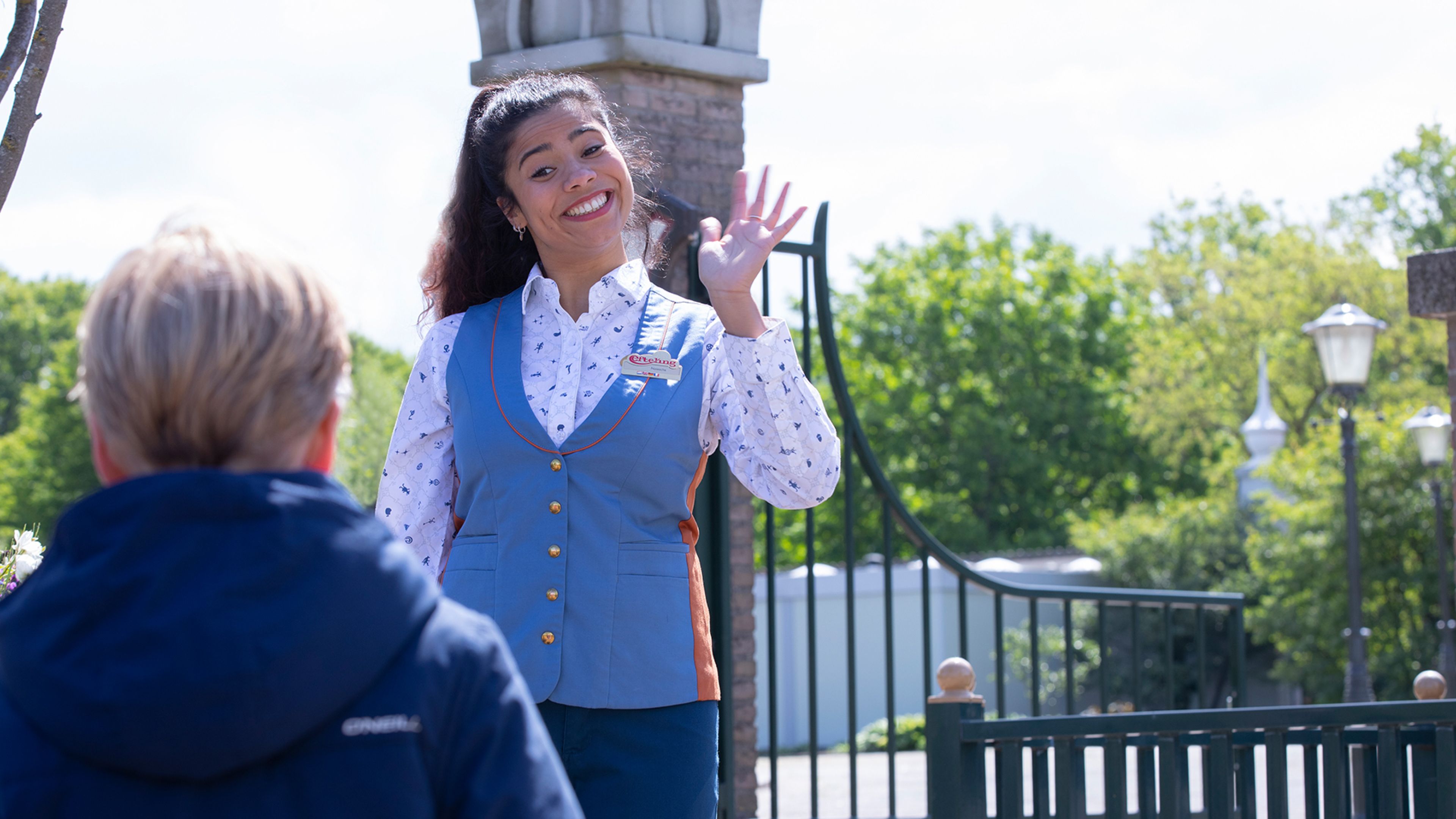
Efteling employer branding recruitment platform

Start with tension, not with values

The most common workshop opener is something like: 'What makes working here special?' That question invites socially acceptable answers. People say 'good atmosphere', 'room for growth' and 'collaborative culture'. Not because it is untrue, but because these are the safe answers.

A better starting point is: where are the tensions? What do employees find difficult about working here, and what would they not want to give up? Tension is informative. It tells you what is actually real.

In practice, this means doing your research before the workshop, not during it. Run short interviews or a quick digital survey with employees across levels and departments. Bring the raw language into the room, not a sanitised summary.

Livewall perspective

A proposition that fits everyone sounds distinctive to no one. The power is in the specificity.

Structure the day around three decisions, not around brainstorming

Workshops that have brainstorming as their core activity produce a lot of material and very little direction. A better structure is built around three explicit decisions.

Decision 1: who is this proposition primarily for? An EVP cannot work for every audience at the same time. Choose the two or three candidate profiles that are most strategically important to your organisation. That becomes the filter for the rest of the day.

Decision 2: what is the central tension or trade-off? Every strong proposition has an honest element in it: something that is better here than elsewhere, and something that is different or harder here. Name that trade-off explicitly. Candidates who are a poor fit will self-select out earlier. That is a feature, not a bug.

Decision 3: what three sentences would a five-year employee say unprompted? Not what HR hopes they would say. What they actually say. This becomes the test for everything you write afterwards.

Those three decisions can be made in half a day if the pre-work is done. The rest of the workshop is translation, not discovery.

Avoid the 'sticky notes become categories' pattern

One of the most time-consuming workshop patterns works like this: everyone writes ideas on post-its, they get clustered into categories, and those categories become 'pillars'. The result is abstract values like 'growth', 'connection' and 'impact' that have no distinguishing power whatsoever.

The fix is to skip the categorisation step and work directly with specific, concrete statements. Do not ask participants 'what are our values?' Ask instead: 'what would a new colleague notice in the first week that is genuinely different from other employers?' Concrete observations are far more useful than abstract values.

If you close the workshop with a list of five abstract words, you have a problem. If you close with three concrete sentences you could put in a job ad tomorrow, you have something.

72%of HR professionals say their EVP is not applied consistently in recruitment communications
3xhigher retention for new hires who felt connected to the organisation before their start date
40%lower early attrition at organisations with a clear and recognisable employer promise

Build a direct bridge to recruitment materials

The workshop has only succeeded if the output is immediately usable by the people who write recruitment communications. That means closing the session with something tangible, not a summary.

Concretely: an EVP canvas with the three core sentences, the audience profiles, the central trade-off, and two or three verbatim statements from real employees. This canvas is the starting point for job ads, employer brand campaigns, and working-at pages.

At Livewall, we always connect EVP workshops to the activation that follows. The proposition only has value once it is visible. That might be a working-at website, a recruitment campaign, or preboarding content that extends the promise past the hire.

The test: can someone who was not in the room explain it?

This is the simplest quality check for any EVP output. Give the document to someone who was not in the workshop and ask them to explain what makes the company a distinctive employer. If they cannot do it in their own words, the proposition is not sharp enough yet.

A strong EVP is not an internal document. It is a story people can tell. Recruiters, managers, and existing employees should be able to repeat it unprompted without looking it up first.

At Livewall, we always test proposition outputs with a small group of employees outside the core team before starting activation. Not as validation, but as a calibration check. If they do not recognise it, the workshop missed something.

Livewall

Build an EVP that actually gets used

Livewall helps you turn workshop output into something recruiters, managers, and employees use every day. From proposition to campaign in one connected process.

Get in touch with our team

What we do

Livewall builds brand experiences that people actually remember — interactive campaigns, loyalty platforms, digital products, and employer branding for ambitious brands.

Our work

We've worked with HEMA, Stabilo, Wehkamp, Efteling, 9292 and many others. Every project starts with the same question: what would make someone actually want to do this?

Talk to us

Working on something similar? We'd love to hear about it.

Contact Livewall →