


livewall
← All articles
Strategy25 January 2026·Livewall

Why the best digital experiences feel inevitable in retrospect

Great digital products and campaigns feel obvious after the fact. The design decisions that create that feeling are anything but obvious in the making. Here is how they happen.

digital-productsuxbrand-activation

There is a peculiar thing people say about the best digital experiences. They say things like: 'It works exactly how you expect.' Or: 'It felt familiar even though I'd never used it before.' That sense of inevitability is not accidental. It is the product of hundreds of deliberate decisions that users never notice.

At Livewall, we build digital products, loyalty activations, and brand campaigns for large consumer brands. We see this pattern constantly. The experiences that genuinely stick are not the ones with the most features. They are the ones where every design decision points at a single target: behaviour.
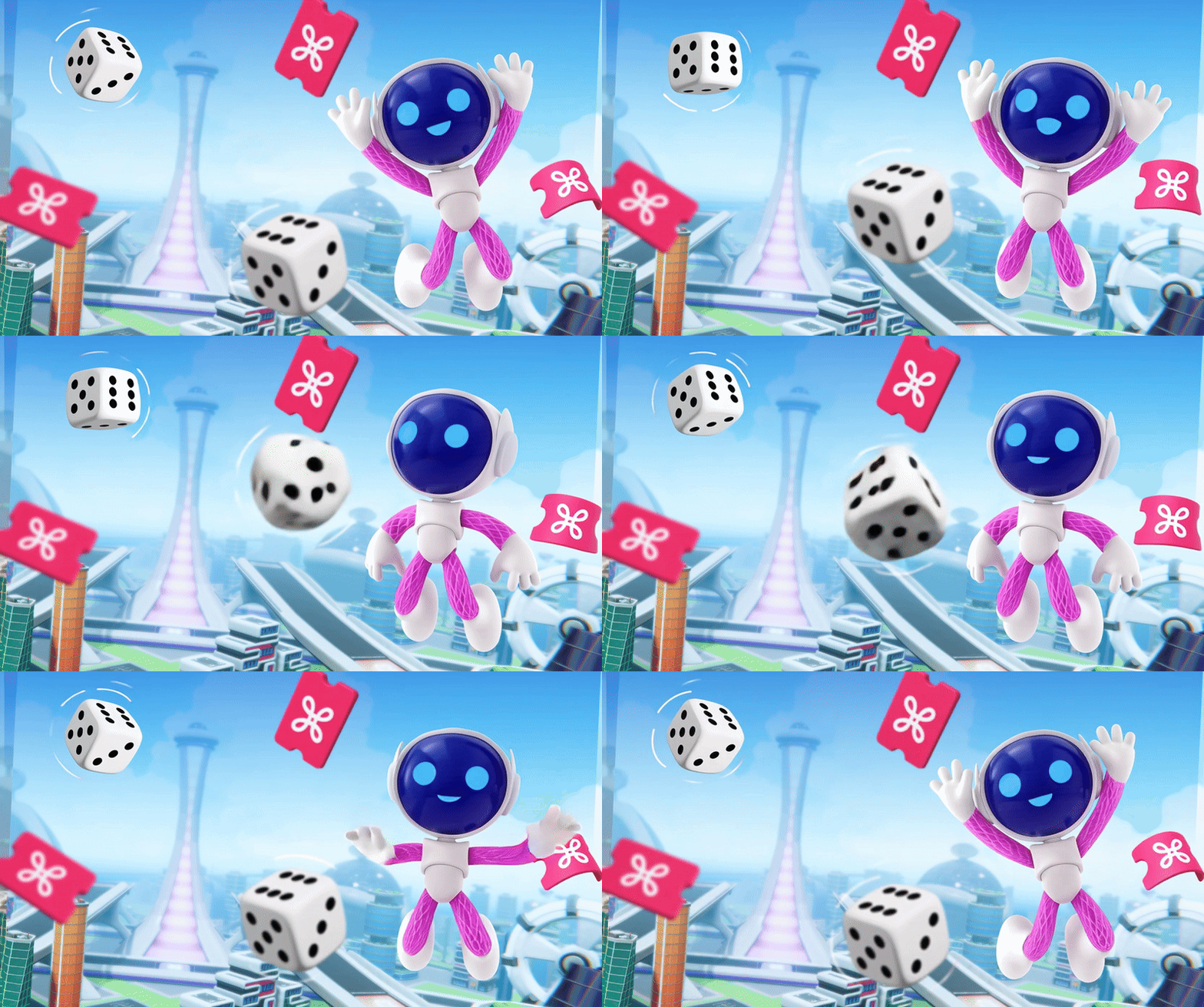

Livewall perspective

That feeling of inevitability is not accidental. It is the product of hundreds of decisions users never see.

Start with behaviour, not interface

Most digital projects begin with a brief about features. What should it do? Which pages are needed? What does marketing want to see?

That is the wrong order.

Behavior-first design starts with a different question: what behaviour do we want to trigger? And then: what is currently getting in the way of that behaviour?

Those two questions sound straightforward, but they change everything. They force you to think outside the interface. Because the barriers are rarely technical. They are psychological: fear of making the wrong choice, doubt about whether it is worth the effort, uncertainty about what comes next.

Poor interfaces do not remove those barriers. They add to them.

The difference between logical and inevitable

Logic is rational. Inevitability is felt.

An interface can be entirely logical and still generate friction. Forms are logical. Multi-step processes are logical. And yet people abandon them in droves. What is missing is the feeling that this is something you want to do, not something you have to do.

That difference lives in the details. The order in which you ask for information. Whether you reward or penalise. Whether you make progress visible. Whether you build trust before you ask for anything.

The Decathlon loyalty campaign we built did not work because the system was clever. It worked because every step matched how Decathlon customers already think about sport and movement. The interface followed the user's mental model, not the system's database structure.

Decathlon loyalty campaign with interactive game elements

The Decathlon game matched the mental model of sports enthusiasts, not the architecture of the system behind it.

Three design principles that create inevitability

1. Give people a sense of competence, not complexity

People quit when they feel stupid. A good digital experience quickly lets someone do something right. That first small success builds confidence. Then you can ask for more.

This is why gamified activations work. Not because play is inherently fun, but because well-designed game mechanics let people immediately feel they understand the rules.

2. Connect to existing behaviour

The hardest thing to ask of someone is to form new behaviour. The easiest: a variation on what they already do.

For the HEMA Stapelgek loyalty activation, we built a mechanic that hooked into the purchase behaviour HEMA customers already had. Playing became a low-friction addition to a routine, not a new habit that needed to be learned.

3. Remove everything that does not matter

Every button you add is a decision you're asking the user to make. Every decision costs energy. Good UX is not about adding more. It is about ruthlessly cutting anything that slows the desired behaviour down.

That takes courage in a briefing room. Stakeholders want to see features. But the best experiences we have built at Livewall are the ones where we said no.

67%of users abandon a digital experience at the first moment of confusion
3xhigher repeat participation when experiences align with existing behaviour
8 secaverage time before a user decides whether an experience is worth their effort

Retrospective feeling as a design objective

There is a practical way to check whether you are on the right track. After every design decision, ask yourself: would a user find this obvious in hindsight?

Not: is this technically correct? Not: does the client want this? But: will someone look back at this and think it could not have been any other way?

That is a high bar. But it is the bar that separates a digital product that works from one that people return to.

We saw this clearly in the AvroTros Eurovision Voting App. 141,000 users downloaded the app and used it live during the broadcast. Every flow was designed around the behaviour of someone watching, excited, and wanting to vote fast. Not around the backend architecture. The result: the number one app in the store, with users not stopping to think about how it worked.

How Livewall approaches this

At Livewall, we start every project with what we call a behaviour mapping phase. We map which behaviours we want to trigger, what barriers currently exist, and which mental models the target audience already holds.

Only then do we sketch the first screens.

It is a way of working that feels slower at the start and faster at the end. Because once you know which behaviour you are designing for, most debates about features resolve themselves.

The digital strategy we develop for clients is always anchored in this principle. Not: which digital tools should we use? But: which human behaviour do we want to enable, and how do we build as little resistance as possible on the way there?

Livewall

Want to build a digital experience that feels inevitable?

At Livewall, we start with behaviour, not features. Tell us what you want to achieve and we will show you how we would approach it.

Get in touch with our team

What we do

Livewall builds brand experiences that people actually remember — interactive campaigns, loyalty platforms, digital products, and employer branding for ambitious brands.

Our work

We've worked with HEMA, Stabilo, Wehkamp, Efteling, 9292 and many others. Every project starts with the same question: what would make someone actually want to do this?

Talk to us

Working on something similar? We'd love to hear about it.

Contact Livewall →