livewall
← All articles
Engagement27 February 2026·Livewall

When phygital experiences go wrong: the design failures to avoid

Phygital activations fail for predictable reasons: the physical and digital halves don't reinforce each other, or the handoff kills momentum. Here is what to watch for.

phygitalbrand-activationcampaigns

Phygital experiences sound compelling on paper: a physical moment that flows seamlessly into a digital one, or the other way around. In practice, we see the same failures repeat across campaigns. The two halves don't connect. The handoff is too clunky. Or the digital component feels like an afterthought rather than a core part of the experience.

At Livewall we design and build phygital experiences for brands that want physical and digital to genuinely work together. What we've learned: most failures are avoidable, if you know what to look for.

Livewall perspective

The problem is rarely the technology. The problem is the design of the transition.

Failure 1: the two halves live separate lives

The most common failure is straightforward: the physical activation and the digital experience were designed independently. Visitors scan a QR code in a store, land on a generic page, and have no idea what they're supposed to do. Or they play an online game, but the connection to the event or the product on the shelf has completely vanished.

Phygital only works when both halves make the same promise. What you see, hear, or touch in the physical world must carry directly into the digital part. Same language, same tension, same story.

Failure 2: the handoff asks too much

Every extra step a user has to take is a potential drop-off point. Download an app, create an account, type a long URL: each of those costs you conversion. We regularly see campaigns where twenty percent of physical visitors never reach the digital part at all, simply because the barrier is too high.

The transition needs to be nearly frictionless. A QR code that drops you straight into an experience that works without login. An NFC tap that opens the next step without explanation. The smoother the handoff, the more of your audience makes it through.


Failure 3: the digital half delivers too little

A QR code that leads to a discount page is not a phygital experience, it's a detour. The digital component must add value that the physical world alone cannot: personalisation, progress, shareable content, a reason to return.

Without that added value, the digital part feels like an extra step rather than an enhancement. Users drop off, not because the technology failed, but because there was no compelling reason to continue.

Failure 4: the connection was never made measurable

Many brands know how many people attended an event and how many visited the campaign page, but not how many actually moved from one to the other. Without that measurement, optimisation is impossible.

Well-designed phygital campaigns build measurement in from the start: unique QR codes per location, session tracking from the physical moment, attribution that shows which physical touchpoints convert best to digital engagement.

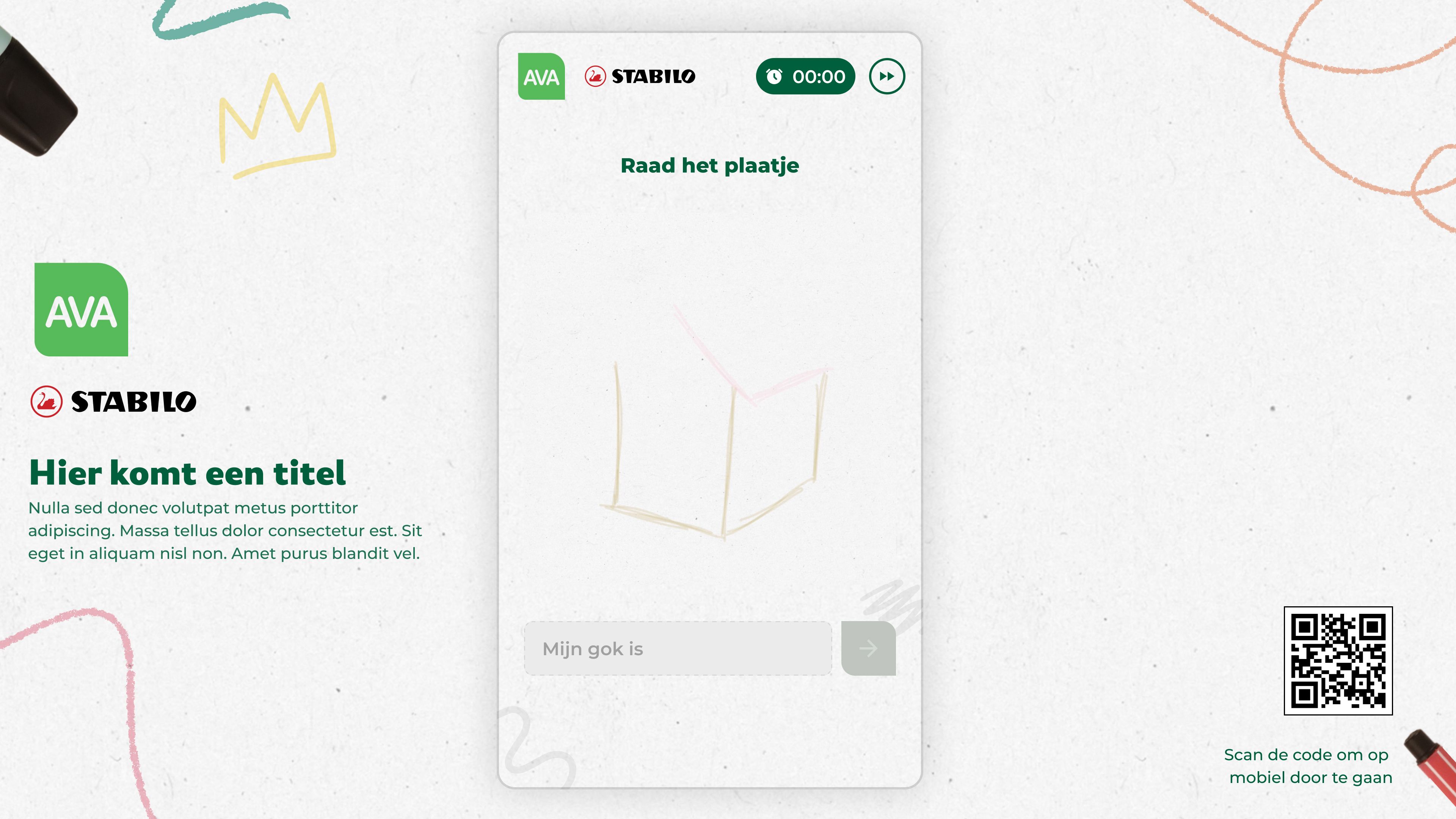
Stabilo Pictionary: a phygital activation connecting drawing and guessing to a digital game experience

Stabilo Pictionary: participate physically, continue digitally.

Failure 5: the experience ignores its physical context

A phygital activation at a busy festival has different requirements than a campaign in a quiet retail environment. At an event there is noise, time pressure, social energy. In a store there is calm and space for something more considered. Designing without accounting for the physical context produces experiences that are technically correct but humanly unworkable.

This shows up in interactive campaigns that perform perfectly in a test environment but fail on location because they demand too much attention or concentration. The best phygital activations are designed to work in the messy reality of the moment.

Failure 6: no reason to share

Sharing mechanics are not a nice-to-have in phygital design, they are the engine for organic reach. An experience that cannot be shared dies with the campaign period. An experience with a personal result, a unique image, or a challenge you can send to a friend keeps circulating long after the event ends.

At Livewall we build share mechanics in as part of the design, not as a late addition. Campaigns like Stabilo Pictionary show how shareable content multiplies the value of a campaign significantly.

20%of physical visitors drop off at a poorly designed digital handoff
3xmore returning users in phygital campaigns with clear progress mechanics
60%higher participation when the digital component requires no login

What good design does differently

Brands that get phygital right don't treat it as two separate projects that happen to sit next to each other. They design the full experience as a single continuous journey, with deliberate attention to every transition point.

That means: the digital experience is already familiar before anyone scans a QR code. The transition takes a matter of seconds. The digital component delivers something the physical experience could not, like a personal memory, a score, or a reward. And the whole thing is measurable end to end.

If you're building brand activations where physical and digital need to work together, this is the difference between an activation that performs and one that disappoints.

Livewall

Building a phygital activation that needs to work?

At Livewall we combine strategy, design, and technology to create experiences where physical and digital work as one. Get in touch to talk through what is possible for your brand.

Get in touch with our team

What we do

Livewall builds brand experiences that people actually remember — interactive campaigns, loyalty platforms, digital products, and employer branding for ambitious brands.

Our work

We've worked with HEMA, Stabilo, Wehkamp, Efteling, 9292 and many others. Every project starts with the same question: what would make someone actually want to do this?

Talk to us

Working on something similar? We'd love to hear about it.

Contact Livewall →