


livewall
← All articles
Strategy29 April 2026·Livewall

How to create a 10-year digital product vision that survives the next three

Long-term digital product visions are useful for alignment and direction. They become dangerous when they're used as fixed plans. Here is how to write one that guides without constraining.

digital-productsweb-apps

Most digital product visions don't survive contact with the real world. Not because they're poorly written. Because they're treated as fixed plans rather than directional frameworks.

A roadmap tells you what to build. A vision tells you why. These are different documents with different jobs, and confusing them is one of the most reliable ways to end up with a digital product that needs a full rebuild every three years.

At Livewall, we've worked on digital products ranging from community platforms to AI-driven production systems, voting apps to always-on brand experiences. The ones that age well share something in common: the organisation behind them had a clear answer to why this product exists, even when the answer to what it does changed over time.

That clarity is not an accident. It's the result of writing a vision that operates at the right level of abstraction.
Livewall perspective

A 10-year product vision is not a prediction of the future. It is a description of the direction you are choosing, so you make better decisions when the world changes.

What a product vision actually is

A strong product vision describes three things: the user you serve, the problem you solve, and the value you deliver. That is all. No features, no timelines, no technology choices.

In practice this is hard. Stakeholders want specificity. Product teams want tangible direction. Executives want something they can present. The pressure to get concrete fast is real. But a vision that jumps to concrete too quickly loses its value the moment circumstances change.

A useful test: if your vision would become invalid because a specific technology changes, it is not a vision. It is a technical architecture with marketing language around it.

A genuine vision survives technology shifts, competitive landscape changes, and internal reorganisations. It survives because it describes a durable human need, not a durable solution.

The three layers of a durable digital product strategy

We structure product visions in three layers, each with a different time horizon.

Layer 1: The permanent core (years 1-10) Why does this product exist? What fundamental problem does it solve, for whom? This part of the vision should barely change. If it changes every two years, you have a strategy, not a vision. Both are valuable, but don't confuse them.

Layer 2: The directional goals (years 1-3) What position do you want to occupy in the user's life? What behaviour change are you trying to create? This layer can move with the market, but slowly. Think in years, not quarters.

Layer 3: Current experiments (this year) What are you building now to learn? This is your roadmap. It is explicitly subordinate to the layers above it. If an experiment fails, that does not mean the vision is wrong. It means this particular path did not work.

Most organisations only build layer 3. They call it a roadmap, send it to the board, and call it a strategy. The result is a new direction every year and a product that never achieves compound growth.

3 yearsaverage lifespan of a digital product built without a long-term vision
60%of product roadmaps are significantly revised within twelve months
2xhigher user retention in products built on a behavioural rather than feature-led vision

Writing a vision that survives change

A durable vision is concrete in the right places and abstract in the right places.

Concrete about the user. Abstract about the technology. Concrete about the problem. Abstract about the solution.

This is deliberate. Technologies shift. Platforms come and go. User needs change more slowly than we assume, but they do change. A vision tied to a specific platform or technical approach is vulnerable.

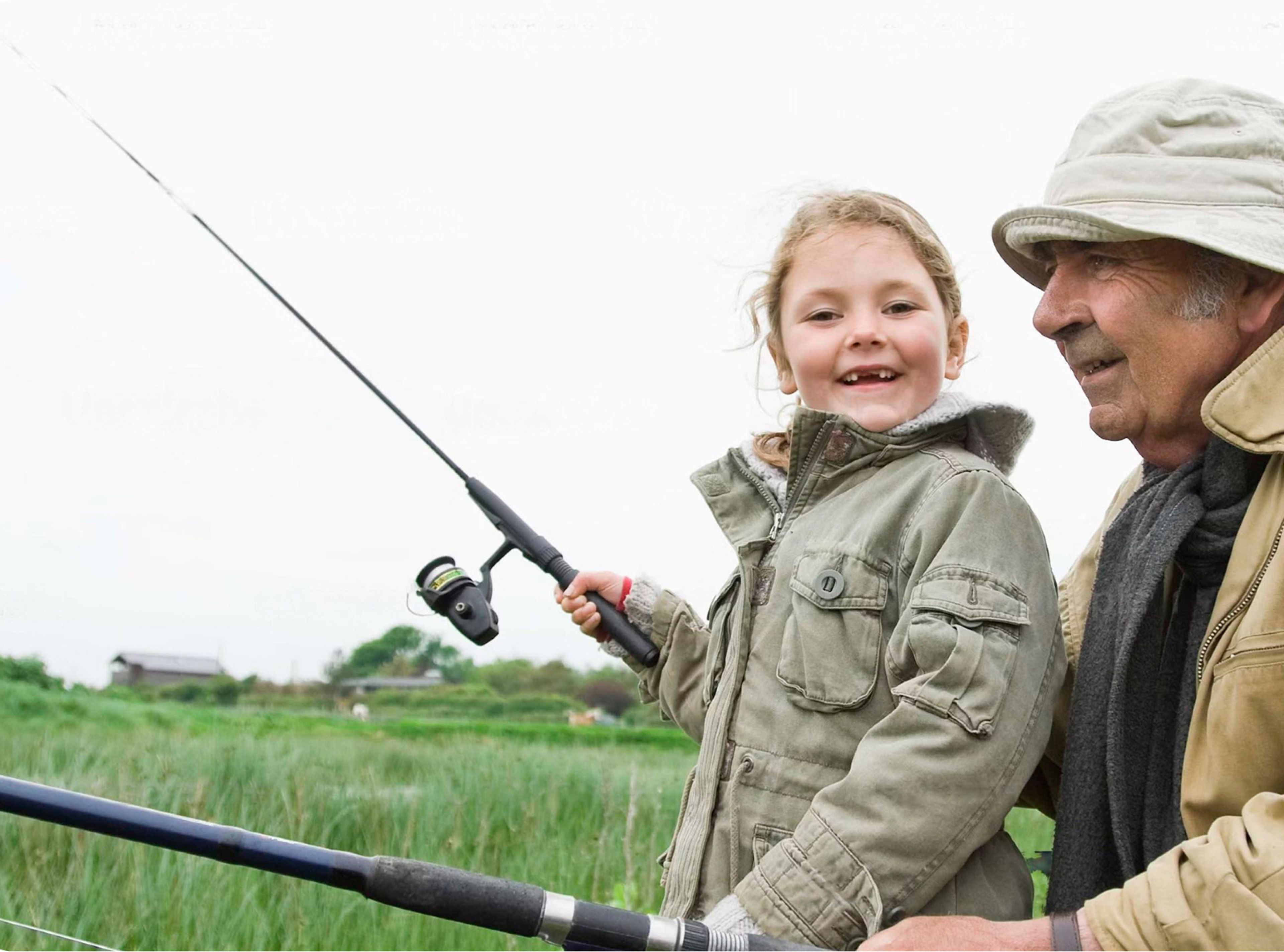
When we built the Sportvisunie community platform, the core need was simple: anglers want to share knowledge and feel connected to others who share the same passion. That core does not change. The way you digitise that connection does. A product built around that understanding can adapt as technology evolves. A product built around a specific feature set cannot.

Digital product strategy and long-term product vision framework

Products that age well are built on a clear understanding of why they exist, not just what they do.

The ambitious roadmap trap

We see it regularly. An organisation asks for help with a digital product and presents a two-year roadmap with eighty features. That roadmap is not a ten-year vision. It is a wish list.

The problem is not the ambition. The problem is that the roadmap has replaced the thinking that should precede the vision. What problem are we solving? For whom? Why this product and not another? What kind of behaviour do we want to encourage?

Without answering those questions first, you build a product nobody truly wants. Or worse: a product that is temporarily popular but doesn't know how to grow.

The AvroTros Eurovision Voting App is a strong example of a product built from a sharp objective. It needed to enable fans to participate in something big, shared, and competitive in real time. That objective drove every decision: the interface, the mechanics, the social features. The result was the number one app in the store with 141,000 active users.

Livewall

A product without a vision is always one step behind the market. A product with a strong vision can help shape it.

Protecting the vision from internal pressure

One common mistake: the product vision becomes a co-creation exercise. Everyone contributes input, and the vision becomes a compromise between all stakeholders.

That is not a democratic process. It is a recipe for a product that no one truly wants but everyone finds acceptable.

A strong product vision is owned by a small number of people who are responsible for direction. Gathering input is useful. But the vision itself must be protected. Not because others are wrong, but because a vision must be credible. A vision that changes at every stakeholder review is not a vision.

That does not mean a vision should never change. But when it changes, it should be a deliberate decision based on new information, not a response to internal pressure.

At Livewall, we help organisations develop digital strategy in a way that earns internal alignment while remaining resistant to the kind of scope drift that kills long-term product thinking.

From vision to product: the right pace

A ten-year vision does not mean you build for ten years without learning. It means you learn within a stable direction.

The best products we have built at Livewall were built with clients who knew what they wanted to achieve in the long run but were willing to experiment with how they got there. That combination gives the team room to move without losing direction.

This shapes how we approach MVP development. Not an MVP that is as small as possible to save budget, but an MVP that validates the core of the vision. Does the behaviour we want to encourage actually happen? Can we build on it later?

Products built this way grow better. They are not an end goal but a starting point. And that is exactly what a ten-year vision should be.

Livewall

Building a digital product that should still matter in ten years?

At Livewall, we start with why, not what. We help you shape a product vision that guides every decision that follows, from the first sprint to year five and beyond.

Get in touch with our team

What we do

Livewall builds brand experiences that people actually remember — interactive campaigns, loyalty platforms, digital products, and employer branding for ambitious brands.

Our work

We've worked with HEMA, Stabilo, Wehkamp, Efteling, 9292 and many others. Every project starts with the same question: what would make someone actually want to do this?

Talk to us

Working on something similar? We'd love to hear about it.

Contact Livewall →