


livewall
← All articles
Engagement12 April 2026·Livewall

How interactive storytelling outperforms traditional brand narratives

Stories audiences participate in are stories audiences remember. Here is how to design interactive narrative formats that build brand associations passive content never could.

campaignsbrand-activationentertainment

The difference between a story you watch and a story you live

A brand that says it puts customers first is easy to ignore. A brand that puts the customer inside the story is much harder to forget.

That is the core premise of interactive storytelling. Not broadcasting, but involving. Not telling, but letting people experience.

At Livewall, we have spent years building formats that give audiences a role in a brand's story. And we see the same pattern every time: once people can choose, discover, or influence something, their relationship with that brand changes. They remember it differently. They talk about it differently.

This article explains why that works and how to design for it deliberately.
Livewall perspective

Passive content tells a story. Interactive content makes the audience part of the story. Those are fundamentally different experiences.

Why passive brand narratives no longer hold attention

People process information differently when they actively participate. The psychological research is clear: participation significantly increases memory retention. But beyond the science, the feeling matters too.

You watch a TV spot. You play, solve, or navigate an interactive campaign based on your own choices. That sense of agency, however small, changes everything.

Attention is scarcer than ever. Brands compete in an environment saturated with content. A story where the user stays passive cannot compete with an experience that actively invites them in.

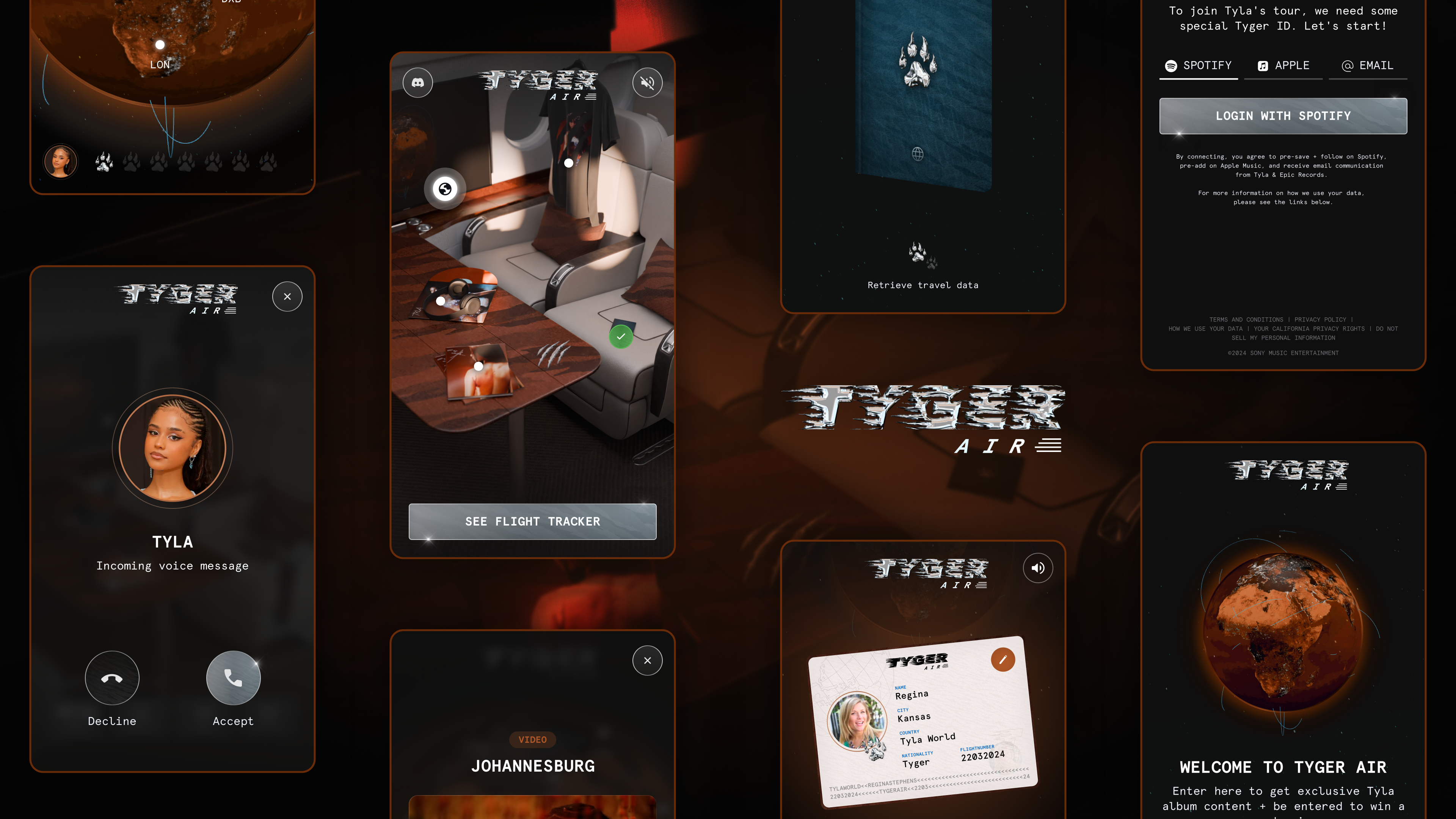
Tyger Air interactive fan experience for artist Tyla

Tyger Air: an immersive 3D fan experience built for artist Tyla

The three mechanisms that make interactive storytelling powerful

1. Choice creates ownership

When a user decides which path to take through a story, the outcome feels like their outcome. They built something. That ownership translates into stronger brand associations and higher engagement.

2. Discovery fuels curiosity

Interactive formats that let users discover rather than receive tap into a fundamental human drive: curiosity. This is particularly powerful in entertainment and retail. In our Rituals Journey to Hamani campaign, we let users literally travel through a brand world to uncover products.

3. Progression motivates return

A story with layers, levels, or daily reveals gives people a reason to come back. This is the principle behind advent and seasonal campaigns, but also behind always-on loyalty mechanics.

How to structure an interactive brand narrative

A strong interactive brand story has three layers.

The world is the frame within which everything happens. This is the visual and emotional universe of the brand. A seasonal world, a product landscape, or a playing field that matches brand values.

The role is what the user gets to be or do. Player, explorer, rescuer, creator. The more concrete the role, the stronger the sense of involvement.

The reward is the reason to continue. This does not always need to be a prize. Story progression, new content, a badge, or a personal result works just as well.

In the Warner Music Ed Sheeran Equals campaign, we combined all three layers: fans were given a role in the album's world, discovered content through gameplay, and saw their own engagement reflected back in the campaign.

4xhigher brand recall with interactive formats versus passive content
68%of interactive campaign participants actively share the experience
3xmore time users spend inside interactive brand worlds

Interactive storytelling formats that work

Not every format suits every brand or objective. These are the ones we deploy most at Livewall:

Narrative games are full story experiences where users make choices that shape the outcome. Best for product launches, seasonal campaigns, and fan activations.

Personalised journeys adapt the story based on user responses or behaviour. Every participant experiences a slightly different narrative, which deepens the feeling of relevance.

Discovery formats let users explore a brand world and find content or products at their own pace. This works especially well for brands with a rich product portfolio or a strong visual universe.

Social narratives build a shared story where users contribute together. Collective challenges, community missions, or campaigns where user participation shapes the story itself.

At Livewall, we always design these formats from a concrete brand objective, not from the technology. Our interactive campaigns service is built around this principle.

What interactive storytelling is not

Adding a quiz to a blog post is not interactive storytelling. Neither is a poll in an Instagram Story.

Interactive storytelling starts with a narrative. There needs to be a world, a tension, a progression. The interaction is how the audience enters that world. It is not a standalone feature bolted on top.

The most common mistake we see: brands apply gamification marketing without any story underneath it. The result is an activity, not an experience. People participate, but nothing sticks.

The story is the foundation. Everything interactive serves that story.

Livewall

A quiz is not a story. A world you can enter, a role you can play, an outcome that reflects your choices: that is a story.

Livewall

Ready to make your brand story interactive?

At Livewall, we design interactive formats that fit your brand and audience. From first concept to technical execution. Tell us what you want to achieve.

Get in touch with our team

What we do

Livewall builds brand experiences that people actually remember — interactive campaigns, loyalty platforms, digital products, and employer branding for ambitious brands.

Our work

We've worked with HEMA, Stabilo, Wehkamp, Efteling, 9292 and many others. Every project starts with the same question: what would make someone actually want to do this?

Talk to us

Working on something similar? We'd love to hear about it.

Contact Livewall →