


livewall
← All articles
Loyalty27 April 2026·Livewall

Gamification for retail loyalty: how to make shopping feel like a game

Retail loyalty is transactional by default. Gamification gives customers a reason to engage that isn't purely financial, and that's where real retention is built.

gamificationloyalty-programsretail

Most retail loyalty programmes follow the same script. Buy something, earn points, redeem for a discount. Repeat. The model works on paper, but it doesn't build much of a relationship. What it actually teaches customers is to wait for the next promotion rather than stay genuinely connected to the brand.

Gamification changes that. Not because game mechanics are magic, but because they shift the reason a customer comes back.

At Livewall, we design and build gamified loyalty programmes for retail brands that want more than repeat transactions. They want customers who actively participate.
Livewall perspective

Points programmes earn the purchase. Games earn the habit. Those are very different things.

What gamification actually adds to a loyalty programme

Gameification for retail isn't a cosmetic layer on top of an existing programme. It's a different way of designing behaviour.

Traditional loyalty rewards the transaction. Gamification rewards participation. A daily check-in, a completed challenge, a product discovery, a shared moment. Each of those interactions deepens the relationship between customer and brand, independent of whether anything was purchased.

The commercial logic is straightforward. Customers who return more often also buy more often. And customers who actively engage with a brand environment are less likely to switch when a competitor offers a slightly lower price. The barrier to leave is higher because the relationship is richer.

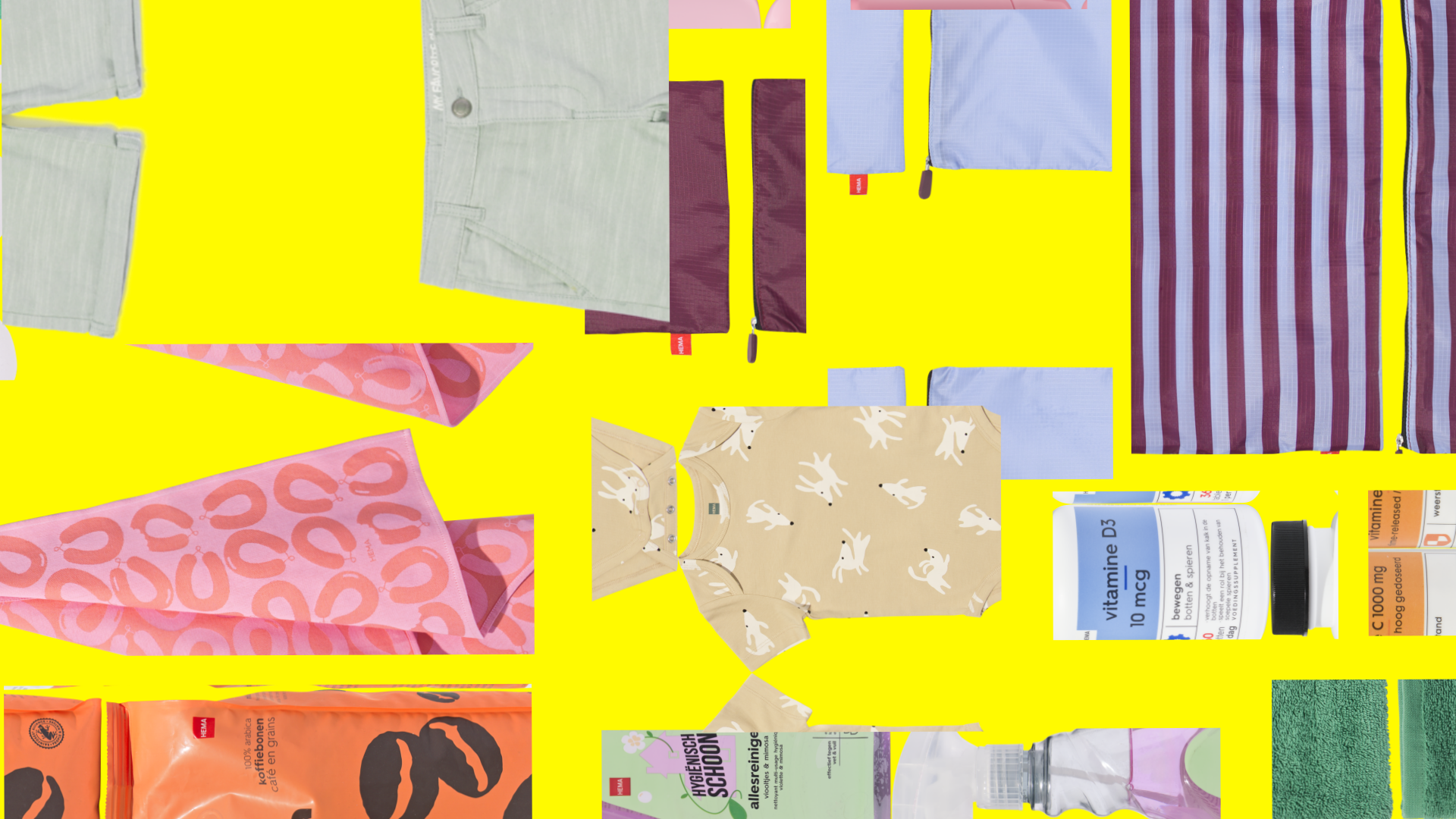
HEMA Stapelgek gamified loyalty campaign

HEMA Stapelgek: daily app interaction as a loyalty mechanic

The mechanics that work in retail

Not every game mechanic translates to a retail context. Based on what we've found actually drives behaviour:

Daily return actions. Something to do every day, even without a purchase. A spin, a mini-challenge, a surprise reveal. This builds a habit that exists independently of buying intent, but keeps the customer close to the brand.

Progress visualisation. A bar filling up, a badge almost unlocked, a level within reach. Visible progress motivates continuation. It's the same reason people finish challenges they could easily abandon.

Time-limited challenges. Seasonal events, weekly missions, flash moments. Scarcity and urgency are powerful motivators. They give customers a reason to act now rather than come back later, and sometimes not at all.

Social mechanics. Inviting friends, comparing scores, unlocking something together. Social elements multiply engagement, especially with younger audiences.

3xhigher return frequency in gamified loyalty programmes compared to purely transactional ones
60%of active users return daily in loyalty programmes with daily game interaction built in
2xmore first-party data per user collected through gamified mechanics versus standard forms

What this looks like in practice

A clear example is how Wehkamp Wanna Have Days approached seasonal engagement. Customers returned daily to unlock digital cards with discounts, gift ideas, and prizes. Not because they had a specific purchase in mind, but because the game pulled them back. That frequency increased product exposure and drove higher conversion across the event period.

The same principle scales globally. With McDonald's Spain MyMcDonald's World, we built a gamified 3D loyalty world inside the app. Mini-games, seasonal areas, and characters turn the app into a destination rather than a tool. Users come back between meal occasions, which is exactly where habitual loyalty is formed.

The key insight: a well-designed game works even when there is no immediate purchase intent. That's precisely where loyalty is built, in the space between transactions.

First-party data as a side effect

One underrated benefit of gamification for retail is the data it generates. Every interaction is a signal. Which challenges does someone complete? Which categories do they explore? Which reward do they choose?

That's richer intelligence than purchase history alone. At Livewall, we integrate first-party data mechanics directly into loyalty experience design, so every gameplay session also enriches the customer profile. Personalisation downstream becomes substantially more effective.

The combination of higher engagement and richer data is why a gamified loyalty approach delivers far more than a purely transactional one, even when the game mechanics themselves are relatively simple.

Where gamification goes wrong

Gameification works when it's designed well. It fails when it's added as an afterthought. Three mistakes we see consistently.

Too complex. A game that requires five minutes of explanation won't get played. The best gamified experiences are immediately understood. One action, one outcome, one reward. Friction is the enemy.

No ongoing pull. A one-time game mechanic doesn't build a habit. You need returning moments, fresh content, new challenges. Without that structure, engagement drops sharply after the first session.

Irrelevant rewards. If the prize at the end of a loyalty challenge doesn't fit what the customer actually wants, the mechanic loses its power quickly. Reward relevance is as important as the game design itself.

The answer is always in the design process. Gamification for retail starts with a behavioural objective, not with a game concept.

Livewall

Want to know how gamification can strengthen your retail loyalty programme?

At Livewall, we design loyalty experiences that give customers a reason to return that goes beyond the next offer. Get in touch and we'll explore what works for your brand and audience.

Get in touch with our team

What we do

Livewall builds brand experiences that people actually remember — interactive campaigns, loyalty platforms, digital products, and employer branding for ambitious brands.

Our work

We've worked with HEMA, Stabilo, Wehkamp, Efteling, 9292 and many others. Every project starts with the same question: what would make someone actually want to do this?

Talk to us

Working on something similar? We'd love to hear about it.

Contact Livewall →