


livewall
← All articles
Engagement22 March 2026·Livewall

Fake out-of-home in 2026: what FMCG brands are getting wrong

FOOH has gone from experimental to mainstream, and now most of it looks the same. Here is why most FMCG FOOH campaigns are missing the point and what the good ones do differently.

campaignssocial-mediafmcg

FOOH is the new 'viral video'

A product floating through a city street. A giant can bursting through a building facade. A mascara wand painting the side of a train. Two years ago, fake out-of-home was shorthand for creative ambition. Now it is a template.

At Livewall, we watch closely how brands use digital campaigns to create real engagement. And FOOH marketing reveals a clear pattern: most FMCG brands are making the exact same mistake. They invest in the visual, but not in the reason to watch.
Livewall perspective

FOOH without context is just a nice render. A nice render goes viral for two days and is then forgotten.

Mistake 1: using FOOH as a substitute for an idea

The technology has become more accessible. That is good news for smaller brands. It is bad news for the overall quality of the work.

When a FOOH video tells no story, creates no feeling, and gives no reason to click further, the brand has used the technique as the idea. That does not work. Audiences recognise the difference between a concept that happens to be executed as FOOH, and a FOOH stunt that is simply a pretty visual with nothing behind it.

The best FOOH campaigns are built on a sharp idea that cannot come to life any other way. The visual is the expression of the idea, not the idea itself.

Mistake 2: no mechanism to carry people forward

A FOOH video might rack up a hundred thousand views. Great. Then what?

Most FMCG FOOH campaigns stop at the video. There is no interaction, no next step, no way for the viewer to stay connected to the brand after those thirty seconds. That is a missed opportunity.

Brands that take FOOH marketing seriously connect the video to a follow-up experience. That could be an interactive activation, a filter, a game, an in-store action. Something that lets the audience become part of the story themselves.

At Livewall, we see this as a fundamental difference in mindset: is the goal a moment, or a conversation?

Mistake 3: wrong platforms, wrong expectations

FOOH works best on platforms where people share content because it is surprising or unseen. TikTok and Instagram Reels are its natural home. But many FMCG brands launch FOOH on channels where their audience is not expecting it, or in a format that does not match how people scroll on that platform.

The length is off. The subtitles are missing. The first three seconds are not sharp enough to stop the scroll. The visual is beautiful but the composition was built for a billboard four metres wide, not a phone screen in portrait.

A FOOH campaign is always a social-native content question as well. Platform-specific production is not optional.

3 secaverage time before a user scrolls on if there is no hook in the opening frames
2 daysaverage shelf life of a viral FOOH video with no follow-up activation
6xhigher engagement for FOOH campaigns connected to an interactive mechanic

What the good campaigns do differently

The FOOH campaigns that stick do three things well.

They start with a feeling, not a format. Not: 'we want to launch our new product with FOOH'. But: 'we want people to see this and think: that cannot be real, can it?' The feeling of disbelief, wonder, or recognition is the engine. The technique serves that feeling.

They are built on brand context. FOOH works best when the visual says something about the brand, not just about the technology. If someone watches the video and cannot tell which brand made it, it is a showcase for the VFX studio, not a campaign.

They think beyond the video. The best FOOH is the start of a larger activation. The video grabs attention. What comes next builds the relationship. At Livewall, we call this branded play experiences: experiences that extend beyond the initial moment and give audiences somewhere to go.

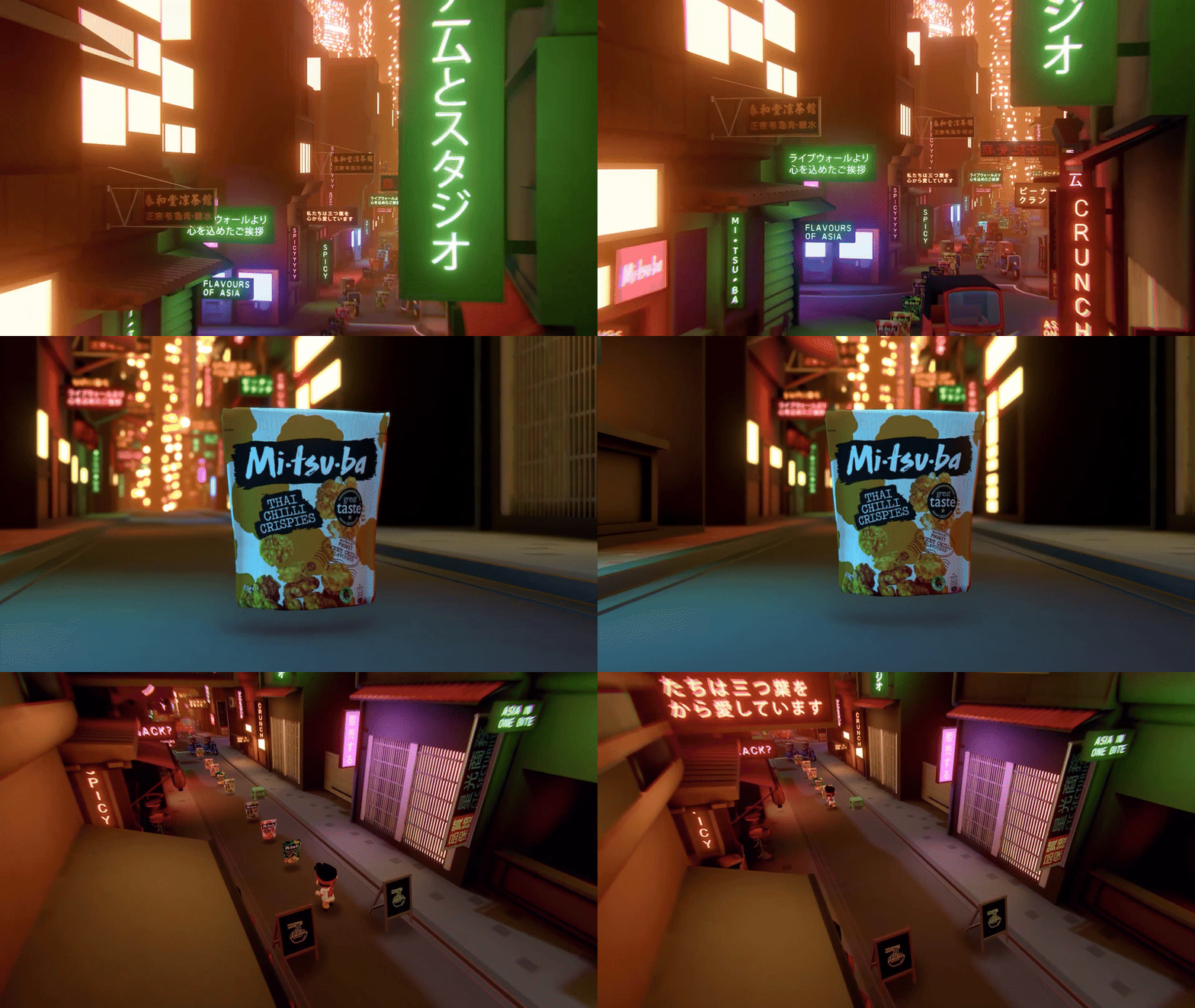
Mitsuba Spice Rush gamified brand activation

Gamified brand activation for Mitsuba: engagement through interaction, not passive viewing.

What FMCG brands can change right now

A few practical shifts we consistently see make a difference at Livewall:

  • Brief differently. Do not start with the format (FOOH), start with the feeling or behaviour you want to create in the consumer. FOOH can be the answer, but it is rarely the right starting point.
  • Build a funnel. Even a simple next step, a prize mechanic, a filter, a promotional code page, significantly increases the campaign value.
  • Test it without sound. If the video loses its power without audio, the composition is not built for mobile.
  • Connect it to something tangible. FOOH that links to an in-store action, a product launch, or a community moment has a reason to exist beyond the algorithm.

Livewall

Want a FOOH campaign that goes beyond the view?

At Livewall, we build brand activations that start with an idea and end with real engagement. Whether that is through FOOH, a branded game, or an interactive campaign, we always look beyond the moment.

Get in touch with our team

What we do

Livewall builds brand experiences that people actually remember — interactive campaigns, loyalty platforms, digital products, and employer branding for ambitious brands.

Our work

We've worked with HEMA, Stabilo, Wehkamp, Efteling, 9292 and many others. Every project starts with the same question: what would make someone actually want to do this?

Talk to us

Working on something similar? We'd love to hear about it.

Contact Livewall →