

livewall
← All articles
Engagement27 February 2026·Livewall

Cross-channel engagement campaigns: how to keep the story consistent

Campaigns that work across email, social, app, and in-store need more than a shared visual identity. Here is how to design for coherence without duplicating every element.

campaignsbrand-activationsocial-media

A campaign running across multiple channels tends to fall apart in predictable ways. One team writes the email, another manages social, the in-store activation gets plugged in at the last minute. The result: the same brand colour on every screen, but a story that makes sense nowhere.

This is one of the most common patterns we see at Livewall on large-scale campaigns. Visual consistency gets confused with narrative consistency. And they are two very different things.

Visual consistency means everything looks the same. Same font, same colour, same logo.

Narrative consistency means the user experiences the same emotion and intent regardless of which channel they enter through. That is much harder to achieve, but it is what separates a campaign that feels like one experience from a campaign that feels like disconnected parts.

Livewall perspective

Consistency is not about repetition. It is about holding one emotional thread, regardless of where a user enters the campaign.

Start with the story layer, not the channel layer

The most effective cross-channel engagement campaigns do not start with 'what do we do on Instagram?' They start with 'what should the user feel, know, or do?'

That sounds obvious, but in practice campaign briefs are almost always structured by channel. There is a budget per channel, a KPI per channel, an owner per channel. So each channel goes its own direction.

At Livewall, we work out the campaign as a single story first. What is the central promise? What is the emotional core? What action are we trying to trigger? Only once those layers are clear do we translate them into channel-specific expressions. A social post behaves differently from an in-app notification, but both come from the same story.

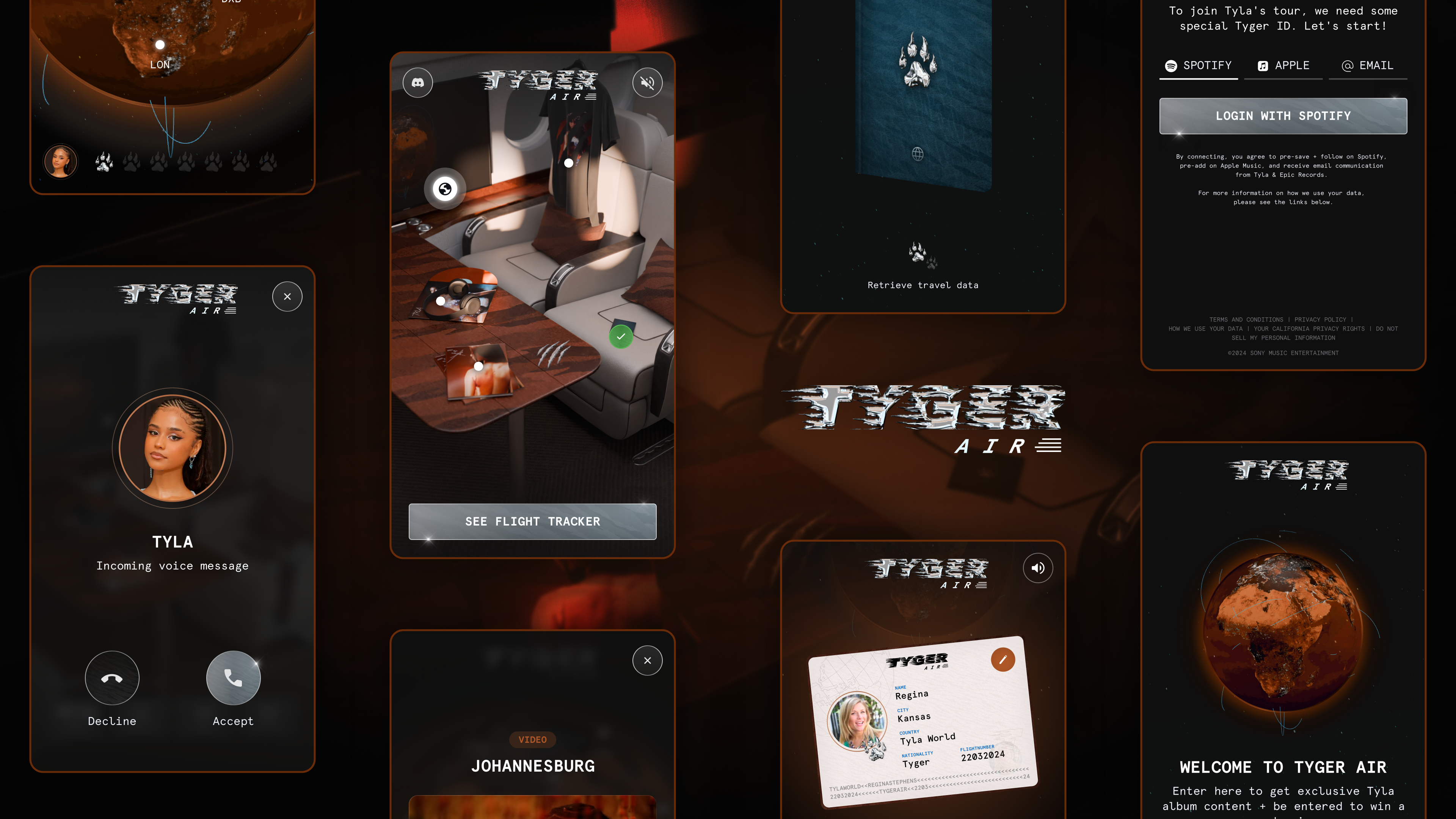
We applied this approach to Tyger Air, a cross-channel fan experience for artist Tyla. The digital passports, the gamification layer, and the social activations were visually distinct per platform, but they all told the same story: you belong to this world.

The three layers of cross-channel coherence

Based on the campaigns we have built, there are three layers you need to hold in balance.

1. Emotional coherence Every channel needs to activate the same state of mind. For a loyalty campaign that is usually: 'I am being rewarded for my behaviour.' For a brand activation: 'this brand gets me.' Define that emotion explicitly before you design a single pixel.

2. Narrative coherence The story needs to develop across channels without requiring the user to follow all of them. Someone who only uses the app should understand the campaign. But someone who also reads the email and sees the social post should get a richer experience. Think in layers, not in isolated messages.

3. Functional coherence The actions you ask of users on each channel need to connect. If a social post asks someone to open the app, that app must deliver exactly on the promise the post made. If an email promotes an offer, that offer must be immediately recognisable on the landing page. Breaks in the flow cost you conversion.

3xhigher participation rate in campaigns with a consistent narrative layer across channels
67%of users drop off when a social post's promise does not match the landing experience
4+average number of channels a Livewall engagement campaign runs across

Channel-native execution without losing the thread

One of the biggest tensions in cross-channel work: every channel has its own language. TikTok demands something different from an in-store activation. An email behaves differently from a push notification. How do you keep the story intact without posting the same thing everywhere?

The answer is a shared campaign concept that is flexible enough to carry channel-native expressions. We call this a 'story platform': a central metaphor or mechanic that takes its own form on each channel but is unmistakably from the same source.

For the Martin Garrix Dream Team campaign, rolled out across 14 countries, the central mechanic was the Spotify integration: your music profile as your identity in the campaign. On social, that was about your favourite tracks. In the app, it was about your personal stats. On the landing page, it was about building your dream team. Three channel-native expressions, one mechanic.

This works because instead of asking 'how do we translate this message to this channel?' you ask 'which side of this story fits this channel?'

The role of data in cross-channel consistency

A cross-channel campaign without shared data is like a story told by multiple narrators who have never read each other's lines. You cannot give your audience a coherent experience when every channel is meeting them for the first time.

In the interactive campaigns we build, we make sure behavioural data from one channel informs the experience on another. Has someone completed a quiz on social? The in-app content adjusts to that. Does someone have a purchase history in-store? The email becomes more relevant.

This is also why first-party data mechanics matter so much in cross-channel engagement campaigns. Not just for targeting, but for the user experience itself. A user who is recognised across channels experiences the campaign as a single whole rather than as separate messages.

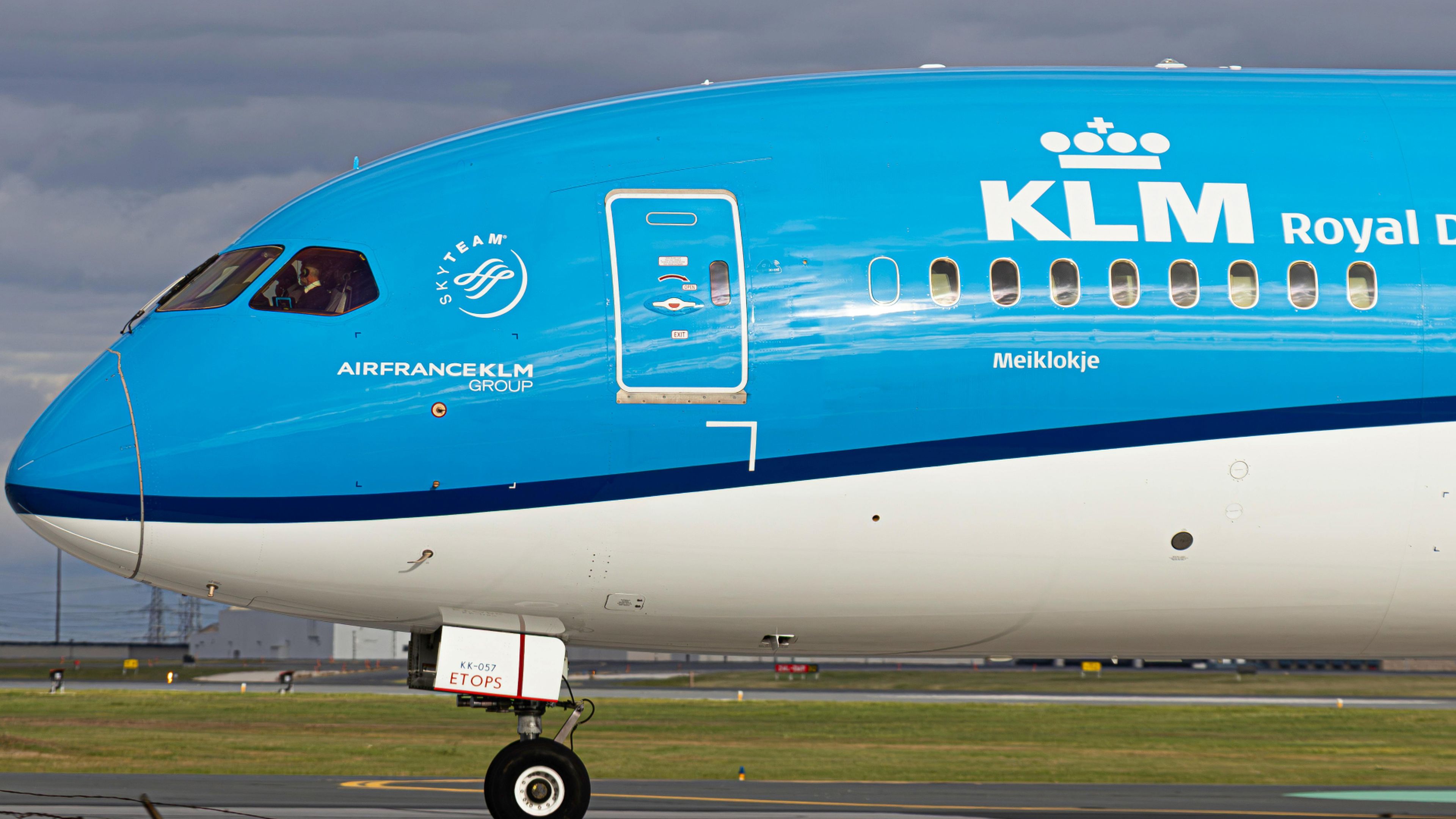
KLM has embedded this principle into their global campaign infrastructure, where cross-channel consistency is not managed manually but structurally guaranteed through a scalable content system we built together.

KLM scalable growth case enabling cross-channel campaign consistency across 50+ markets

KLM scales cross-channel campaigns across 50+ markets through an AI-driven content infrastructure.

How Livewall approaches cross-channel differently

Many agencies design a campaign concept and then deliver separate channel work independently. At Livewall, we work differently. We design the campaign as a system, where every channel gets its role in the story assigned upfront.

That also means thinking early about the transition points. Where do users switch channels? What do they already know at that moment? What can we assume and what do we need to repeat? We answer those questions in the concept phase, not in retrospect.

We also build the technical connections that support cross-channel coherence wherever possible: shared identifiers, campaign status synchronisation, consistent URL structures. Technology in service of story.

The result is that users experience the campaign as one brand moment, even if they only encounter two of the five channels. That is the goal of brand activations that actually work.

Livewall

Want to build an engagement campaign that tells the same story on every channel?

At Livewall, we design cross-channel engagement campaigns as one coherent system. We work with you from brief to launch. Get in touch and tell us about your campaign.

Get in touch with our team

What we do

Livewall builds brand experiences that people actually remember — interactive campaigns, loyalty platforms, digital products, and employer branding for ambitious brands.

Our work

We've worked with HEMA, Stabilo, Wehkamp, Efteling, 9292 and many others. Every project starts with the same question: what would make someone actually want to do this?

Talk to us

Working on something similar? We'd love to hear about it.

Contact Livewall →