

livewall
← All articles
Loyalty12 January 2026·Livewall

Why most loyalty programmes fail before they launch

The failure isn't in the mechanics, it's in the brief. Most loyalty programmes are designed around the brand's needs, not the customer's behaviour.

loyalty-programscrmretail

Most loyalty programmes launch with ambition and settle into low engagement within three months. The technology worked. The reward catalogue looked fine. The brief was signed off. And still, barely anyone opened the app after week two.

At Livewall, we see this pattern often. Brands design a programme with clear internal logic: reward purchases, build tiers, re-engage churned customers. The mechanics are coherent. The problem is that the brief was built around what the brand wanted to measure, not around what the customer actually cares about.

That gap, between brand objective and customer motivation, is where most programmes quietly fail.

Livewall perspective

A loyalty programme built around the brand's KPIs will always struggle to change customer behaviour.

The brief is where it goes wrong

Most briefs for loyalty program design start with an internal question: how do we increase purchase frequency? How do we get customers back into the app? Those are legitimate goals, but they are the brand's starting point, not the customer's.

Customers don't open a loyalty app because the brand wants to see them. They come back because the experience gives them something: enjoyment, value, recognition, a sense of progress. If the brief doesn't acknowledge that, the programme becomes a promotional system wearing loyalty clothing.

Three patterns keep appearing in programmes that underperform:

Pattern 1: Points as the only language. Points are neutral. They communicate no value and create no connection. A programme that speaks only in points asks customers to calculate instead of feel.

Pattern 2: Rewards that benefit the brand more than the customer. Discount vouchers with minimum spend requirements. Merchandise nobody wants. Rewards only motivate when they align with something the customer already wants to do.

Pattern 3: No behavioural design. Loyalty isn't a side effect of a points balance. It's the result of repeated positive behaviour. If the programme contains no specific behavioural triggers, the member count grows on paper while engagement stays flat.

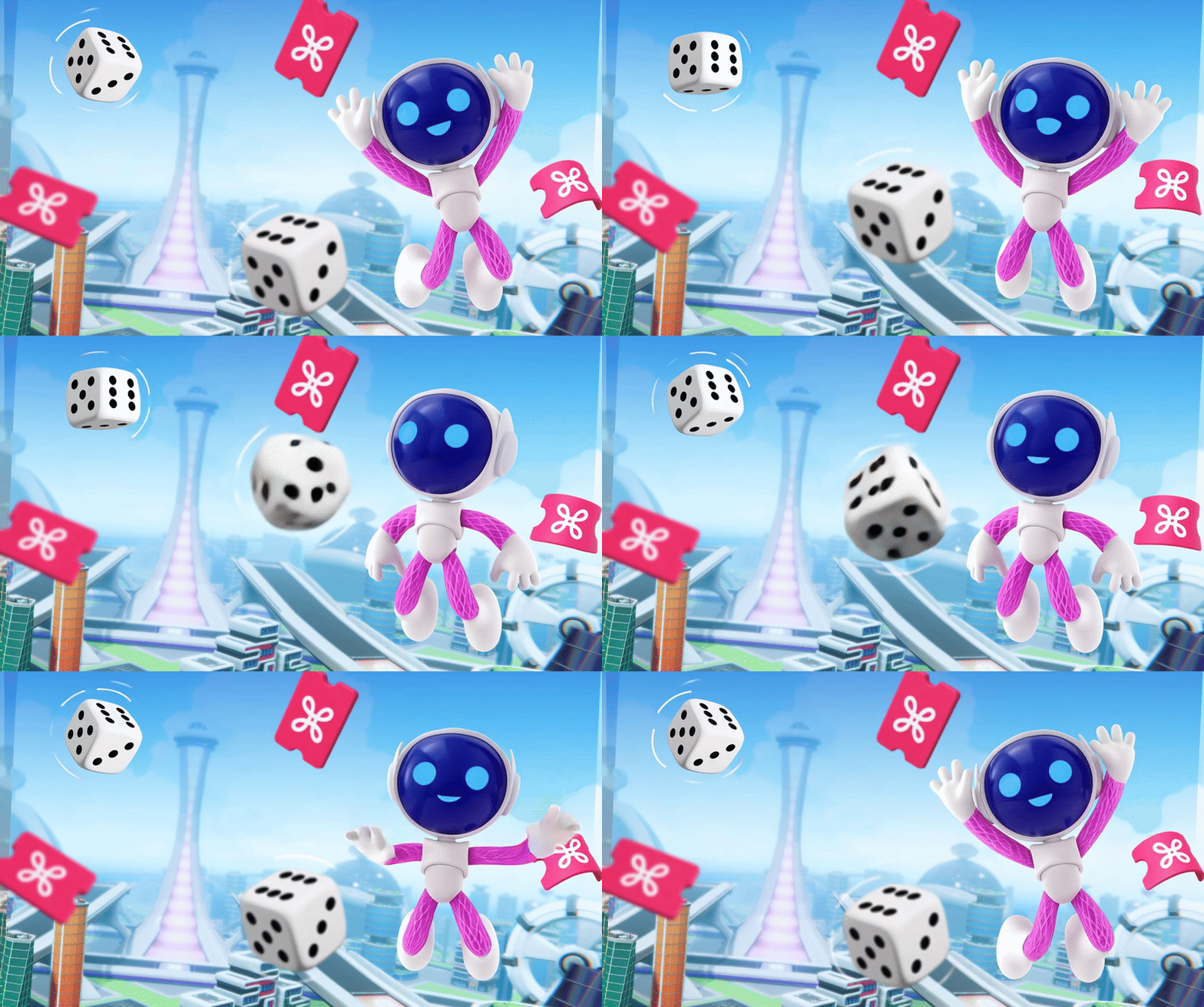
HEMA Stapelgek loyalty gamification campaign

HEMA Stapelgek: daily return driven by game mechanics, not discounts

Behaviour first, mechanics second

Good loyalty program design starts with a behaviour question: which specific behaviour do we want to see more of, and what motivates the customer to do it? Only then do you choose your mechanics.

With HEMA Stapelgek, the question wasn't 'how do we build a loyalty app'. It was: how do we make daily interaction with HEMA enjoyable enough that customers come back by choice? The answer was a game mechanic that let customers 'stack' new cards daily through the app, tied to real store visits. Engagement grew not because the programme existed, but because it connected to a concrete customer behaviour.

The same thinking applied to Decathlon's always-on loyalty programme. It rewards movement, not just purchases. That's a fundamentally different choice: instead of asking 'buy more', the programme asks 'move more'. That alignment with the customer's own values is precisely what makes it work.

What works: four design principles

After years of loyalty work for retailers, FMCG brands, and telecoms, Livewall has a set of design principles that consistently make the difference.

1. Design from the target behaviour, not the reward structure. Ask yourself: if this programme is successful, what specific behaviours are customers showing more often? Start there, and build the mechanics from that point outward.

2. Make progress visible. People are motivated by momentum. A points balance is abstract. A visual progress bar, a badge, a level: these are concrete signals of movement. Gamified loyalty works because it makes progress tangible.

3. Rewards need to resonate emotionally. The best rewards aren't the most expensive. They're the most relevant. Early access to a collection, an exclusive experience, recognition within the community: these are rewards customers feel they've earned, not just received.

4. Design for return, not just activation. Many programmes are good at recruiting sign-ups and poor at pulling people back. Build return moments into the structure: daily challenges, seasonal content, personal milestones.

70%of loyalty members become passive after the first month
3xhigher engagement in programmes with gamification mechanics
40%higher retention when reward relevance is optimised for the customer

The brief as a design tool

The brief isn't an administrative document. It's where the fundamental choices are made: who is this programme for, what behaviour should it change, and how will we know if it's working?

A good brief asks hard questions. Who is the customer outside the purchase funnel? What are they doing when they're not buying? Which moments in their life can we make relevant? What do they actually deserve in return for their loyalty?

Without those questions, you end up with generic mechanics that nobody associates with your brand. With them, you end up with a programme people actually want to use.

Proximus+ World is a clear example. The strength wasn't the points system. It was the world Proximus built: a digital environment where customers had something to actively discover. The loyalty value lived in the experience, not the transaction. That shift in thinking starts in the brief, long before a single mechanic is chosen.

Livewall

Want a loyalty programme that actually brings customers back?

At Livewall, we start with the behaviour question, not the platform decision. Get in touch and we'll work through whether there's a smarter way to build what you need.

Get in touch with our team

What we do

Livewall builds brand experiences that people actually remember — interactive campaigns, loyalty platforms, digital products, and employer branding for ambitious brands.

Our work

We've worked with HEMA, Stabilo, Wehkamp, Efteling, 9292 and many others. Every project starts with the same question: what would make someone actually want to do this?

Talk to us

Working on something similar? We'd love to hear about it.

Contact Livewall →