

livewall
← All articles
Loyalty13 January 2026·Livewall

Why loyalty programmes need an emotional core, not just a rewards catalogue

Discounts and free products keep people enrolled. They don't create loyalty. Here is what the programmes that generate genuine emotional attachment do differently.

loyalty-programscrm

Most loyalty programmes are discount schemes with a card. They reward transactions. They track return visits. But they do not build attachment.

The gap between emotional loyalty vs transactional loyalty is not a subtle one. A customer who stays because you have the lowest price leaves the moment someone else undercuts you. A customer who feels connected to your brand, shares your values, or feels like they belong to something, is motivated by something far harder to compete with.

At Livewall, we design and build loyalty programmes for consumer brands in retail, entertainment, and FMCG. What we see consistently: the programmes that actually work are not the ones with the most generous rewards catalogue. They are the programmes that stand for something.

Livewall perspective

Transactional loyalty buys behaviour. Emotional loyalty builds identity. Only the second one survives a price comparison.

What emotional loyalty actually means

Emotional loyalty does not come from adding more points or lowering the threshold for a free product. It comes from making someone feel that participating says something true about who they are.

There are a few ways this gets built:

Identity. Your programme connects to how members see themselves. A sports brand that rewards movement, not just purchases, speaks a different language than a stamp card.

Community. People want to belong somewhere. Programmes that create that sense of belonging build a form of connection that is genuinely hard for a competitor to copy.

Progression. The feeling of working towards something, unlocking something, achieving something. Not as a gimmick, but as real meaning.

Ritual. Daily or weekly return that feels like a habit the person has chosen, not a task they have been asked to complete.

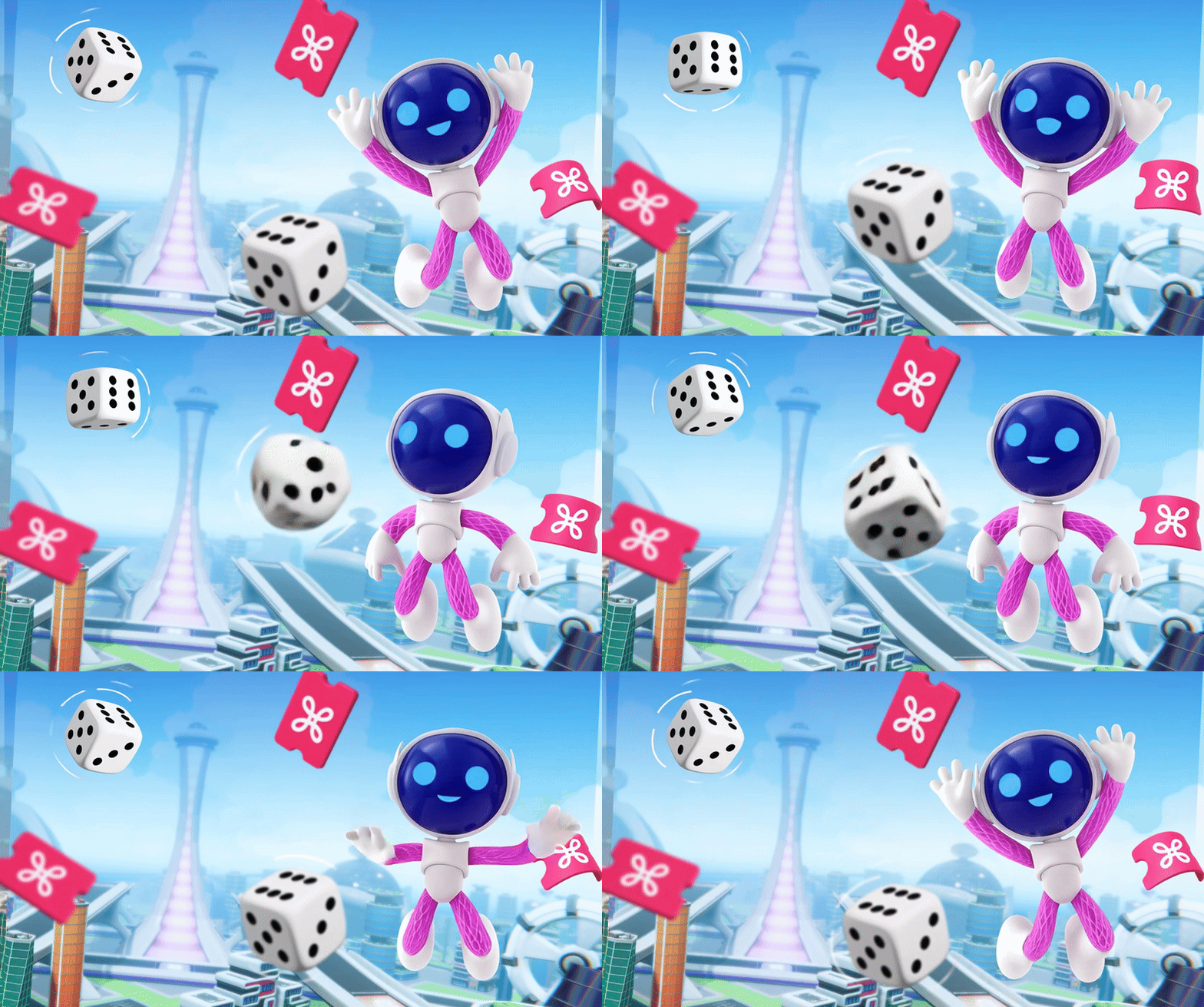
HEMA Stapelgek loyalty programme with game mechanics

HEMA Stapelgek: everyday purchases turned into reasons to play

Where most programmes get stuck

The problem with most loyalty programmes is not the reward level. It is the design architecture.

Programmes are typically built from the question: 'What do we want customers to do?' Rather than: 'What do we want customers to feel?'

That leads to programmes that treat members as transaction machines. Buy this, get that. It works in the short term. But it does not build preference. It builds sensitivity to the next best deal.

Every programme we've built that has delivered real retention results started from a different question: what feeling should participation create? From there, we work backwards to the mechanics, the technology, and the reward structure.

That is the heart of the emotional loyalty vs transactional loyalty distinction: not what people earn, but what they experience.

3xhigher return rates in programmes with emotional connection versus purely transactional ones
67%of loyalty members are inactive within three months of signing up
5xhigher lifetime value among members who describe themselves as brand fans

How to build emotional connection into a programme

These are the design principles we apply when working on loyalty system design:

Start with brand values, not mechanics. What does your brand stand for? A sports brand centred on movement builds differently from a beauty retailer that celebrates ritual and self-care. The mechanics need to reflect those values, otherwise participation feels hollow.

Make participation meaningful independent of the reward. If the only reason to engage is the discount, you have a promotion, not a loyalty programme. Design moments that are valuable in themselves: content, community, recognition, progress.

Use gamified loyalty purposefully. Game mechanics work well when they fit the context. They backfire when they feel forced. A challenge that aligns with the brand and the member strengthens connection. A random points mechanic does not.

Design for return, not for sign-up. Most programmes are optimised for registration. The interesting question is what brings someone back for their second, third, and fifteenth visit when there is no big reward on the horizon.

Measuring what actually matters

A programme with emotional connection needs different KPIs from a transactional one.

Do not only look at average order value and return frequency. Also track:

  • Active versus passive members (not just enrolled, but genuinely engaged)
  • Spontaneous participation (members returning without a push notification)
  • Social action (sharing, recommending, talking about the brand)
  • Sentiment data from reviews and community interactions

These signals tell you whether you are running a reward distributor or building a brand people want to belong to.

Livewall works with brands that take that distinction seriously. We design custom loyalty programmes that start from behavioural psychology and end in technical systems that support that behaviour. From strategy through to platform, from mechanics through to measurement.

Livewall

Ready to build loyalty that goes deeper than discounts?

At Livewall, we design loyalty programmes that start with how participation should feel, not what it should cost. Get in touch if you want to talk about building genuine emotional loyalty for your brand.

Get in touch with our team

What we do

Livewall builds brand experiences that people actually remember — interactive campaigns, loyalty platforms, digital products, and employer branding for ambitious brands.

Our work

We've worked with HEMA, Stabilo, Wehkamp, Efteling, 9292 and many others. Every project starts with the same question: what would make someone actually want to do this?

Talk to us

Working on something similar? We'd love to hear about it.

Contact Livewall →