

livewall
← All articles
Engagement20 January 2026·Livewall

Why interactive campaigns outperform passive content on every metric that matters

Passive content gets consumed. Interactive campaigns get remembered. The difference shows up in recall, sharing, and conversion data across every category.

campaignsbrand-activationsocial-media

The problem with content that just sits there

A banner. A video. A social post. People see them, scroll past them, and forget them within seconds. Passive content asks nothing of the audience, and the audience gives very little back. No action, no emotional imprint, no memory that sticks.

Interactive campaigns work differently. They ask something of the participant, and that demand is precisely why they perform better. At Livewall, we design and build interactive campaigns for brands that want more than impressions. Brands that want people to act, return, and remember.

The performance gap is consistent across categories. Interactive formats outperform passive content on recall, sharing behaviour, and conversion. Not occasionally, but reliably. Understanding why helps you make better choices about where to put your campaign budget.
2xhigher brand recall from interactive versus passive formats
4xmore social sharing from gamified campaign experiences
70%of participants return when interactive mechanics are well designed

Why participation creates memory

When someone does something, they remember it. That is not a marketing claim. It is cognitive psychology. Active processing of information creates stronger memory traces than passive exposure. The brain encodes a choice differently from an image that passes by.

Interactive campaigns activate that active processing. They push participants into decisions, reactions, and expectations. Whether it is a quiz, a game, a personalised flow, or a leaderboard challenge, the underlying structure is the same. The user invests attention, and that investment translates into engagement.

For brands, this has a concrete implication. The probability that someone remembers which brand was behind an interactive experience is substantially higher than after a video or banner. And the brand remembered after a positive experience occupies a very different position in someone's mind than the brand seen between two other ads.

Livewall perspective

Passive content asks nothing of the audience. Interactive campaigns ask something, and that investment is exactly why they are better remembered.

Sharing behaviour as a measure of genuine engagement

One of the most concrete ways to see the difference is in sharing behaviour. People do not share content they passively consumed. They share achievements, scores, results, and experiences. The social impulse only arises when there is something to show.

Gamified campaigns provide that by nature. A score worth beating. A result that reflects your identity. A collection you built. These are not just campaign elements. They are social objects: shareable, discussable, comparable.

At Livewall, we have seen this pattern consistently across the campaigns we build. With gamified activations for retailers and FMCG brands, organic reach driven by sharing behaviour regularly accounts for a meaningful share of total reach. Not because we ask people to share, but because the mechanics naturally trigger that behaviour.

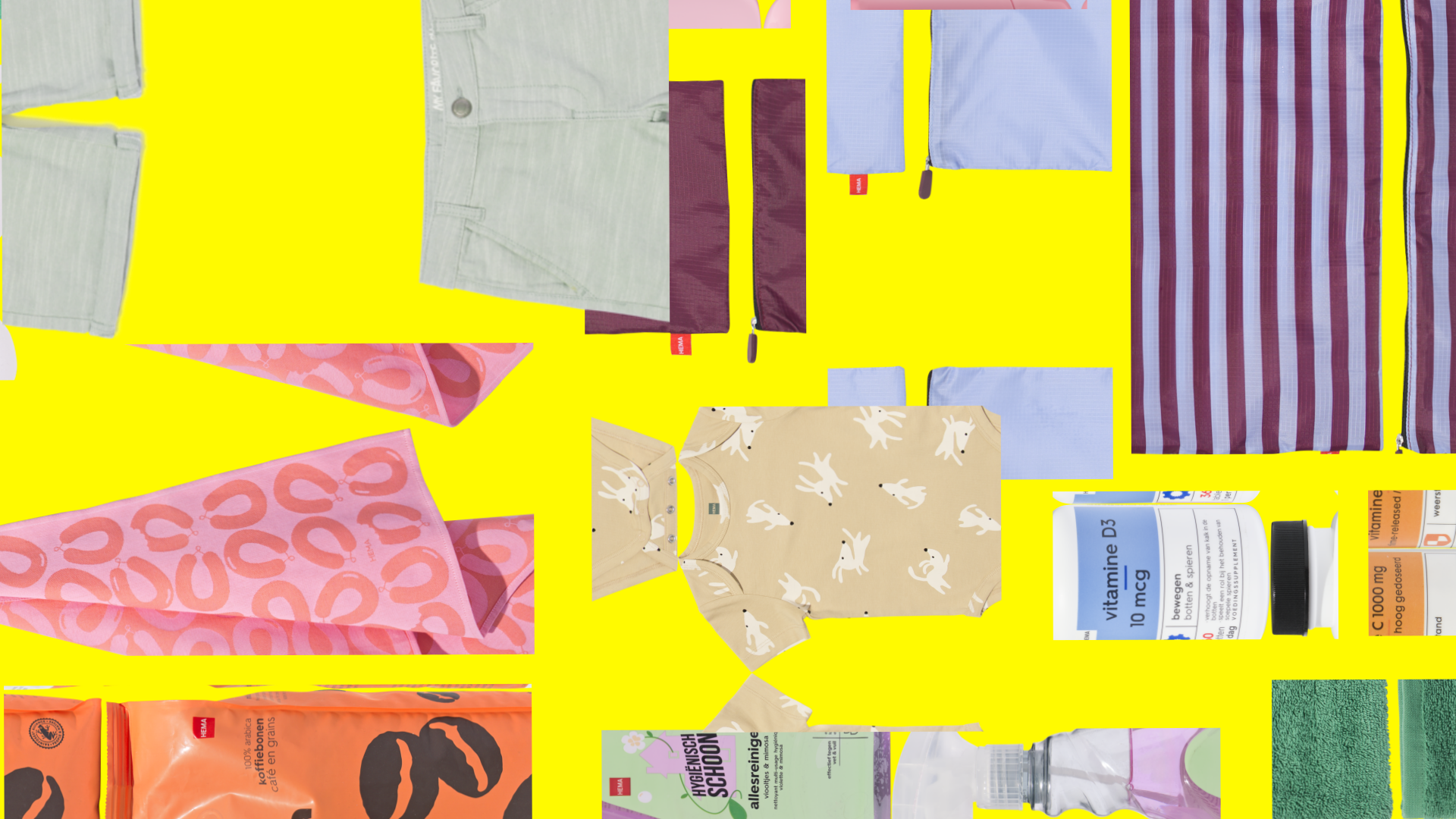
HEMA Stapelgek gamified loyalty campaign

HEMA Stapelgek: daily return loops built through gamification in the HEMA app

Conversion: where the data makes the case

Recall and sharing are valuable, but conversion is the proof. And here too, interactive campaigns win consistently.

The reason is mechanical. Someone actively engaged with a campaign is in a different mental state than someone who passively saw a banner. The threshold for the next action, whether that is a purchase, a sign-up, or a store visit, is lower after genuine engagement. Intent has already been partially activated.

The HEMA Stapelgek campaign showed this directly. Daily return through gamification linked measurably to app engagement and purchasing behaviour. Participants who actively engaged with the game mechanics made purchases more frequently than passive app users. That is not coincidence. That is design.

The same pattern appeared in Wehkamp Wanna Have Days, where seasonal gamification drove structurally higher repeat purchases during the campaign window.

What separates good interactive campaigns from bad ones

Not every interactive campaign performs well. A poorly designed mechanic is worse than no mechanic, because forced interaction frustrates. The quality of the experience determines whether engagement is genuine or superficial.

At Livewall, we work from three principles. First, the interaction must connect logically to the brand or product. A game that is disconnected from what you sell creates engagement with the game, not the brand. Second, the reward must be proportional to the investment. People who give time and attention to a campaign expect an experience that justifies it. Third, the mechanics must be shareable. Results, scores, and achievements need social weight.

Those three principles underpin every brand activation project we run. They apply to a one-off seasonal campaign and to long-running loyalty mechanics that stay active for months.

Livewall

Ready to move beyond passive content?

At Livewall, we build interactive campaigns that actually move people. Tell us what you want to achieve and we will show you what that looks like in practice.

Get in touch with our team

What we do

Livewall builds brand experiences that people actually remember — interactive campaigns, loyalty platforms, digital products, and employer branding for ambitious brands.

Our work

We've worked with HEMA, Stabilo, Wehkamp, Efteling, 9292 and many others. Every project starts with the same question: what would make someone actually want to do this?

Talk to us

Working on something similar? We'd love to hear about it.

Contact Livewall →