

livewall
← All articles
Strategy22 May 2026·Livewall

User retention strategy: how to design against churn at every product stage

Retention is cheaper than acquisition at every stage of a product's life. Here's how to build a retention strategy into the product itself, not just the CRM.

loyalty-programsdigital-productscrm

Retention is a design problem, not a CRM problem. That sounds obvious, but most brands treat it the other way around. They build a product, launch it, and then start thinking about how to bring people back. By that point, you're already behind.

At Livewall, we've found that the brands with the strongest retention numbers bake return visits into the product before it goes live. Not as a bolt-on feature, but as a foundational principle of the whole experience.

The right question is not: "How do we keep people?" It's: "Why would someone come back, and when?"

That shift changes everything about how you design.

Livewall perspective

Retention is a design problem. If you start thinking about it after launch, you're already playing catch-up.

Stage 1: onboarding decides whether anyone ever returns

The first session is the most critical moment for retention. Not the second. Not the third. The first.

Users decide within minutes whether a product is worth their time. If they don't experience value in that first session, no CRM campaign in the world will bring them back reliably.

Good onboarding does three things. First: it shows the core value as fast as possible. Second: it asks as little from the user as possible before that value lands. Third: it creates the first reason to return before the session ends.

That third point is the one most often skipped. Many products close out onboarding with "your account is set up." But the question you need to answer is: what's here for you tomorrow?

A solid UX/UI design approach always plants the next action inside the current session.

Stage 2: the first two weeks, the most underestimated window

After onboarding, you enter the most dangerous interval: days 2 to 14. Most users who churn do so here. Not because the product is bad, but because there's no reason to return at a specific moment.

What works at this stage is rhythm. Not push notifications as a spam campaign, but a logical pattern that fits how people actually use the product. Daily or weekly "reason to return" moments, based on what the user has already done.

Game mechanics work well here. Progress, streaks, collection goals, time-limited challenges. Not as decoration, but as structure for return behaviour.

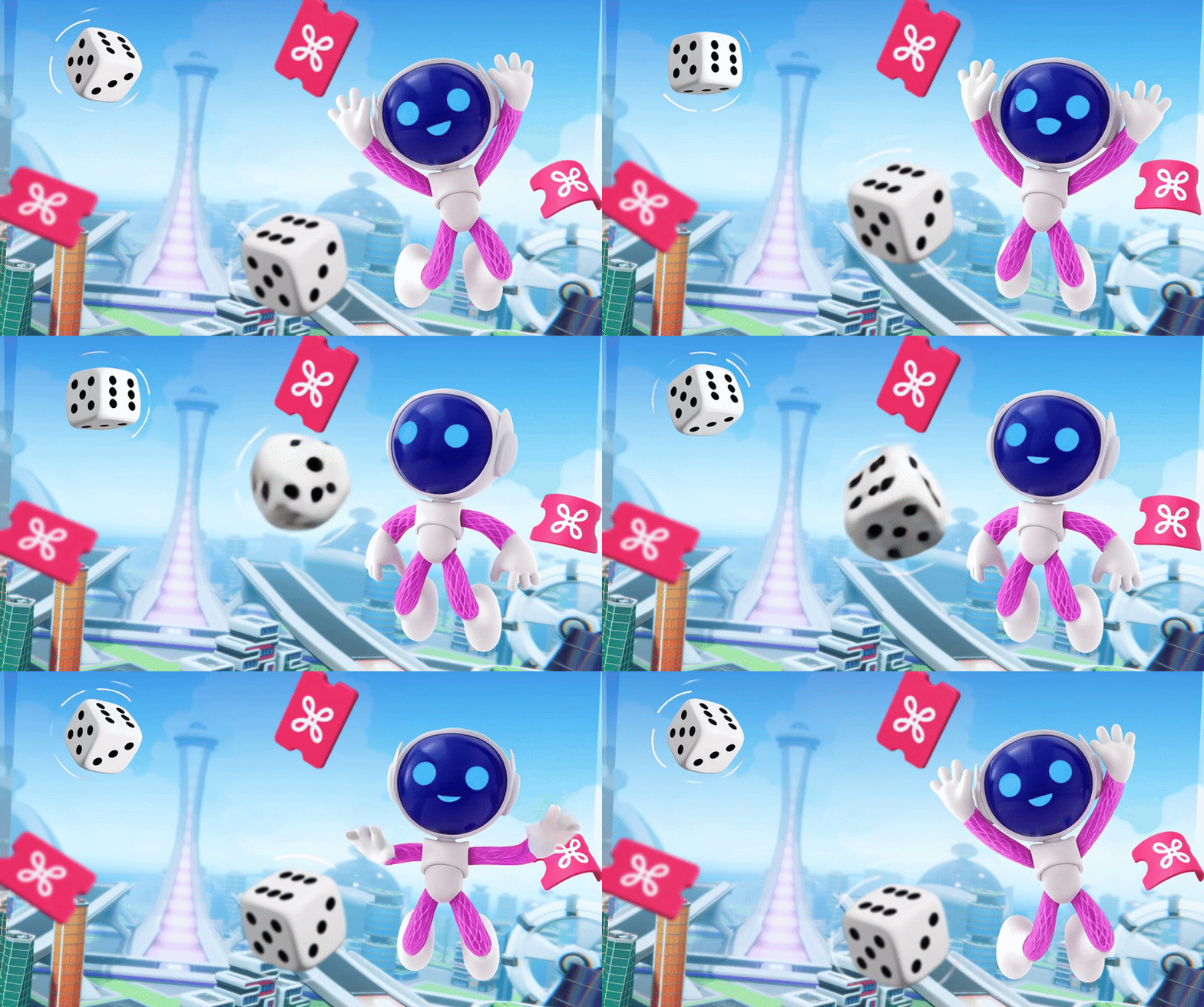
The McDonald's Spain MyMcDonald's World campaign is a strong example. By transforming the app into a 3D world with mini-games and seasonal areas, they gave users a reason to open the app every single day. The app became a destination, not just an ordering tool.

Stage 3: the middle phase, where retention does the hardest work

Once a user is past the two-week mark, the challenge shifts. You don't need onboarding anymore. You need depth.

People don't stay with a product because it was easy to start. They stay because the product grows with them. That means new content, new possibilities, new goals. Progression that feels meaningful, not arbitrary.

This is where loyalty program design plays a major role. Not a points system as a standalone element, but as a reflection of what the user has already invested in the product.

The Decathlon always-on loyalty campaign illustrates this well. Members are rewarded for everyday movement, not just for purchases. The loyalty layer connects to actual user habits rather than trying to replace them.

People's Postcode Lottery solves this differently. Their always-on web games are built around daily return. The postcode-based mechanics turn participation into a social ritual, giving users a shared reason to come back every day.

5xhigher customer value for users who return past the second week
70%of churn happens within the first 14 days after sign-up
3xhigher conversion when the next return is seeded in the first session

Stage 4: reactive retention, handling users on the way out

Even the best products lose users. Some people just get distracted. The question is not whether it happens, but when you spot it and what you do next.

This is where CRM earns its place, not as the first line of defence, but as a layer on top of a product that's already doing its job.

Effective reactive retention works at three levels. First, you signal on behaviour, not on time elapsed. Someone who was active three weeks ago and has gone quiet is a different signal from someone who never came back after their first session.

Second, you personalise the reason to return. A generic "we miss you" email rarely works. Referencing what someone last did, or surfacing a new goal that connects to their earlier behaviour, performs significantly better.

Third, you make sure there's something new to come back to. Reactive retention without product news is a dead end.

The Proximus+ World case shows how a digital environment can constantly offer new reasons to return by keeping the experience itself fresh and explorable.

The user retention strategy you actually need

A strong user retention strategy for a digital product has four layers that connect to each other.

Layer 1: onboarding design. Not focused on registration, but on the first moment of value and the first reason to return.

Layer 2: habit structure. Rhythm, progression and goals that match how people use the product. Game mechanics as structure, not decoration.

Layer 3: depth and growth. New content, new features, new goals. A product that develops alongside the user.

Layer 4: behaviour-driven CRM. Reactive retention based on real signals, not on calendar schedules.

At Livewall, we design all four layers together, because they only work as a system. A retention strategy that runs separately from product and UX decisions is always treating symptoms rather than causes.

The brands that get this right, like HEMA with Stapelgek, build retention as a core part of the product experience. Not as a campaign layer bolted on after launch.

Livewall

Want to build retention into your product instead of around it?

Livewall helps brands treat retention as a design principle from the very first session through to long-term loyalty. Get in touch and we'll dig into your specific challenge together.

Get in touch with our team

What we do

Livewall builds brand experiences that people actually remember — interactive campaigns, loyalty platforms, digital products, and employer branding for ambitious brands.

Our work

We've worked with HEMA, Stabilo, Wehkamp, Efteling, 9292 and many others. Every project starts with the same question: what would make someone actually want to do this?

Talk to us

Working on something similar? We'd love to hear about it.

Contact Livewall →