


livewall
← All articles
Engagement14 January 2026·Livewall

User-generated content campaigns: how to design for real participation

UGC campaigns fail when they ask too much from people who have no reason to contribute. Here is how to remove the friction and build the motivation that gets your audience creating.

campaignssocial-mediabrand-activation

Most UGC campaigns ask people to create something for a brand they barely know, for a chance to win a prize nobody really wants, for an audience that does not exist. Then they wonder why response rates are disappointing.

UGC does not work when you treat it as free content production. It works when you design it around a simple question: what gives someone a reason to participate? Not as a customer of your brand, but as a person.

At Livewall, we build interactive campaigns for consumer brands. We see the same mistake repeatedly. Brands start with what they want: user-generated content, reach, registrations. Not with what participants want: recognition, connection, enjoyment, winning. That order needs to flip.

Livewall perspective

Participation marketing does not start with your objective. It starts with the question: why would someone actually want to do this?

The four reasons people contribute

Nearly every UGC contribution we have seen is driven by one of these four motivations:

1. Showing pride in what they can do. People want to demonstrate their skills or taste. Photo, video, text, the format matters less than the opportunity to show something good about themselves. When participation gives them that, the barrier drops.

2. Belonging to something. Being a fan of an artist, a regular customer of a brand, a member of a community: people contribute when it feels like an identity they want to represent.

3. Winning or earning something. Prizes work, but only when the reward is proportionate to the effort. A small prize for a large ask produces worse results than no prize at all.

4. Being seen. The prospect of someone else noticing or valuing your contribution is one of the strongest motivators in participation marketing. A gallery, a leaderboard, a response from the brand: each form of recognition lifts participation significantly.

Which of these motivations fits your audience best determines how you build the campaign.

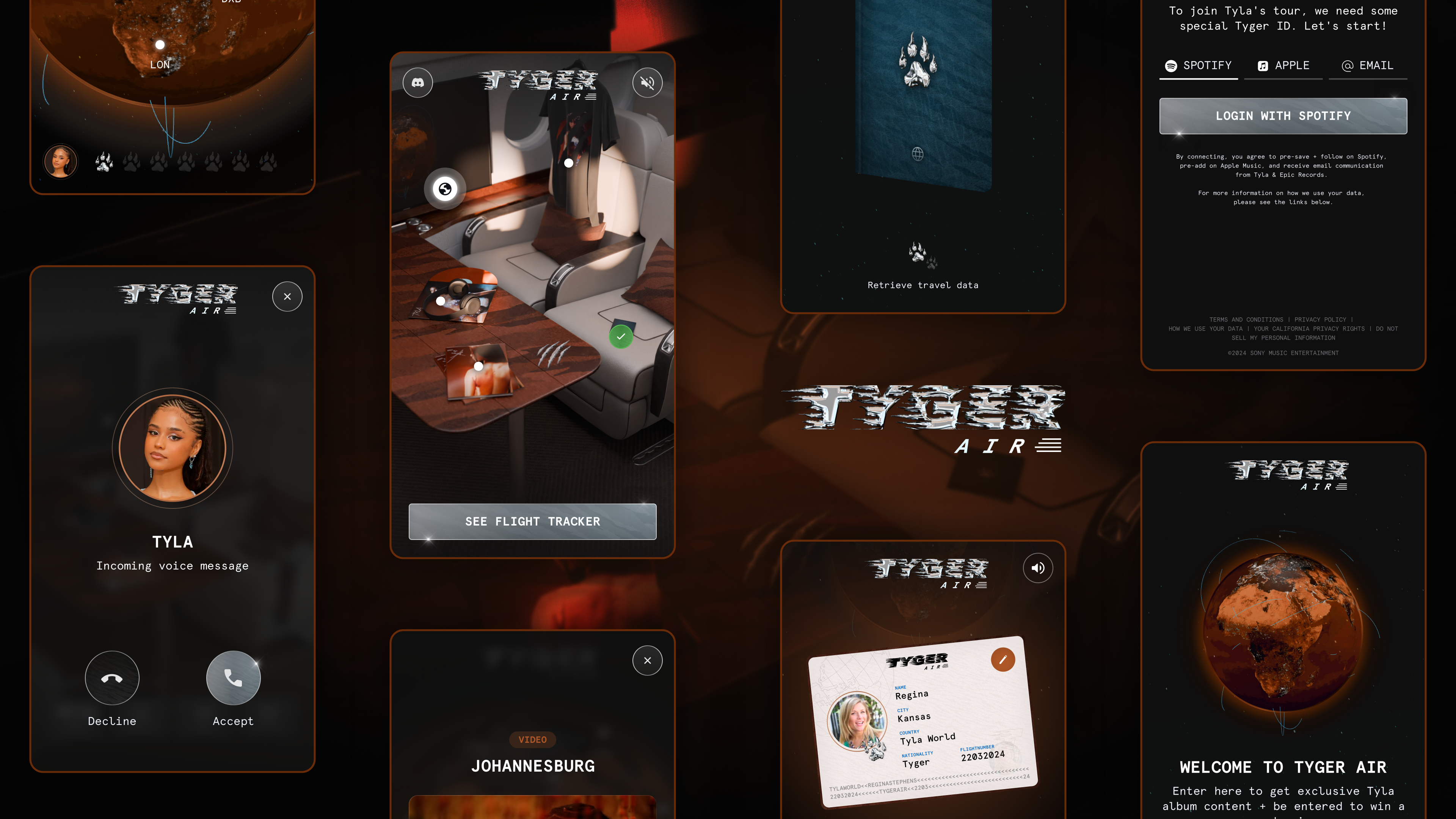
Tyger Air fan experience by Livewall

Tyger Air: a fan experience where participation felt like something worth being proud of

Friction is the campaign killer

The most underestimated cause of low participation is friction in the entry flow. The motivation is often there. The barrier is just too high.

Friction points we see constantly:

  • Mandatory registration before you can participate. Every extra step costs you a meaningful percentage of potential participants.
  • Overly complex creation briefs. Ask for a 60-second video and most people drop off immediately. Ask for a photo with a hashtag and the barrier is far lower.
  • Unclear rules. If people cannot immediately understand what is expected of them and what they get in return, they stop.
  • Slow feedback loops. If someone submits something and hears nothing for two weeks, the connection is gone.

In the campaigns we build, we try to reduce the number of steps between the decision to participate and the actual contribution. Sometimes that means technical choices: direct upload without an account, in-platform creation so people are already familiar with the tool. Sometimes it is purely copy: state in one sentence what is being asked and what is on offer.

Reward does not have to mean prize

One of the biggest assumptions brands make about UGC campaigns is that people only contribute for a chance to win something. Prizes work for a specific segment. But for the broader audience, recognition is often more motivating.

What we have found to work:

  • Publicly displaying contributions. A gallery on the campaign page, a showcase on social, a response from the brand. People want to see their creation reflected back.
  • Leaderboards and scores. Not everyone wants to win, but almost everyone wants to know how they rank.
  • Personal acknowledgement. A like, a reply, a shout-out from the brand: the value of recognition from the sender is disproportionately high.
  • Virtual reward. Badges, digital collectibles, a unique status in a loyalty programme: for certain audiences these are as motivating as physical prizes.

The choice of reward type must always match your brand's identity and your audience's motivations. Cheap merchandise for a premium audience undermines brand value. Exclusive access for fans outperforms a discount voucher every time.

4xmore participation when contributions are displayed in a public gallery
62%of UGC participants share their contribution on their own social channels when they receive recognition
3 stepsis the maximum for a successful UGC entry flow before conversion drops sharply

The social mechanism: participation that generates participation

The strongest UGC campaigns are self-reinforcing. One person's contribution triggers another's. This does not happen by accident. You have to build the mechanism in from the start.

How to do it:

Make every contribution automatically shareable in a format that looks good on social. Not a generic screenshot of a form, but a visual result: a badge, a card, something the person created. People share results when they are proud of them.

Build in a way for participation to invite others. A friend challenge, a tag-a-friend mechanic, a referral link: this lowers the entry cost for new participants because they arrive via someone they know.

Show numbers or progress. 'Already 4,200 people have participated' acts as social proof. It lowers the psychological barrier for anyone still hesitating.

In the social campaigns we design at Livewall, the share mechanic is never an afterthought. It is part of the core concept from day one.

Four decisions to make before you build

Before any creative or technical work starts, four choices determine how the campaign performs:

1. What are you asking people to create? The simpler the creation brief, the more participants. Choose the minimum format that still meets your objective.

2. Where does it happen? On your own platform you have more control but less inherent reach. On social you have reach but less control. Many campaigns combine both, but the entry flow needs to be unambiguous.

3. How and when do participants get feedback? Real-time is always better than delayed. An immediate confirmation that a submission has been received lifts satisfaction and increases the likelihood of repeat participation.

4. What happens to the content afterwards? UGC you collect but never use feels like a broken promise to the people who created it. Communicate upfront how you will use contributions.

Livewall helps brands design brand activations where these decisions are locked in during the concept phase. Not as a checklist item, but as part of the mechanism design.

Livewall

Ready to build a campaign people actually want to participate in?

At Livewall, we design the mechanisms that produce real participation. Not a standard mechanic, but a concept built around your audience's motivations and your brand's objectives.

Get in touch with our team

What we do

Livewall builds brand experiences that people actually remember — interactive campaigns, loyalty platforms, digital products, and employer branding for ambitious brands.

Our work

We've worked with HEMA, Stabilo, Wehkamp, Efteling, 9292 and many others. Every project starts with the same question: what would make someone actually want to do this?

Talk to us

Working on something similar? We'd love to hear about it.

Contact Livewall →