livewall
← All articles
Engagement23 January 2026·Livewall

Interactive video in brand campaigns: when it adds value and when it doesn't

Interactive video is a powerful format when the interaction earns its place. When it doesn't, it just adds friction. Here is how to tell the difference before you build.

campaignsbrand-activationsocial-media

Interactive video attracts attention. That is exactly the problem.

When something is new, brands want to use it. Interactive videos with viewer choices, clickable hotspots, or branching narratives feel ambitious in the briefing room. They feel exciting in the pitch. And they get built at significant cost for campaigns that really just needed a good video.

At Livewall, we design and build interactive experiences for brands in retail, entertainment, FMCG, and music. We have seen the contradiction many times: the campaigns that actually work are not always the most complex. They are the campaigns where the interaction has a reason.

This article explains how to identify that reason. And how to stop the brief when that reason is not there.

Livewall perspective

The question is not whether you can make it interactive. The question is whether the interaction does something the video cannot do without it.

When interactive video genuinely adds value

Interactive video works when the interaction is inseparable from the campaign's goal. Not as a layer on top, but as the core of the experience.

Three situations where we see the most consistent results:

1. Personalisation that feels relevant

When a viewer makes a choice and the output genuinely changes as a result, the interaction feels justified. A music campaign where your own streaming behaviour determines what content you see. A sportswear campaign where you tell us your sport and the story adapts to it. The point is relevance, not technology.

The Martin Garrix Dream Team campaign is a clear example. Through Spotify integration, every user saw an experience shaped by their own music history. The interaction was functional: it determined the output.

2. Choice architecture that reveals something

Interactive video can let people discover things they would otherwise miss. Not clicking for the sake of clicking, but clicking to go one layer deeper. Behind the scenes of a brand, into the detail of a product, into a narrative that would otherwise be linear.

For brands with a rich product reality, such as beauty, fashion, or food, this works well. The viewer controls how deep they go. That sense of autonomy increases engagement without requiring more content to be produced.

3. Game mechanics as campaign engine

When the interaction does not just respond passively but actively challenges the user, video becomes a different medium altogether. Clicking, deciding, earning. That is no longer video with a button, it is gamification marketing.

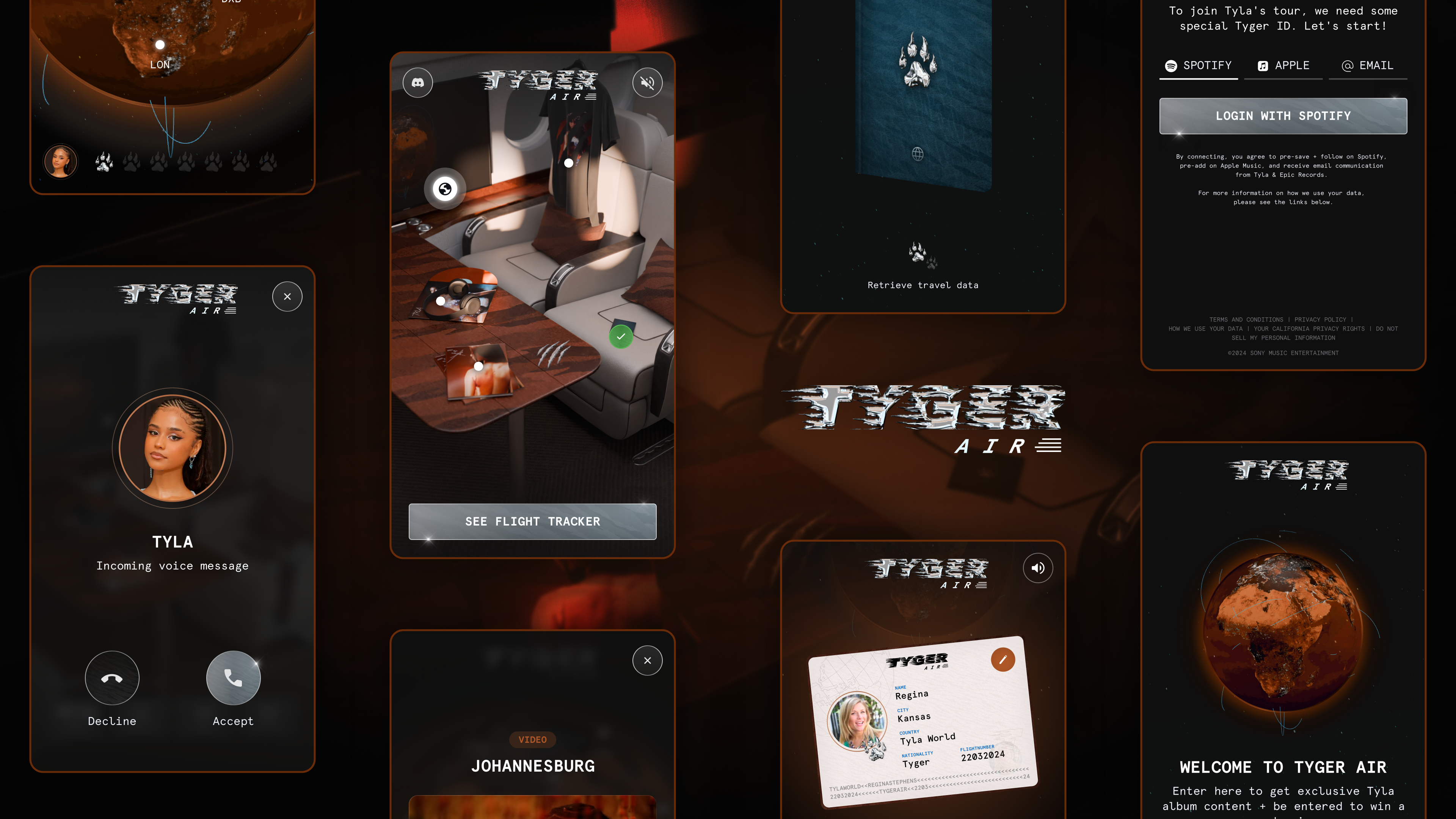
The Tyger Air campaign shows what happens when you combine interactivity with personalised digital passports and gamification layers for a global audience. Engagement holds because the user's action counts.


When interactive video adds no value

This is the part that is rarely said out loud, but it is the most useful.

Interactive video does not work when the interaction is decorative. When the choices you give the viewer do not actually matter. When all paths lead to the same conclusion and the branches are cosmetic. People feel this immediately. The interaction does not feel like an enhancement, it feels like a delay.

It also does not work when the goal of the campaign is mass reach. You cannot use interactive video for wide brand awareness on social platforms, because most environments do not support deep interaction. A video that tells you to click through to another page is not an interactive video, it is a pre-roll with extra steps.

And it does not work when the production quality of the interactive layer does not match the rest of the campaign. A high-quality brand film attached to a poorly functioning choice tree undermines both. Interactivity requires technical care that standard video production does not.

The most honest question you can ask yourself:

If you removed the interactivity, what would the campaign lose? If the answer is: not much, then make a better video instead.

Livewall perspective

If you remove the interactivity and the campaign barely changes, you never needed the interactivity in the first place.

Martin Garrix Dream Team interactive music campaign

Martin Garrix Dream Team: Spotify integration made the interaction substantively relevant, not cosmetic

Choosing the format based on your behaviour goal

Every campaign format serves a behaviour goal. Interactive video is no different.

If your goal is for people to learn something, interactive works well. Choices reinforce memory formation. If your goal is for people to remember the brand, a strong passive video usually does more. Emotional impact is not amplified by buttons.

If your goal is for people to share first-party data, an interactive format works well, provided the interaction justifies the exchange. With KLM Airmail, the interaction, writing a personal message, was the product itself. That is the standard: the interaction is the offer, not the packaging.

At Livewall, we use behaviour goals as the starting point, not technology. We do not ask: can we make this interactive? We ask: what behaviour do we want to activate in the user, and which format helps most?

Interactive video can be that format. Often it is. But it is always a deliberate choice, never a default.

3xhigher session time in interactive experiences where the choice changes the outcome
60%of viewers drop off interactive video when the choices are cosmetic rather than consequential
1 questionthat determines everything: what does the campaign lose if you remove the interactivity?

How to recognise the right brief

You do not need to be a technical expert to know whether interactive video is the right choice. The signals are in the brief itself.

Good signals:

  • The brief describes a desired user choice, not just a viewing moment
  • The brand has multiple stories to tell that are relevant to different audience segments
  • There is a call to action that benefits from user initiation rather than passive exposure
  • The format is being deployed in an environment that supports deep interaction, such as a brand's own platform or a dedicated campaign environment

Warning signals:

  • The word interactive appears in the brief but there is no description of what choice the user makes
  • The goal is reach, not engagement
  • The campaign timeline leaves no room for technical quality assurance
  • Interactivity has been added because a competitor did it

We see the second type of brief more often than the first. And we always give honest advice, even when that means recommending against interactivity.

Building a branded game or an interactive campaign that actually works requires the interaction to earn its place. That is the only standard that matters.

Livewall

Want to know if interactive video is the right choice for your campaign?

At Livewall, we always start with the behaviour you want to activate, then choose the format. Whether that means interactive video, a branded game, or something else entirely, we will help you make the right call.

Get in touch with our team

What we do

Livewall builds brand experiences that people actually remember — interactive campaigns, loyalty platforms, digital products, and employer branding for ambitious brands.

Our work

We've worked with HEMA, Stabilo, Wehkamp, Efteling, 9292 and many others. Every project starts with the same question: what would make someone actually want to do this?

Talk to us

Working on something similar? We'd love to hear about it.

Contact Livewall →