


livewall
← All articles
Engagement14 April 2026·Livewall

Immersive brand worlds: how to build a digital environment worth exploring

A brand world is more than a landing page with 3D assets. The ones people return to are designed like games, not like brochures.

brand-activationgamificationweb-apps

A brand drops six figures on a visually stunning digital environment. Traffic spikes on launch day. Then it flatlines. One visit, no return. The visuals were good. The problem was everything else.

Immersive brand worlds fail not because of poor craft but because of the wrong design model. Most are built like brochures: beautifully produced, completely static, with nothing to pull someone back. The digital environments that actually hold attention are built like games. They have exploration, progression and a reason to return.

At Livewall, we design and build brand activations and digital environments for consumer brands that want more than a one-time visit. What we've found consistently: the environments that work are designed around behaviour first, aesthetics second.
Livewall perspective

A brand world nobody comes back to is not a world. It's an animated brochure.

What separates a brand world from a campaign page

Three things: space, time and reward.

Space means there is something to explore. Not everything is immediately visible. There are areas to earn or discover. That creates the feeling of a world rather than a presentation.

Time means the environment changes. Seasonal content, daily unlocks, events. If something new appears every day, people come back. If everything is static, there is no reason for a second visit.

Reward means there is something to gain. It does not have to be a discount. A badge, a personalised outcome, a hidden area. The sense of progress is the reward.

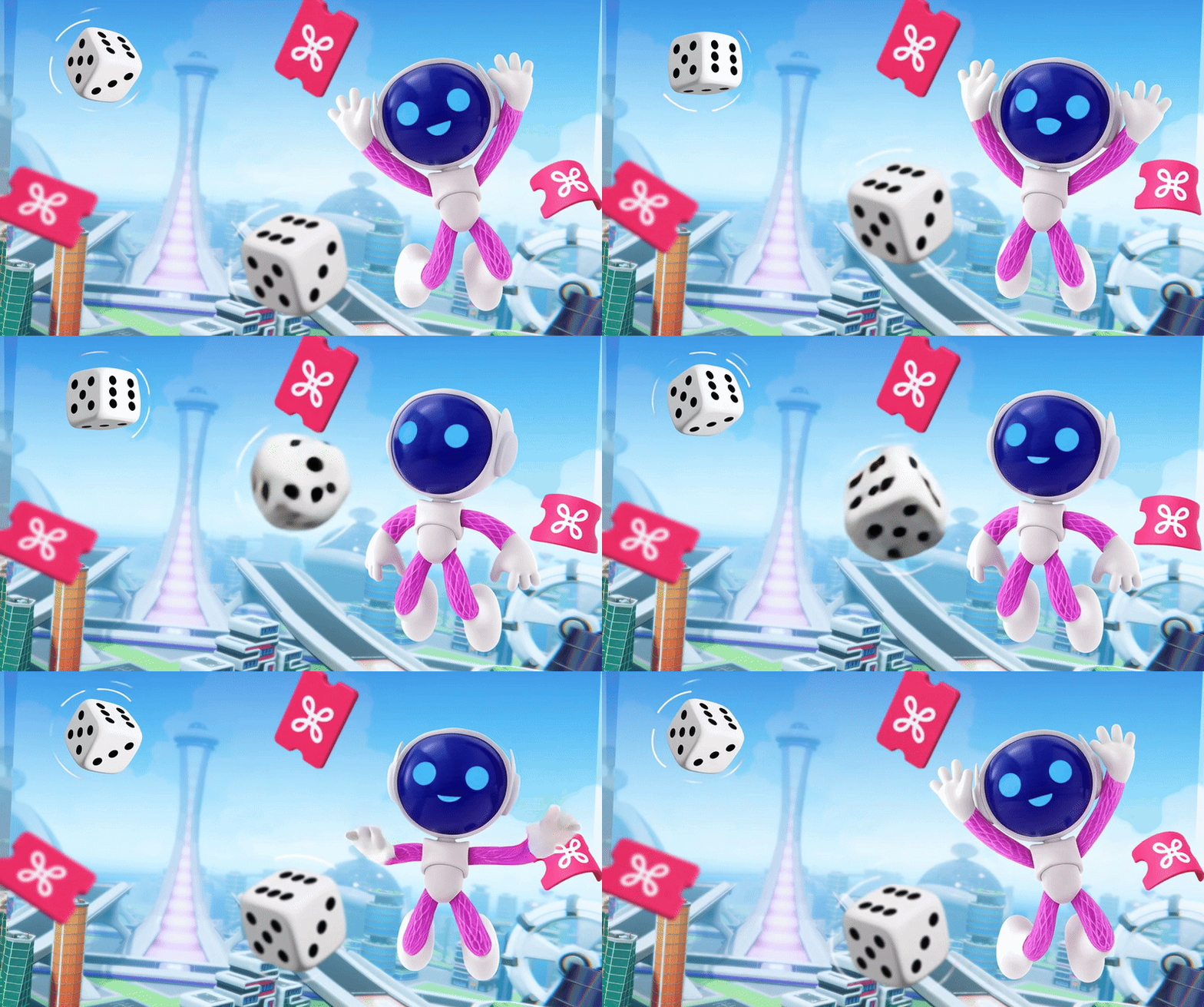
The McDonald's Spain MyMcDonald's World shows this working at loyalty scale. Mini-games, characters and seasonal zones turn the app into a destination users keep returning to week after week.

The architecture of a brand world

A brand world needs a structure, the same way a game does. That structure has several layers.

The overworld: the central space where everything connects. This is the visual anchor. It is where users orient themselves and decide where to go next.

Zones or areas: sections of the world with their own identity. These can map to product categories, seasons or campaigns. They give the world depth and a reason to explore further.

Return mechanics: daily check-ins, time-limited content, game mechanics that track progress. Without this layer, the environment is a one-time experience.

Personalisation: the most powerful way to bond someone to a brand world is to make it feel like it was made for them. That can come through personalised content, a user profile or a unique path through the environment.

Proximus+ World applied this thinking at telco scale. An immersive digital environment combining brand experience with service discovery, built for repeat use rather than a single campaign visit.

3xmore repeat visits when brand worlds include daily unlock mechanics
68%of users return when there is visible progress or personal reward
4xlonger session time compared with a standard campaign landing page

Branded games versus brand worlds

There is a distinction worth making between a branded game and a brand world. A game is a contained experience with a beginning and an end. A brand world is an environment you can return to.

Both have their place. The Doritos Step into the Netherlands Minecraft experience was built for a specific campaign moment. The integration created a distinctive, shared experience that landed perfectly with the target audience. But it was an activation, not a world.

A brand world asks for a different kind of investment. You are not building for one moment but for a longer window. That means a scalable technical architecture, a content calendar and a team that keeps the world alive.

Gamified activations can serve as an entry point to a brand world. You introduce the mechanics and the aesthetic in a shorter campaign, then expand that into a persistent platform over time.

The technical foundations you cannot skip

A brand world is a digital product, not a campaign microsite. The technical decisions you make early determine how scalable and alive the environment can become.

A few things Livewall builds in from the start:

  • Mobile performance. Most users arrive on their phone. A heavy 3D environment that works beautifully on desktop but stutters on mobile loses the majority of its audience before they get started.
  • Modular content structure. You need to be able to add zones and content without rebuilding the entire architecture. A CMS layer is not a luxury, it is a requirement.
  • Data layers for personalisation. If you want the world to adapt to the user, you need a user profile. Build that in from day one, not as an afterthought.
  • Behavioural analytics. Not just page views. Where do people click, where do they drop off, which zones do they visit more than once? That data is how you improve the world over time.

Web application development is the foundation. The challenge is combining technical solidity with an experience that feels like playing, not navigating.

Livewall perspective

The brand worlds that last longest are not the most visually spectacular ones. They are the environments that best understand why someone would come back.

When is a brand world the right choice?

Not every brand needs one. A brand world is an investment that pays off only when there is enough of an audience to keep it alive, and when the brand has something worth exploring.

Good candidates: brands with a strong visual identity, a loyal audience and a product range that lends itself to discovery. Retail brands, entertainment companies, FMCG brands with multiple product lines, loyalty programmes that want to be more than a points system.

Brands better served by a focused campaign or activation: brands with a narrow product range, no repeat-purchase dynamic, or an audience with no reason to visit more than once.

If you are unsure, start smaller. An interactive campaign can apply many of the same principles without the infrastructure investment of a full brand world. Use it to test the mechanics and learn what your audience responds to before committing to the longer build.

Livewall

Want to build a digital environment people actually want to explore?

At Livewall we combine game design thinking, technology and brand strategy to build digital worlds that bring people back. Tell us what you are trying to achieve.

Get in touch with our team

What we do

Livewall builds brand experiences that people actually remember — interactive campaigns, loyalty platforms, digital products, and employer branding for ambitious brands.

Our work

We've worked with HEMA, Stabilo, Wehkamp, Efteling, 9292 and many others. Every project starts with the same question: what would make someone actually want to do this?

Talk to us

Working on something similar? We'd love to hear about it.

Contact Livewall →