


livewall
← All articles
Strategy1 May 2026·Livewall

Immersive brand experiences: why they outperform standard campaign formats

Immersive experiences perform better on recall, sharing, and conversion. Here's what makes them immersive in the first place, and how to design for that quality.

brand-activationgamificationcampaigns

Most campaigns get seen, but not felt. The creative is sharp, the targeting is right, the copy is solid. People still scroll past without a second thought. Immersive brand experiences work differently. They pull someone in, give them something to do, and leave a memory that does not disappear when the tab closes.

At Livewall, we have been building this kind of experience for brands like Rituals, Decathlon, McDonald's, and KLM for years. What we see consistently: the campaigns that perform best on recall, sharing, and actual conversion are rarely the cleverest or the most expensive. They are the most immersive.

So what actually makes something immersive? And how do you design for it deliberately, rather than stumble into it by accident?
Livewall perspective

Immersive experiences demand active participation. Not scrolling, but doing. That difference determines whether someone remembers your brand.

What makes an experience immersive?

Immersion is not an aesthetic choice. It is a state of full attention where someone is absorbed in an experience and the outside world temporarily recedes. You cannot buy it with a bigger production budget or a longer video.

Three ingredients appear consistently in the experiences that actually take people somewhere:

1. Active participation. The user does something. They make a choice, play a game, build something, unlock a reward. Passive viewing does not produce immersion. Interaction does.

2. A coherent brand world. Everything fits. The visual identity, the tone, the mechanics, the feeling. When a game environment feels like the packaging of the brand itself, every interaction reinforces brand association. That is what makes immersive brand worlds so effective as a format.

3. Progress and reward. People stay when they feel like they are getting somewhere. That does not always mean a prize. An unlocked story beat, a personalised result, a collectible item, all of these work just as well. Progress is the emotional engine of immersion.

Why standard campaign formats fall short

A static landing page, an interstitial, a social carousel. They can all be beautifully made, but they ask nothing of the user. Looking is enough to move on.

That has real consequences for how the brand is remembered. Research on memory formation consistently shows that active processing, doing something with information, leads to stronger and more durable memories than passive exposure. You cannot buy this effect with more impressions.

The difference lies in the design question. Most campaign formats start from: "What do we want to say?" Immersive experiences start from: "What do we want people to do?"

That shift from communication to participation is exactly where gamified activations draw their power. The brand is no longer the sender of a message. It is an environment where people have an experience.

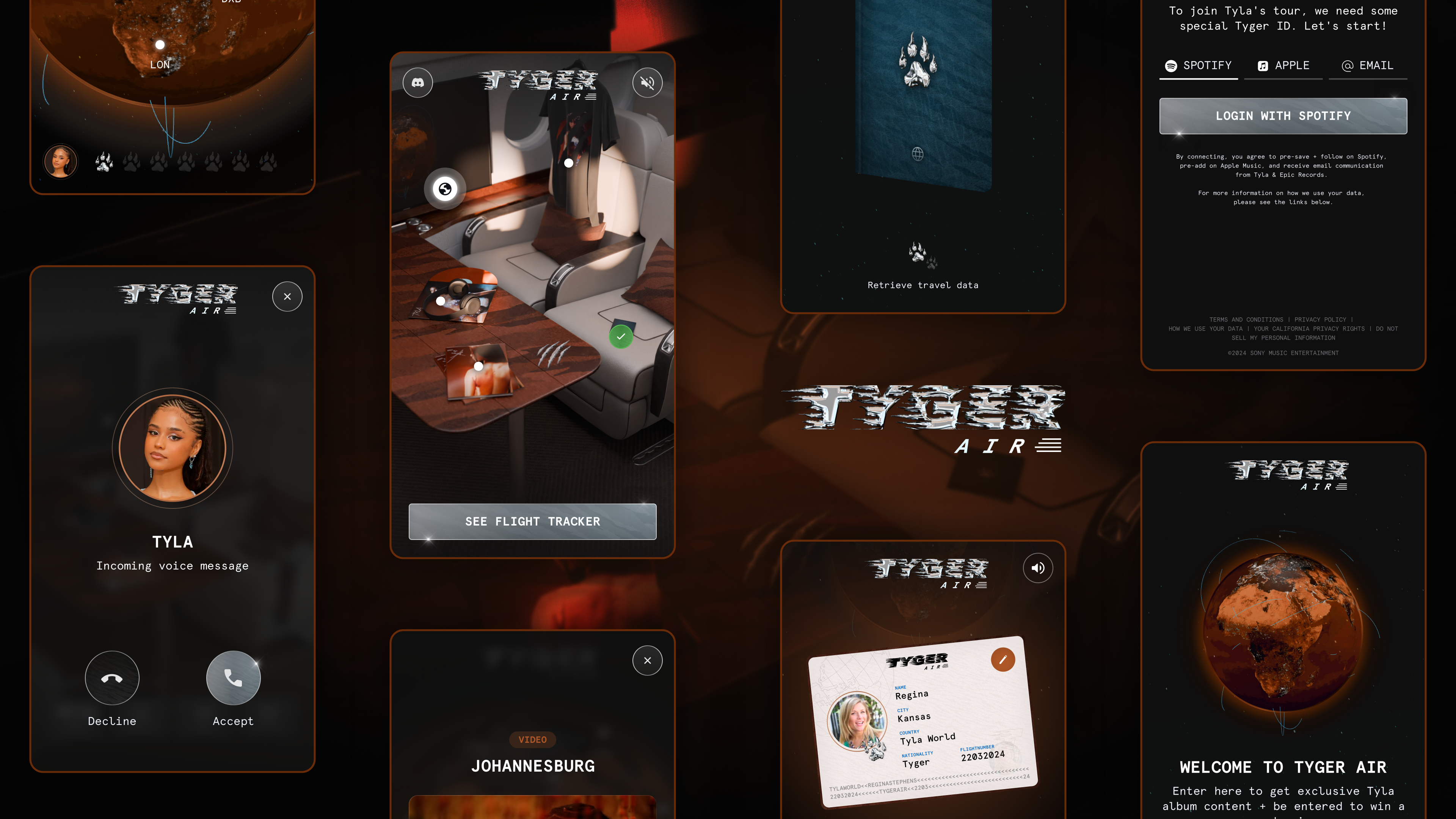
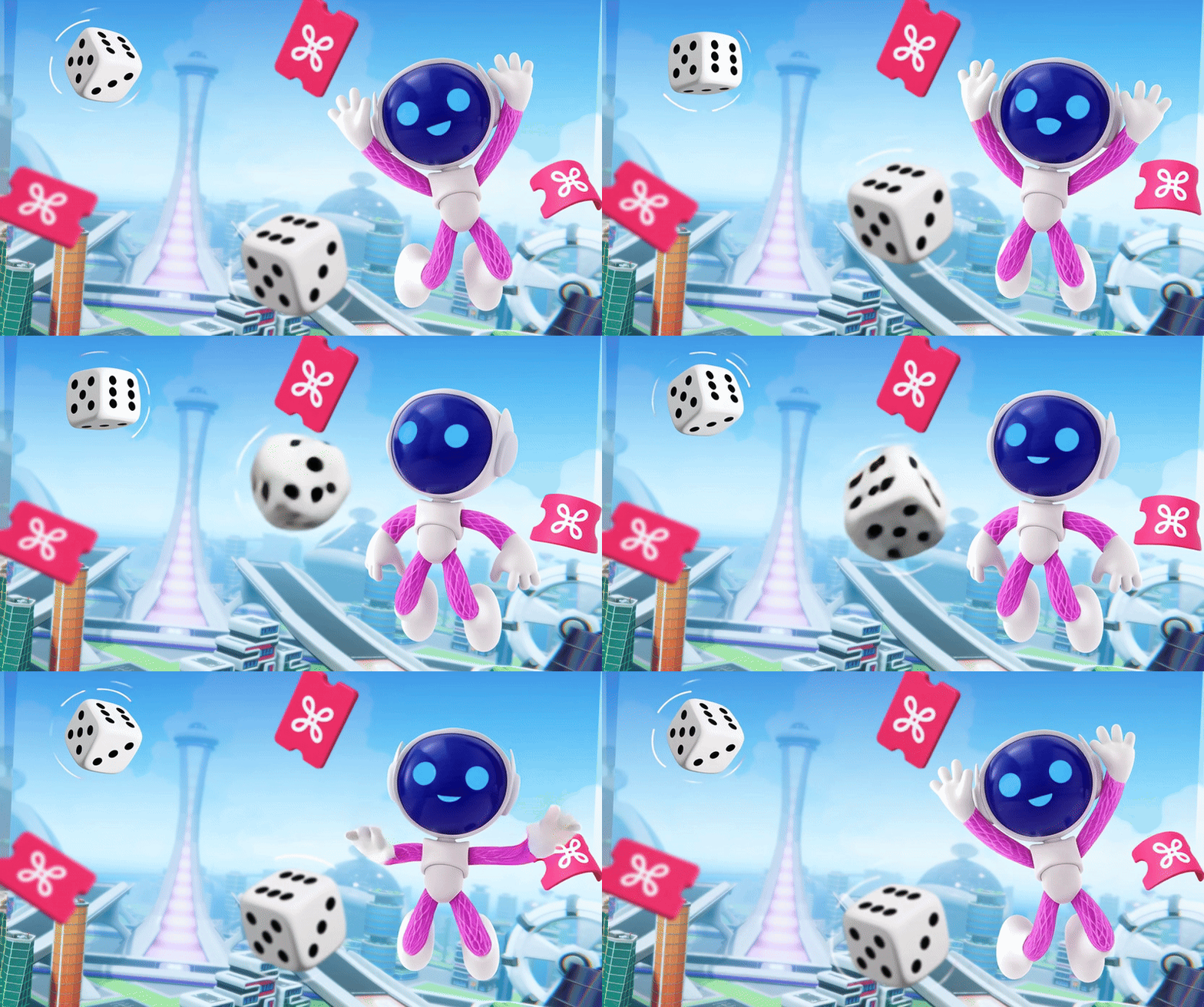
Proximus+ World: an immersive brand world where customers explore Proximus services through an interactive digital environment

Proximus+ World: a branded digital world that actively draws customers into the brand's offering.

Immersive experiences in practice

Abstract principles are useful, but they become concrete in the cases.

For Proximus+ World, we built a complete digital brand world where customers could explore the Proximus offering through an interactive environment. Not a product page, but a world. Session time and click-through behaviour were significantly higher than on the standard campaign pages that preceded it.

For the Doritos Minecraft campaign, a branded game world was built around a film promotion. Fans actively played inside a Doritos-created environment and discovered merchandise as part of the game experience. That is a fundamentally different relationship with the brand than seeing an ad for the same product.

With Rituals Dream Collection, visitors drifted through a dreamlike world while discovering products behind the new seasonal line. The Rituals brand values, calm, ritual, beauty, were not told but experienced.

In each case, the same logic applies: people were not told what the brand has to offer. They experienced it directly.

Activeparticipation produces measurably stronger brand recall than passive exposure
3 layersactive participation, coherent brand world, and progress define the immersion level
Highersession time, sharing behaviour, and conversion in well-designed immersive experiences

How to design for immersion deliberately

Immersion is not a lucky accident. It is the result of a set of intentional design decisions.

Start with the action, not the message. What will the user concretely do in this experience? If the answer is "read" or "watch", the chance of immersion is low. Define the action first, build the message around it.

Make the brand world coherent. Every visual element, every sound, every interaction needs to be consistent with how the brand feels. A game mechanic that does not match the brand identity pulls users out of the immersion rather than deeper into it.

Build in progress. Give people a reason to return. A daily challenge, a collectible element, a story that unfolds step by step. Progress sustains engagement long after initial interest fades.

Make sharing effortless. Immersive experiences get shared when they produce a personal result worth showing. A unique score, a created item, a moment someone wants to display. Interactive campaigns that get this right generate organic reach on top of paid reach.

Measure what matters. Session time, return visits, and goal completion tell you more about immersion than CTR. Set the right metrics from the start.

Immersion and loyalty: the long-term connection

An immersive experience is not only stronger for short-term brand recall. It also lays the foundation for loyalty.

When someone actively invests time in a brand world, building something, earning something, unlocking something, discovering something, a different relationship forms than with someone who saw an ad. That is not theory. It is what we see in the data from campaigns like HEMA Stapelgek, where the game mechanic structurally increased app engagement and repeat purchase behaviour.

The combination of immersion and loyalty mechanics is exactly what makes gamified loyalty such an effective long-term instrument. People deepen their relationship with the brand not because they have to, but because the experience earns it.

At Livewall, we believe this is the direction brand activation is heading. Not louder advertising, but deeper building.

Livewall

Want to build a brand experience that actually takes people somewhere?

At Livewall, we design immersive campaigns and brand worlds for consumer brands that outperform on recall, engagement, and conversion. We are happy to think through what that could look like for you.

Get in touch with our team

What we do

Livewall builds brand experiences that people actually remember — interactive campaigns, loyalty platforms, digital products, and employer branding for ambitious brands.

Our work

We've worked with HEMA, Stabilo, Wehkamp, Efteling, 9292 and many others. Every project starts with the same question: what would make someone actually want to do this?

Talk to us

Working on something similar? We'd love to hear about it.

Contact Livewall →