


livewall
← All articles
Loyalty21 February 2026·Livewall

How to design loyalty mechanics for a multi-brand portfolio

Loyalty that works for one brand in a portfolio doesn't automatically work across the others. Here is how to design a system that creates value across different brand identities.

loyalty-programscrmretail

Multi-brand portfolios put loyalty marketers in a difficult position. You can build one shared program that is efficient but ignores brand identity, or you can build separate programs per brand that are expensive and hard to maintain. Both approaches are a compromise.

At Livewall, we've designed loyalty programs for brands like HEMA, Decathlon, and Rituals. Every one of them has a strong, distinct identity. What we keep finding: the problem is never the technology. It's the starting point. Most teams start with the platform or the brand, when they should be starting with behavior.

Start with behavior, not identity

The first thing to establish is what customer behavior you want to drive for each brand. That sounds obvious, but in practice teams almost always start with "what fits our brand?" instead of "what do we want our customers to do more often?"

Behavioral objectives are the bridge between a shared loyalty structure and a brand-specific execution. Say you have three brands in a portfolio: an everyday grocery brand, a sports retailer, and a home goods store. Purchase frequency differs dramatically. The customer's relationship with each brand differs. The reason they choose one brand over another differs. Those differences determine which loyalty mechanic will work, not the brand guidelines.

One architecture, multiple expressions

The key to a scalable multi-brand model is the distinction between structure and experience. The structure, points logic, tier mechanics, CRM integration, technical infrastructure, can be shared. The experience, the name, the tone, the rewards, the visual language, is brand-specific.

This is the principle behind the always-on Decathlon loyalty program we work on, where members earn rewards for everyday movement through a renewed membership system. The structure is robust and scalable. The expression is right for Decathlon's active, sports-first identity. The same architectural logic applies to a completely different brand, as long as the behavioral objectives align.

The danger of copy-pasting mechanics

One of the most common mistakes is copying a mechanic that worked for brand A and applying it to brand B. "It worked for them, so it will work for us." It rarely does. A mechanic worked because it matched the customer motivation of that specific brand in that specific category.

Take the gamified loyalty activation we built for HEMA, HEMA Stapelgek. It worked because it matched HEMA's playful, accessible brand personality and the everyday purchasing rhythm of their customers. That same game format would land very differently for a premium beauty brand.

The question isn't "which mechanic do we use" but "what feeling do we want to create for the customer, and which mechanic serves that?"
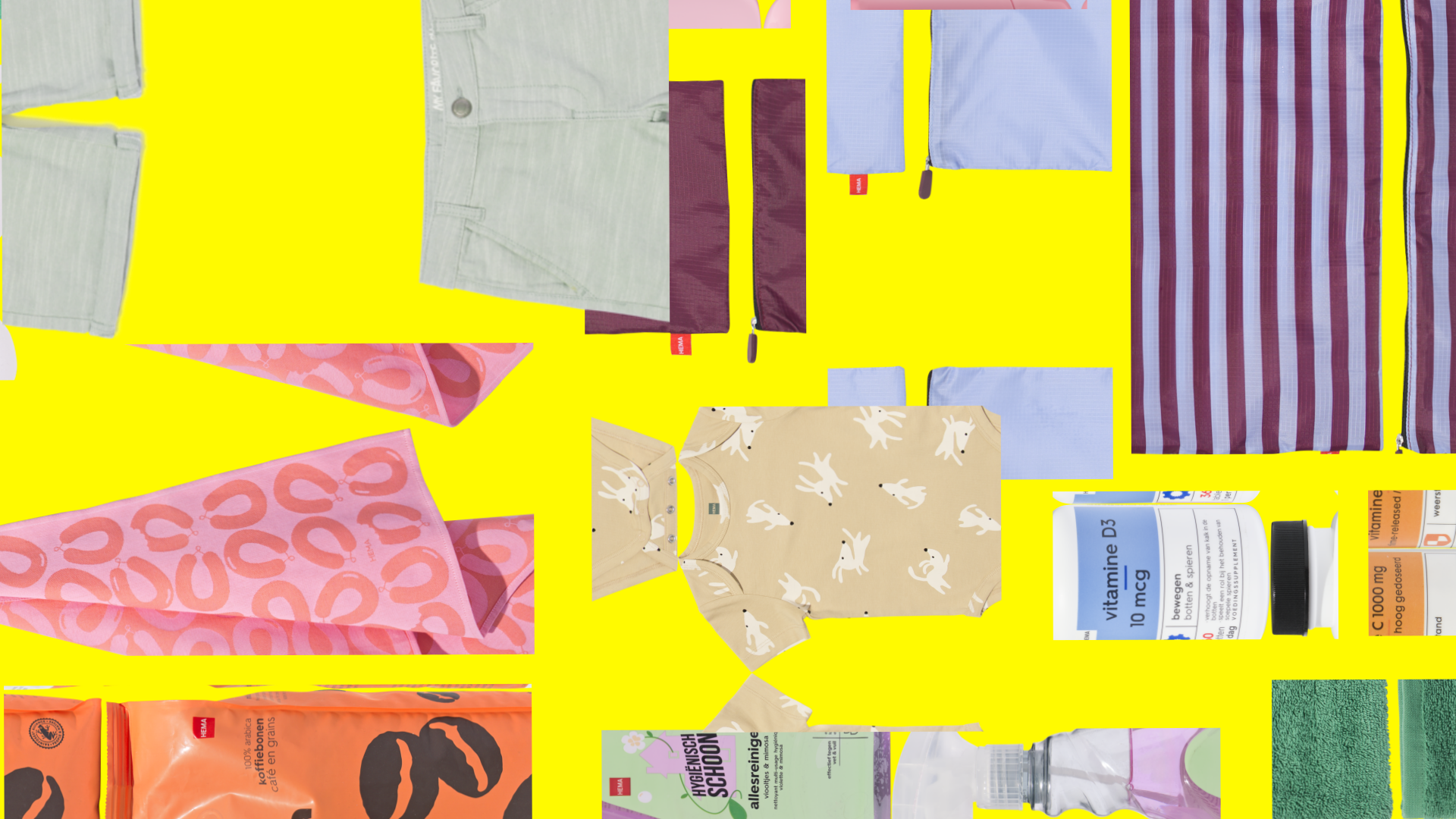

HEMA Stapelgek loyalty campaign

HEMA Stapelgek: a loyalty mechanic designed around brand personality and customer purchase behavior.

Livewall perspective

The mechanic is never the starting point. The feeling you want to create for the customer, that is the starting point.

Shared data, separate insights

One strong technical advantage of a shared loyalty architecture is the ability to connect customer data across brands. A customer who is active at both brand A and brand B reveals a richer behavioral pattern than a single-brand customer. That is valuable CRM intelligence you can use for personalised communication, cross-sell, and churn prevention.

But watch out: shared data does not mean shared communications. Customers experience brands as separate. They don't want to be constantly reminded that they are part of a larger holding company. The data infrastructure can be shared. The customer journey stays brand-specific.

What the music industry teaches us

Loyalty programs are not limited to retail portfolios. For Warner Music, we built a cross-media loyalty campaign around the Ed Sheeran Equals release. Music, merchandise, physical and digital touchpoints were connected into one coherent loyalty experience for fans. The lesson: a "portfolio" can also be a franchise or artist with multiple expressions, and the same architectural principles apply.

Tier structures: when to share, when to split

A practical question in multi-brand loyalty: do you use shared tiers, or does each brand have its own tier system?

Our recommendation depends on the customer base. If customers are genuinely active at multiple brands in the portfolio, a shared tier structure pays off. High-engagement customers can carry their status across brands, which reinforces cross-brand loyalty.

If the customer bases barely overlap, a shared tier system adds little value. In that case, build brand-specific programs on a shared technical foundation, gaining scale advantages without diluting the brand experience.

With Decathlon Game, we saw how a loyalty campaign mechanic collected personalised data that translated directly into store visits. That is the proof that a well-designed mechanic can be both brand-specific and structurally scalable.

3xhigher return frequency with gamified loyalty programs versus traditional points programs
40%of loyalty members become inactive within six months in generic programs
1 baseshared technical architecture can power multiple brand-specific loyalty experiences

Loyalty program design in four steps

For brands that want to build a multi-brand loyalty system, Livewall works through four consistent steps.

1. Map behavioral objectives per brand. What do you want customers to do more often? What is their current frequency? What rhythm do you want to build toward? This is the foundation for everything else.

2. Define the shared structure. Which elements of the program can be shared, points logic, API connections, data layer, without affecting the brand experience?

3. Design the brand-specific experience. Name, tone of voice, rewards, visual language, and the specific mechanic are defined per brand. This is where creative strategy and brand thinking meet.

4. Validate against customer motivation. Test whether the mechanic you've chosen connects to the actual reason customers choose that brand. A loyalty program that doesn't align with the primary purchase intent will never work, regardless of how well it is executed.

A custom loyalty program is not a luxury reserved for large brands. It is a prerequisite for programs that genuinely change behavior rather than just distributing discounts.

Livewall

Does your loyalty system work for every brand in your portfolio?

At Livewall, we help brands design loyalty systems that are both scalable and brand-specific. Get in touch to talk through what this could look like for your portfolio.

Get in touch with our team

What we do

Livewall builds brand experiences that people actually remember — interactive campaigns, loyalty platforms, digital products, and employer branding for ambitious brands.

Our work

We've worked with HEMA, Stabilo, Wehkamp, Efteling, 9292 and many others. Every project starts with the same question: what would make someone actually want to do this?

Talk to us

Working on something similar? We'd love to hear about it.

Contact Livewall →