livewall
← All articles
Strategy13 March 2026·Livewall

Habit-forming design: how products earn a place in someone's daily routine

Habit formation doesn't happen by accident. There are specific design conditions that make routine use far more likely than one-off engagement.

digital-productsgamificationloyalty-programs

Most digital products get used once. People download the app, play the game, enter the campaign, and never come back. Not because the product was bad, but because nothing in the design pulls them back.

Habit-forming design is the discipline that changes that. It has nothing to do with manipulative dark patterns or engagement-at-any-cost thinking. It is about understanding how routines are built, and deliberately creating the conditions that make repetition feel natural.

At Livewall, we build loyalty programmes, digital products, and brand activations where return visits are an explicit objective. We have seen what works and what does not. The patterns are consistent.

Livewall perspective

A habit is not a conscious choice. It is an automatic response to a context. Good design makes sure that context is always there.

The four building blocks of habit-forming design

1. A clear trigger

Every habit starts with a cue. That cue can be external, like a notification or a day of the week, but the most powerful triggers are internal: a feeling, a situation, a moment in the day. Good design attaches a product to existing contexts people already live in.

A loyalty programme that activates at the moment of purchase uses an existing behavioural pattern as the entry point. A daily challenge in an app works best when it fits a routine someone already has, not when it adds a new obligation.

2. A low-effort action

The less friction, the higher the chance of repetition. This sounds obvious, but it is routinely underestimated in practice. Every extra step, every load time, every form field is a reason to stop.

UX/UI design that takes habit formation seriously starts by minimising the action required. What is the smallest interaction that still feels meaningful?

3. A variable reward

Fixed rewards lose their power quickly. Variable rewards, where you do not know exactly what you will get, sustain motivation far longer. This is why collect-and-win mechanics, spin-the-wheel formats, and daily surprises work so well in loyalty campaigns.

This is not about manipulating people. It is about creating the right level of tension to keep engagement alive between bigger moments. The reward does not have to be large. It just needs to be uncertain enough to keep curiosity active.

4. Investment in the product

Users who have put time, data, or effort into a product are far less likely to leave. Behavioural researchers call this the endowment effect. The more you have invested, the more it feels like you have something to lose.

Progress tracking, personal profiles, collected points, saved preferences: all of these raise the cost of leaving. They transform a one-time visitor into a committed participant.


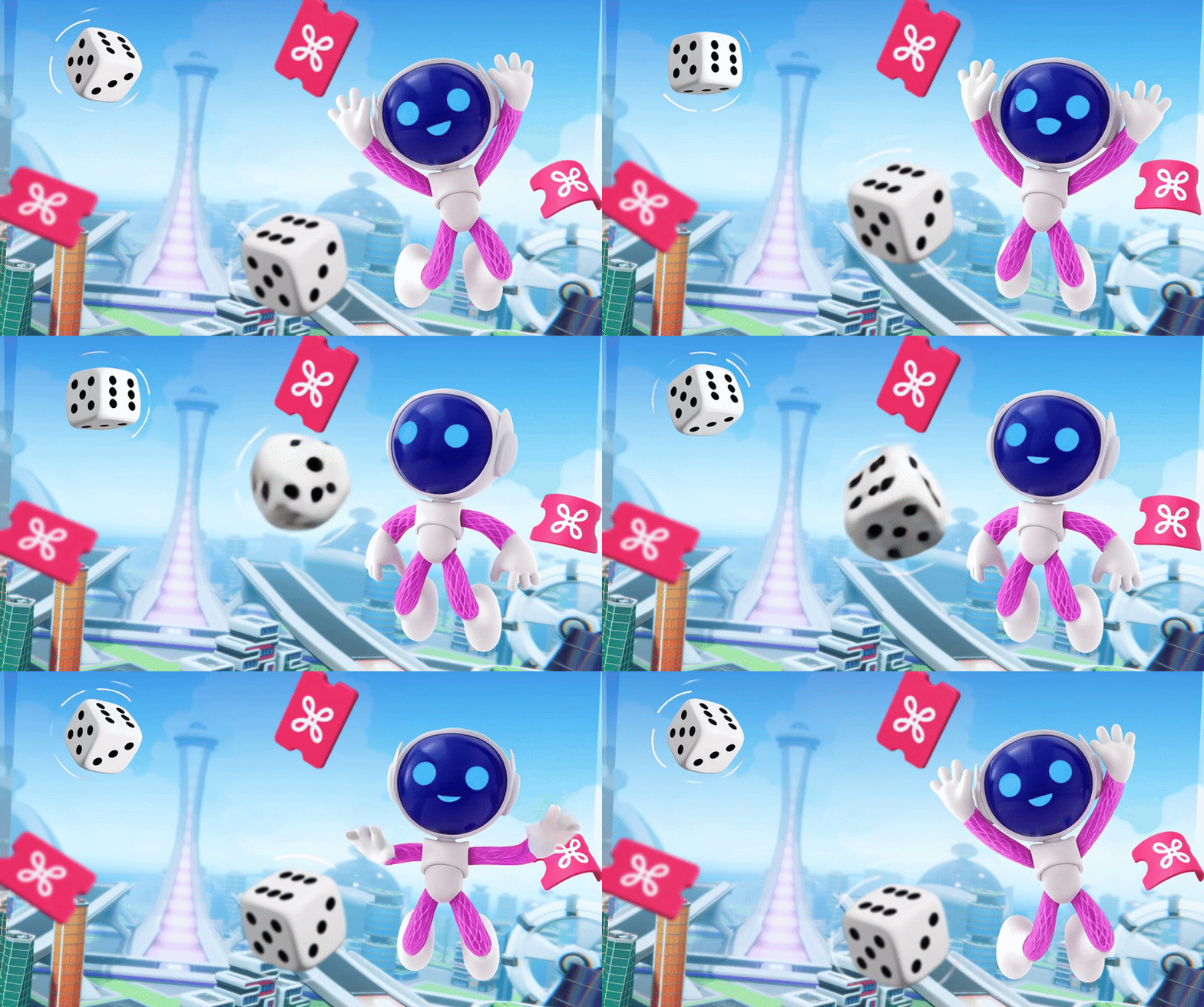
McDonald's Spain: a 3D loyalty world that turns the app into a destination.

Loyalty programmes as habit engines

Loyalty programmes are naturally well suited to habit-forming design, but most of them fail because they rely too heavily on the reward and too little on the loop.

A points programme that only rewards purchases misses the point. The habit is not in the saving, it is in the returning. Every interaction needs to offer something, even when nothing is being bought. Reading content, completing challenges, unlocking new areas: these are all actions that sustain the habit between transactions.

The gamified loyalty programmes Livewall designs are built around daily and weekly return moments. Not as a trick, but because the product's full value only becomes visible through repeated use.

66%of digital products are no longer used after the first week
3xhigher retention in products using variable rewards versus fixed
Day 1is when habit-forming design needs to start, not week three

The difference between a campaign and a habit

Many brands confuse campaign participation with habit formation. They are not the same thing.

A campaign draws people in for a defined period. A habit brings them back long after the campaign has ended. The difference lies in how the product is designed: for a moment, or for the long term.

This extends well beyond loyalty programmes. A community platform intended for daily use requires habit-forming thinking from the first wireframe. The same principles apply to internal tools, learning paths, pre-boarding experiences, and mobile apps.

When people start using something every day, it is rarely an accident. It is the result of deliberate design choices that make returning easy, satisfying, and meaningful.

Where to start with habit-forming design

The most common mistake is starting with the reward rather than the trigger. Brands ask: what do we give people for coming back? The better question is: why would they come back at all?

That answer lives in the user's context. When is this product relevant? What moment in the day, what emotion, what situation creates the opening for use? If you understand that, you can embed the product in an existing context instead of hoping people will remember it on their own.

At Livewall, we start this conversation early in the process. Not as a theoretical exercise, but as a practical design question: what makes repetition the most natural choice for the user? The retention strategy follows from that answer, not the other way around.

Livewall

Want to build a product people use every day?

At Livewall we combine behavioural design, loyalty strategy, and technical development to build the right loop. From the first trigger to the return visit you are aiming for.

Get in touch with our team

What we do

Livewall builds brand experiences that people actually remember — interactive campaigns, loyalty platforms, digital products, and employer branding for ambitious brands.

Our work

We've worked with HEMA, Stabilo, Wehkamp, Efteling, 9292 and many others. Every project starts with the same question: what would make someone actually want to do this?

Talk to us

Working on something similar? We'd love to hear about it.

Contact Livewall →