livewall
← All articles
Loyalty22 March 2026·Livewall

Gamified loyalty world design: how to build an app users return to

Gamified 3D loyalty worlds are becoming a real retention tool for QSR and retail apps. Here is how to design a digital environment that keeps members coming back every week.

loyalty-programsgamificationdigital-products

Most loyalty apps have one structural problem: people only open them when they want to complete a transaction. Outside of that moment, the app simply does not exist for them. That is not loyalty. That is a digital receipt.

A gamified loyalty world works differently. Instead of a points counter attached to a rewards list, you build a digital place people genuinely want to visit, even when they are not buying. The app becomes a destination, not a transactional tool.

At Livewall, we design and build these kinds of loyalty worlds for large consumer brands. What we have found consistently: the success is not in the technology. It is in the structure of the game experience underneath it.

The three layers of a loyalty world that works

A gamified loyalty world is built from three layers, each driving different user behavior.

Layer one: the persistent world This is the permanent environment that gives the experience its structure. A map, a city, an island, a personal territory. Users navigate it, discover areas, and see their own progress made visible. This framework is what builds return habit: people remember where they were and want to continue.

Layer two: seasonal content Every few weeks something changes in the world. New areas open, special events appear, time-limited rewards become available. This gives users a concrete reason to return before they forget about the app entirely. It creates urgency without being pushy.

Layer three: daily triggers Small game elements that can be completed every day: a mini-game, a challenge, a collectible item. They do not need to be large. They need to be consistently present. Daily triggers are the engine behind weekly engagement.

Livewall perspective

A loyalty world is not a marketing layer on top of a points program. It is a standalone destination that pulls members back, even when they are not buying.

What does not work

Many brands try to build a loyalty world by skinning an existing points program with game visuals. That rarely succeeds. The game layer feels decorative rather than functional, and users see through it immediately.

Another common mistake: too much attention on the onboarding experience, too little on the return experience. The first session looks great. By the third session, there is nothing new to do. Once users understand how the system works, the tension disappears.

A gamified rewards program that actually works is designed from a single question: what does the app offer after the twentieth session? If you cannot answer that, the world is not ready to launch.

Progression as the core of retention

Progression is the most powerful mechanism in game design and the most underused in loyalty design. People return when they know something is within reach that they do not yet have. Not the rewards themselves, but the feeling that the next milestone is almost there.

That requires a progression structure that is visible but not overwhelming. Users should be able to see in one glance how far they are, what the next milestone is, and roughly how long it will take to get there. That near-miss feeling is what drives weekly return.

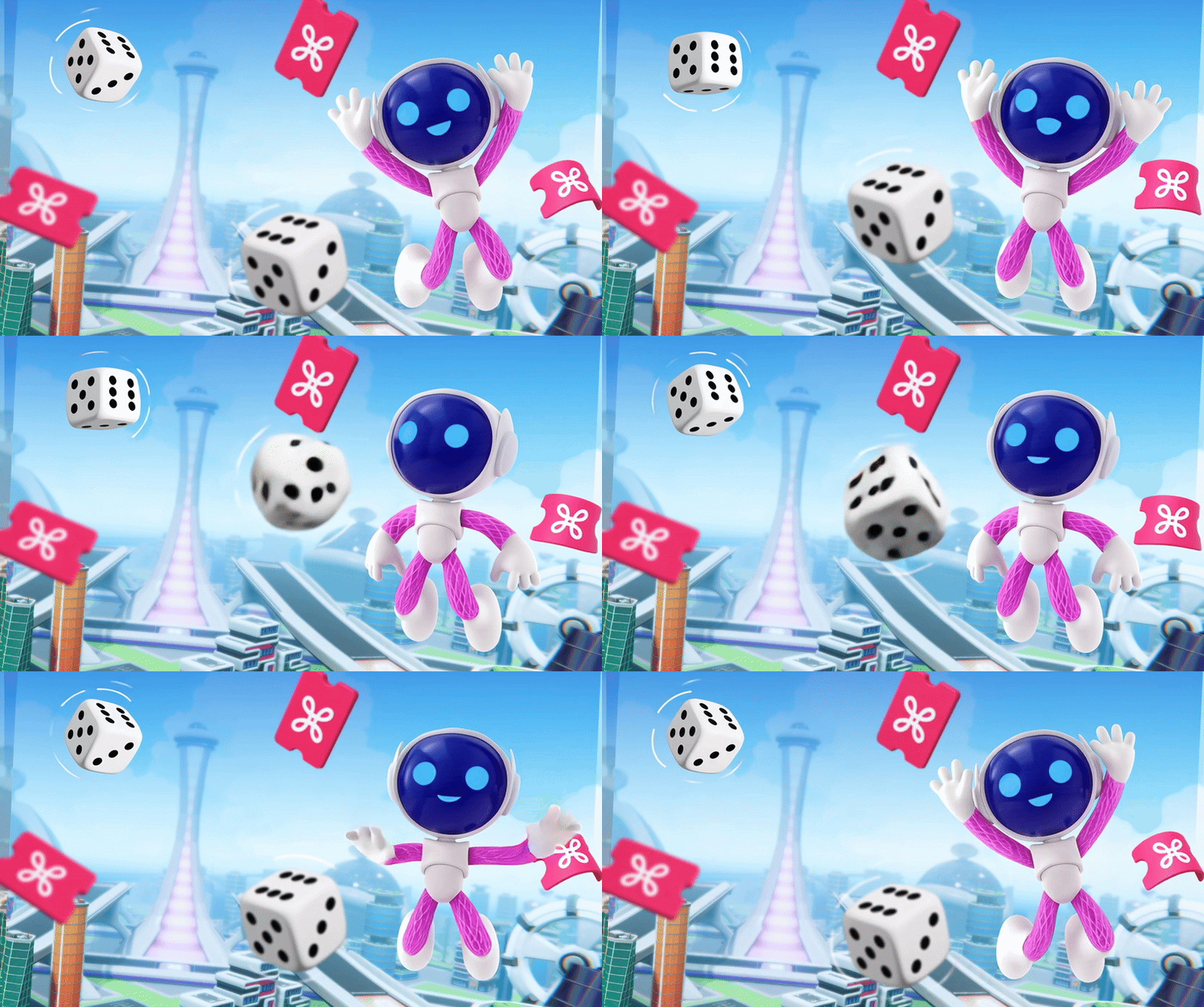
For Proximus+ World we applied a similar structure: a branded world with multiple areas and unlock moments that pulled users through the digital environment at their own pace.

3xhigher app opens in loyalty worlds versus standard points programs
70%+of active users return within 7 days following a seasonal update
40%more transactions from members who visit the gamified world weekly

Design starts at the return moment, not the onboarding

When designing a loyalty world, the most valuable design question is: what does a user do on day 30? Not day one.

On day one, everything is new. Everything is interesting. But on day 30 the user has explored the world, earned the first rewards, and understood the structure. What brings them back?

The loop structure we recommend:

  • One fixed daily return mechanic (small, completable in under two minutes)
  • One weekly event or challenge
  • One seasonal update every four to six weeks
  • One overarching progression line that spans months

These four levels ensure every return visit has something to offer. Daily users are rewarded. Weekly users miss nothing meaningful. Monthly users still see growth.

Collection as a loyalty mechanic

One of the most effective but most underused mechanics in loyalty world design is collection. Not points, but actual collectible objects: stickers, badges, characters, cards. Something that exists inside the world itself.

Collection mechanics work because they combine two things: progression (you know what you are missing) and ownership (you have something others do not). That sense of ownership strengthens the relationship with the brand in a way no discount voucher can match.

HEMA Stapelgek shows how powerful a collection mechanic can be in a retail context. Customers returned to the app and to the physical store because they wanted to complete their collection.

Platform or custom build?

A common question when building a loyalty world is whether an existing platform can do the job. The honest answer: rarely.

Standard loyalty platforms are built for transactional programs. They lack the flexibility needed for dynamic game environments, seasonal content pipelines, and layered progression systems. You can adapt them, but you end up building against the grain of the product.

Custom build gives you the freedom to design the game environment around how the user experiences it, not around how the database stores it. That makes it more expensive to build initially, but cheaper over time because you are never constrained by platform limits.

At Livewall, we build custom loyalty platforms and design the underlying loyalty program structure from the inside out. User behavior leads. Technology follows.

Loyalty world versus loyalty campaign

A campaign has a start and an end. A world is permanent. That sounds like a small distinction, but for the user it changes everything.

A campaign asks for action within a time window. A world invites you to return when you feel like it, with the knowledge that there is always something to do. That lowers the barrier significantly. No pressure, no countdown, just a place to go.

This also means the content investment is different. A loyalty world requires ongoing content, small but frequent updates, and a team committed to keeping the world alive. If you cannot guarantee that, a campaign serves you better.

But if you can commit to it, you build something competitors find very hard to copy: a digital place that belongs to your brand, that members know by heart, and that they return to out of habit.


Livewall

Ready to build a loyalty world that keeps members coming back?

Livewall designs and builds gamified loyalty worlds for retail brands, QSR chains, and consumer businesses. From program strategy to technical delivery, in one team.

Get in touch with our team

What we do

Livewall builds brand experiences that people actually remember — interactive campaigns, loyalty platforms, digital products, and employer branding for ambitious brands.

Our work

We've worked with HEMA, Stabilo, Wehkamp, Efteling, 9292 and many others. Every project starts with the same question: what would make someone actually want to do this?

Talk to us

Working on something similar? We'd love to hear about it.

Contact Livewall →