


livewall
← All articles
Engagement27 January 2026·Livewall

FOOH marketing: what it is, why it works, and when to deploy it

Fake out-of-home is the most talked-about format in digital marketing right now. Here's an honest look at what it can and can't do for a brand.

campaignssocial-mediabrand-activation

What is FOOH marketing?

FOOH stands for Fake Out-Of-Home. It's digital content that looks, at first glance, like a real outdoor ad, but is made entirely with CGI and visual effects. A giant perfume bottle pouring out of a building in Paris. A brand taking over the Empire State Building. A blimp drifting above a music festival.

No physical billboard was placed. No permit was filed, no crane hired, no location booked. The video exists only online, usually on TikTok or Instagram, and is designed to look as convincing as possible.

The format broke through in 2023 when major brands like Jacquemus and Maybelline published viral videos. Since then, hundreds of brands have followed, from large FMCG players to retail chains. And like every viral format: quality varies enormously.

At Livewall, we've been watching this format closely. We work with brands on interactive campaigns and brand activations that go beyond a short attention spike. That makes us perhaps more critical than some agencies, but also more honest about what FOOH actually does.
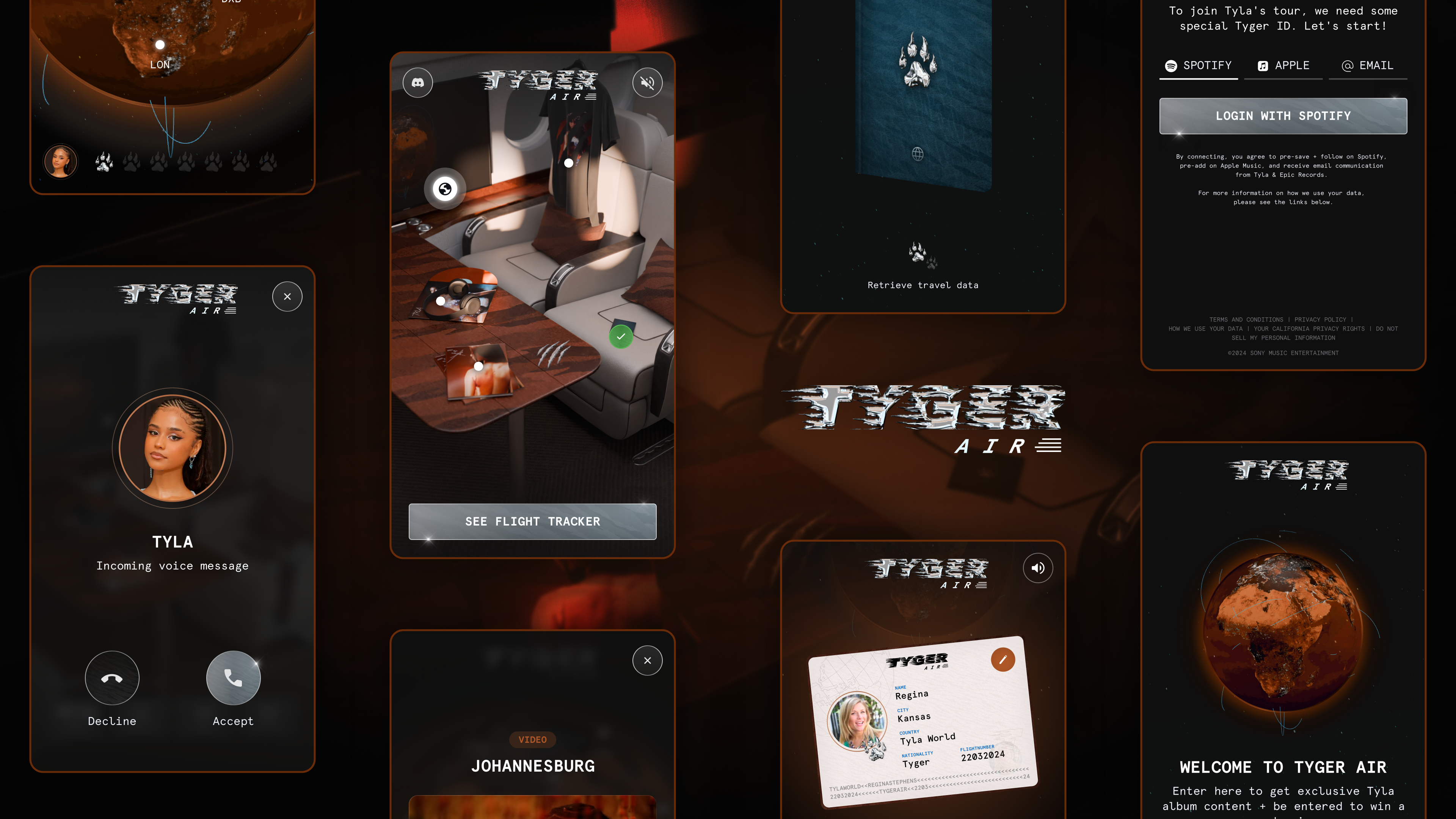
Visually striking digital brand activation with immersive experience

Brand activations that stand out don't need to be physical to make an impact.

Why does FOOH work?

The appeal comes from a few concrete mechanisms.

Cognitive dissonance sells attention. People see something that looks real but can't possibly be. That tension keeps them watching, compels them to share, and gives them something to talk about. "Did you see that?" is the engine behind viral spread.

The production barrier has dropped. What required an expensive VFX house three years ago can now be made by a skilled 3D team, or even with AI-assisted tools. The cost of producing something spectacular has fallen significantly, while audience quality expectations have stayed the same.

It fits social-native logic. Platforms like TikTok and Instagram reward content that stops people mid-scroll. FOOH does this naturally: the first two seconds always create a "wait, what?" moment. That's exactly the behavior algorithms optimize for.

The brand inherits associations media can't buy. A brand that virtually claims an entire city centre projects scale and boldness. That perception has value, even when everyone knows it's fabricated. Sometimes especially because they know it's fabricated, since it signals what the brand dares to imagine.

Livewall perspective

Everyone knows it's fake. That sometimes makes it more powerful, because it shows what a brand dares to dream.

When to deploy FOOH

Not every brand and not every moment suits this format. We see four situations where FOOH genuinely adds something.

At a product launch that needs to communicate scale. FOOH works well when introducing a new product and you want to signal size. The visual metaphor of something enormous in a recognisable environment delivers that feeling immediately.

When you want to reach a new audience. The format circulates on platforms where younger audiences live. If your brand struggles to land organically there, a well-executed FOOH video can be an entry point.

Around cultural moments. FOOH works best when it connects to something already alive: a new season, a big event, a cultural moment. The video then has a hook that accelerates sharing.

When your brand personality permits it. A brand built on playfulness, creativity, or boldness fits this format naturally. A bank or insurance company has a harder time making credible FOOH, unless the creative is exceptionally strong.

The situations where FOOH is the wrong choice are at least as important to understand.

When FOOH is the wrong choice

When there's no story behind the visual. A spectacular video without brand substance is a nice post but not a campaign. If people share it without mentioning your brand, you've bought reach without building brand value.

When the format is already saturated in your category. In some sectors, competitors have used FOOH so heavily that the surprise has worn off. Joining in means participating in a format that has lost its novelty.

When the execution isn't good enough. This is perhaps the biggest trap. Poorly rendered FOOH backfires. Audiences are now conditioned to spot quality. A cheap execution damages the brand more than no FOOH at all.

When you're optimising for conversion. FOOH is an awareness and perception tool. It's rarely the right choice when you need direct action, want to drive sign-ups, or need to activate a specific audience. For those objectives, an interactive campaign or a social campaign with a clear mechanic will outperform it.

FOOH and what needs to come after the view

This is where most FOOH campaigns fall short. The video performs. Reach is high. Shares are there. But then what?

The best FOOH is the starting point of a broader activation, not the endpoint. Brands that handle it well connect the video to:

  • A landing page or microsite where people can experience the promise of the visual
  • A social campaign that picks up and extends the conversation
  • A mechanic that collects first-party data while the audience is still engaged
  • A product experience that carries the energy of the video forward

At Livewall, we've built campaigns that deliberately open with high visual impact and then transition into participation. That progression works better than a standalone viral post, precisely because the audience is already warmed up.

The Heineken Player 0.0 campaign with Max Verstappen is a good example of how to tie a strong visual hook to an interactive fan experience that goes beyond passive watching.

3–5 secaverage view time before a FOOH video is shared or skipped
60–80%of viral reach lands outside the core brand target audience
1 in 10FOOH videos has a follow-up activation that holds the engagement

What does FOOH cost and how do you judge quality?

Quality FOOH does not start at a budget of a few hundred euros. A convincing production requires strong 3D expertise, accurate lighting, realistic shadows, and a solid understanding of the environment being replicated. That takes time and craft.

Roughly, there are three tiers:

Entry level (small team, simple locations): Can be convincing for straightforward concepts, but lacks the detail that makes the difference at a recognisable landmark. High risk of visibly fake output.

Mid-tier (experienced 3D studio, strong compositing): The level you want for most brand awareness goals. Believable enough to make people pause, creative enough to share.

Top tier (film-quality VFX): For major campaigns at A-list brands. The production itself becomes news, generating earned media beyond the initial post.

When evaluating FOOH quality, look for: does the CGI element integrate seamlessly with real environmental lighting? Are reflections and shadows consistent? Are there believable incidentals, such as passers-by reacting or vehicles moving around the object? Those details are the difference between "wow" and "that looks fake".

FOOH as part of a broader campaign strategy

The brands that extract the most from FOOH marketing don't treat it as a standalone format. They treat it as an attention moment inside a longer story.

Think of FOOH as the opening scene. It draws viewers in, creates talking points, and gives your brand a stage. But what comes after determines whether that attention goes anywhere useful.

At Livewall, we work on the full arc: from the initial visual hook to an interactive campaign that holds the audience, to a mechanic that converts that audience into leads, data, or loyalty. The campaigns we build for brands like Feyenoord Play by Unive and Doritos Step into the Netherlands follow the same logic: a striking opening, followed by real participation.

FOOH marketing has its place. But only when it leads somewhere.

Livewall

Want to use FOOH as part of a campaign that actually delivers?

At Livewall, we connect visual impact to real brand engagement. Whether you're starting from a FOOH concept or looking for a fuller campaign strategy, we'll help you make the right calls.

Get in touch with our team

What we do

Livewall builds brand experiences that people actually remember — interactive campaigns, loyalty platforms, digital products, and employer branding for ambitious brands.

Our work

We've worked with HEMA, Stabilo, Wehkamp, Efteling, 9292 and many others. Every project starts with the same question: what would make someone actually want to do this?

Talk to us

Working on something similar? We'd love to hear about it.

Contact Livewall →