


livewall
← All articles
Digital Products22 April 2026·Livewall

Digital flagship stores: what they are and whether your brand needs one

The digital flagship concept is gaining momentum with brands that want more than a transactional website. Here's what it involves and who it's right for.

digital-productsweb-appsbrand-activation

A flagship store is not a regular shop. It is a space where a brand demonstrates who it is, not just what it sells. The physical version has existed for decades: the Apple Store, Nike House of Innovation, the LEGO store on the Champs-Élysées. They are not primarily driven by revenue. They run on brand experience.

That same logic is now moving into the digital domain. A digital flagship store is an owned digital environment that goes beyond a standard e-commerce site. It is a platform where visitors explore a brand world, interact, and experience something. Transactions can be part of it, but they are not the centre of gravity.

At Livewall, we build these kinds of environments for brands that understand their website needs to do more. Not a brochure, not just a shop, but a digital home for the brand.

Livewall perspective

A digital flagship store is not about how quickly someone checks out. It's about how long they want to stay.

What makes something a digital flagship store?

Not every well-designed platform qualifies. A few characteristics justify the term.

The brand is the centre, not the product. A flagship communicates values, stories, and identity. Products are part of the experience, not the starting point.

The experience is deliberately designed. The structure, interactions, and visual language are intended to create a feeling. Visitors come not just for information, but for the experience itself.

There is a reason to return. Flagship stores are not static pages. They evolve. Seasonal content, gamification, exclusive access, or a loyalty layer that rewards return visits.

The platform is owned. No dependence on algorithms or external platforms. The brand relationship is built on owned ground, with owned data.

This last point grows more relevant as social platforms become less predictable and advertising costs keep rising. Brands that invest in owned digital environments build something that is genuinely theirs.

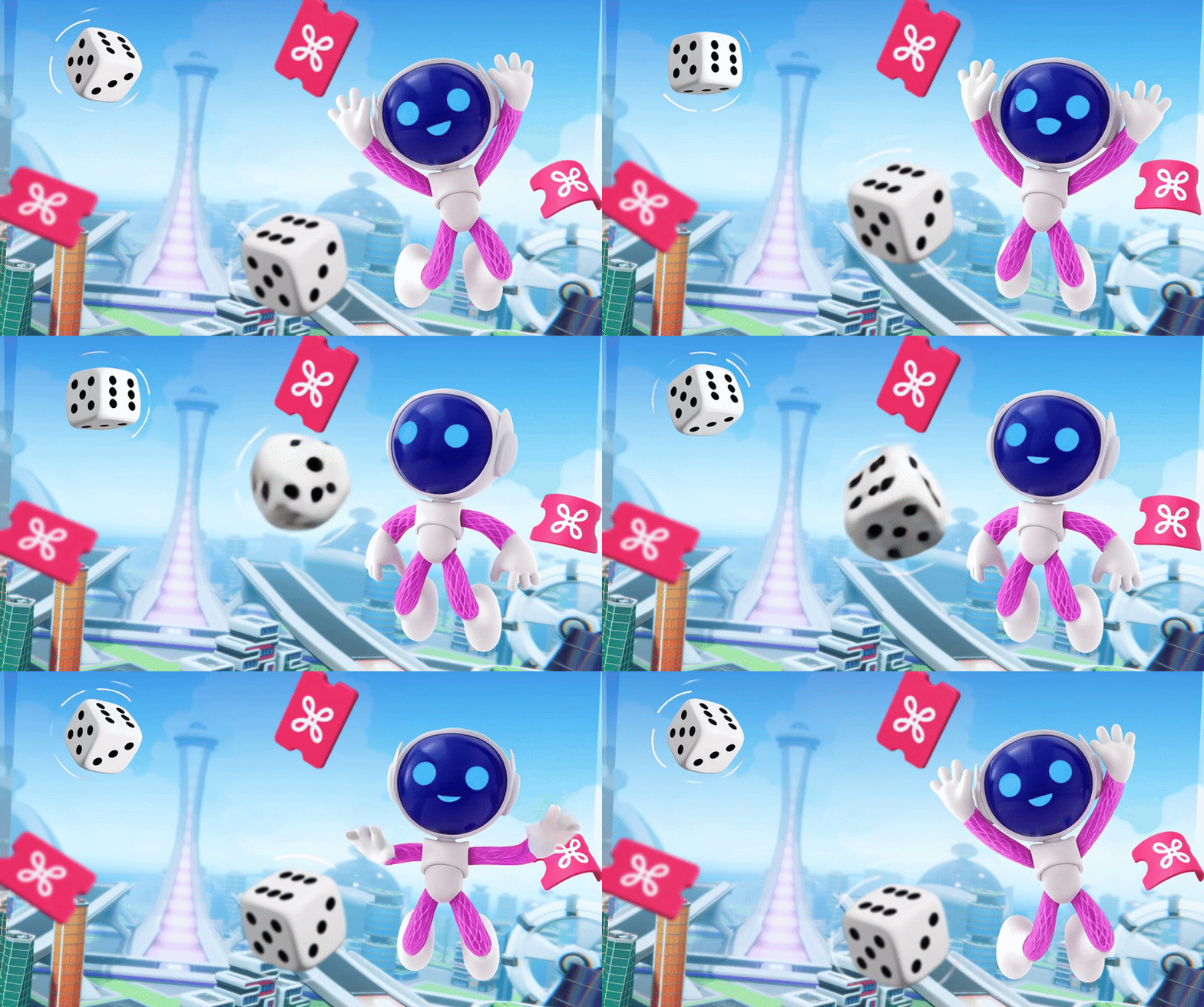
Proximus+ World digital brand experience

Proximus+ World: an immersive digital world built around the brand.

Which brands benefit from this?

Not every brand needs a digital flagship store. A flagship strategy works best when a few conditions are in place.

The brand carries emotional weight. Brands where people have a feeling, a preference, a story, are better positioned to make a flagship environment work. If your brand is purely functional, a well-optimised website is probably more effective.

There is repeated interaction. Flagship stores work best for brands where people come back regularly: retailers, entertainment brands, sports brands, FMCG brands with loyalty programmes. Single-purchase categories are a weaker fit.

There is already an audience or fanbase. A flagship environment strengthens an existing relationship. It does not build one from scratch.

There is willingness to maintain it. A flagship store that goes stale quickly loses its appeal. It requires editorial and technical commitment over the long term.

Sports retailers, entertainment labels, FMCG brands with active communities, and telcos with loyalty programmes sit in the sweet spot. B2B brands and niche markets with low purchase frequency are typically a weaker fit.

The building blocks of a digital flagship store

A flagship store is a combination of elements that work together. None of these components work in isolation.

Brand world and storytelling. The environment communicates who the brand is through image, copy, video, and interaction. Not as an advertising message, but as an experience visitors can move through.

Interactive layers. Gamification, challenges, quizzes, personalised content, tools that give visitors something to do rather than just watch. This is what separates a flagship from an ordinary website.

Loyalty integration. The most successful digital flagship stores are connected to a loyalty programme. Participation earns points, badges, exclusive access. This gives visitors a reason to return.

Community. When the platform also becomes a gathering place for users, it reinforces itself. People come not just for the brand, but for each other.

Owned data. Every interaction on the platform generates insight into who the visitor is, what interests them, where they are in the customer journey. That is more valuable than any external advertising dataset.

3xhigher engagement in owned environments versus campaign microsites
68%of visitors to immersive brand platforms return within 30 days
40%more first-party data signals through interactive flagship environments

Digital flagship versus campaign site versus webshop

It is worth keeping the distinctions clear.

A webshop is transactional. The goal is conversion. Everything points toward the shortest path to purchase.

A campaign site is temporary. It supports a specific campaign or product launch and is wound down once the campaign ends.

A digital flagship store is permanent, evolving, and brand-driven. It exists alongside the webshop, not instead of it. The two complement each other. The flagship builds the relationship; the webshop converts it.

Some brands attempt to merge both into one platform. That can work, but it requires careful UX and information architecture to prevent the experience from being disrupted by transactional friction.

At Livewall, we typically advise keeping the two separate but connecting them at the data and account level. The user experiences the transition as seamless, while the systems behind the scenes are aligned.

When is it too early?

The concept is compelling, but there are situations where the timing is wrong or the approach is off.

If the brand itself is not yet clearly defined, a flagship platform will not work. A digital environment amplifies what is already there. It does not resolve a brand identity problem.

If there is no operational capacity to maintain and activate the platform, it loses value quickly. A stagnant flagship is worse than no flagship.

If the technical foundations are missing, such as a working CRM integration or account infrastructure, it is hard to realise the loyalty and data benefits that justify the investment.

The smartest approach we apply at Livewall: start with an MVP or a pilot campaign that tests the core mechanics. See whether visitors return, whether they register, whether they use the interactive layers. Build further only when the data supports it.

Livewall

Thinking about what a digital flagship store could do for your brand?

Livewall designs and builds digital brand platforms that go beyond a website. Whether you are starting with a pilot or have a fully developed brand world in mind, we are ready to think it through with you.

Get in touch with our team

What we do

Livewall builds brand experiences that people actually remember — interactive campaigns, loyalty platforms, digital products, and employer branding for ambitious brands.

Our work

We've worked with HEMA, Stabilo, Wehkamp, Efteling, 9292 and many others. Every project starts with the same question: what would make someone actually want to do this?

Talk to us

Working on something similar? We'd love to hear about it.

Contact Livewall →