livewall
← All articles
Strategy17 April 2026·Livewall

Digital brand activation: how to brief for cultural impact, not just campaign reach

Cultural impact happens when a campaign gets talked about, shared, and referenced outside the media buy. Here's how to brief for that kind of outcome from the start.

brand-activationcampaignssocial-media

Most campaign briefs start with reach. How many people will we hit? What are the impression targets? What's the CPM? That's understandable, because those are the numbers you report against at the end.

But reach and cultural impact are two completely different things. Reach is bought. Cultural impact is earned. And if you want people to talk about your brand, share it without being paid, and reference it after the campaign window closes, that intention needs to be in the brief from day one.

At Livewall, we build brand activations that go beyond media budget. We see consistently that outcomes are determined in the brief, not in the execution.

Livewall

Reach is bought. Cultural impact is earned. The difference starts in the brief.

What do we mean by cultural impact?

A campaign has cultural impact when people do something with it that you didn't pay for. They forward it. They make something from it. They bring it up in conversation. They search for it after a friend mentioned it.

That sounds intangible, but it's very much designable. It starts with an honest question in the brief: What gives people a reason to share this with someone who didn't ask for it?

That question filters a lot out. A banner with a discount code? No. An interactive experience that reveals something about yourself or lets you challenge a friend? Possibly yes.

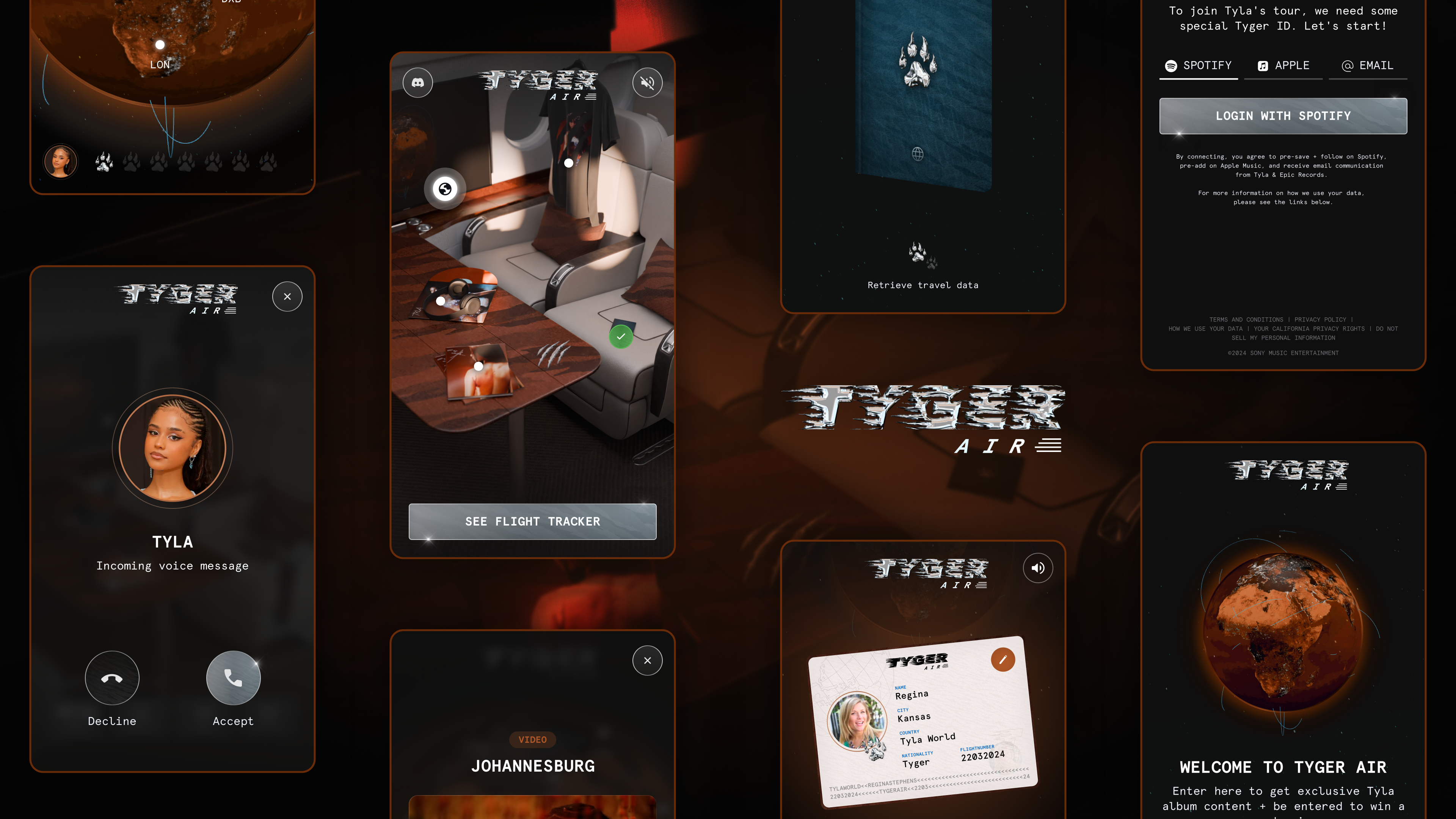
Tyger Air fan experience by Livewall

Tyger Air: a 3D fan experience built around shareable moments

Four things that make a brief for cultural impact different

1. Define the shareable moment, not the message

Traditional briefs start with the message: what do we want people to know or feel? That's a starting point for advertising, not for cultural impact.

Start instead with the moment: what experience or interaction do you want people to forward, describe, or relive? With Tyger Air, that was a personalised digital passport fans created and shared. The message followed from the experience, not the other way around.

2. Give the audience something to do, not just to watch

Passive content can buy reach. Participation earns distribution. When people fill something in, collect something, compare with others, or win something, they have a story to tell.

With Martin Garrix Dream Team, fans compared their own musical DNA to the artist's via Spotify integration. People didn't share because Livewall or Sony Music asked them to. They shared because it said something about themselves.

3. Build momentum outside the media buy

If a campaign only lives as long as you're paying for impressions, you haven't achieved cultural impact. Ask explicitly in the brief: what mechanism carries the campaign beyond paid distribution?

That could be social sharing mechanics, a leaderboard, a collect-and-win element, a time-gated surprise, or a community dimension. Wehkamp Wanna Have Days used daily reveals to bring people back repeatedly and give them something to talk about before the next reveal landed.

4. Connect brand identity to the mechanic, not just to the visuals

Many campaigns are visually on-brand but generically interactive. The mechanic, the thing people actually do, needs to be as distinctive to the brand as the logo.

Ask yourself in the brief: if you removed the brand, could this experience still only belong to this brand? If the answer is no, the brand identity isn't embedded deeply enough in the activation.


3xmore organic reach when audiences actively participate rather than passively watch
68%of participants in gamified activations return without a paid reminder
5xhigher brand recall for interactive campaigns versus display advertising

What does a good brief actually look like?

A brief for cultural impact contains several elements you rarely see in standard campaign briefs:

The shareable moment. Describe in one sentence which specific moment or interaction people will forward. If you can't describe it, it probably doesn't exist yet.

The social currency. Why does sharing this say something about the person doing the sharing? Does the campaign give people something to express themselves with, beat their friends at, or feel part of something bigger?

The mechanism beyond paid distribution. What drives spread when the media buy stops? Word of mouth, organic search, community activity, or repeat participation?

The cultural hook. Does the campaign connect to something people already care about? Not forced, but deliberate. A relevant moment, a shared feeling, an existing trend.

With KLM Airmail, a Valentine's campaign where people sent personal messages through an interactive platform, all of these elements were present. The shareable moment was the message itself. The social currency was the feeling of having done something special for someone else. The mechanism beyond the media buy was the recipient sharing it onward.

Where Livewall fits in

We prefer to work on campaigns where the brief already asks the right questions. In practice, we often sit in during the briefing phase to help sharpen those questions before creative work begins.

That's not an unnecessary step. The difference between a campaign that travels and one that doesn't is rarely the execution. It lives in the choices made before anyone draws a single pixel.

Livewall designs interactive campaigns and gamified activations built around one central question: what gives people a genuine reason to participate and share? Not as an afterthought, but as the starting point.

Livewall

Brief your next activation for impact, not just reach

Whether you're at the start of a briefing process or already have a concept, we're happy to work through the question that matters most: what gives people a genuine reason to share this?

Get in touch with our team

What we do

Livewall builds brand experiences that people actually remember — interactive campaigns, loyalty platforms, digital products, and employer branding for ambitious brands.

Our work

We've worked with HEMA, Stabilo, Wehkamp, Efteling, 9292 and many others. Every project starts with the same question: what would make someone actually want to do this?

Talk to us

Working on something similar? We'd love to hear about it.

Contact Livewall →