

livewall
← All articles
Digital Products25 March 2026·Livewall

Custom tooling for marketing teams: when internal tools pay off

Most marketing teams bend themselves around their tools. At a certain scale, the right move is tools that bend around the team.

digital-productsweb-apps

Almost every marketing team runs on a stack that never quite fits. There is always a spreadsheet filling the gap between two systems, a manual export process that eats hours every month, or a workflow so clunky that people quietly skip it. That is not a team failure. It is a signal that off-the-shelf software is missing something fundamental: an understanding of how your specific processes actually work.

At Livewall, we have been building digital products for brands that have reached this point. Not as a first move, but as the logical conclusion after years of wrestling with tools that never fully fit. The question is not whether custom tooling is better than standard solutions. The question is when it becomes worth making the move.

Livewall perspective

A custom tool is not cheaper than a SaaS subscription. But at a certain scale, it is the only thing that actually works.

When off-the-shelf falls short

Most teams start with what is available: a CMS, a planning tool, a reporting platform. That makes sense. Early on, adapting to the tool costs less than building one.

But at some point, the balance shifts. The signals are recognisable:

  • Your team spends more time working around the tool than working with it
  • Every campaign cycle involves manual steps that are prone to error
  • Integrations between platforms are held together with hacks and scheduled exports
  • Insights always arrive late because the data is spread across five systems
  • New colleagues need weeks to learn the workflow, not the content

If two or more of those points feel familiar, the moment to seriously consider custom tooling has probably already passed.

What makes a custom tool different

Most conversations about custom tooling focus on cost. That is understandable, but it is also why teams often frame the decision wrong. Cost is the easiest thing to quantify, but not the most important part of the equation.

What actually makes custom tooling different:

It fits your workflow exactly. No detours, no translation of your process into the logic of an external system. The tool works the way you work, not the other way around.

It grows with your organisation. A standard SaaS platform changes on the vendor's schedule. A custom system changes when you need it to, in the way you need it to.

It connects what otherwise sits apart. Much of the inefficiency in marketing teams lives not in individual tools, but in the gaps between them. A custom tool can bridge systems that were never built to talk to each other.

Your data stays yours. No data routing through third parties, no export restrictions, no dependency on a vendor that adjusts its pricing model.

Sportvisunie community platform overview

A platform built to match how a community actually works, not how a standard solution expects it to.

Three situations where custom tooling is the right call

1. Your process is the core of your competitive advantage

If the way you produce campaigns, serve customers, or process data is genuinely distinctive, you need to protect that process. Standard software makes you identical to everyone else using the same tool. A custom system builds that way of working in as a structural advantage.

2. Scale makes manual processes untenable

What is acceptable at small scale becomes a blocker at large scale. A team of five can track a lot manually. A team of fifty cannot. And by the time the pain is large enough to justify a custom tool, the backlog has usually been building for months.

3. Integration is more complex than a standard platform can handle

Many marketing environments have grown organically: a loyalty platform here, a CMS there, a CRM that does not quite connect with the reporting system. When the landscape becomes too complex for standard integrations, custom tooling is the most reliable path forward.

3-5×faster campaign launches after implementing internal custom tooling
60%fewer manual steps in production processes after custom integration
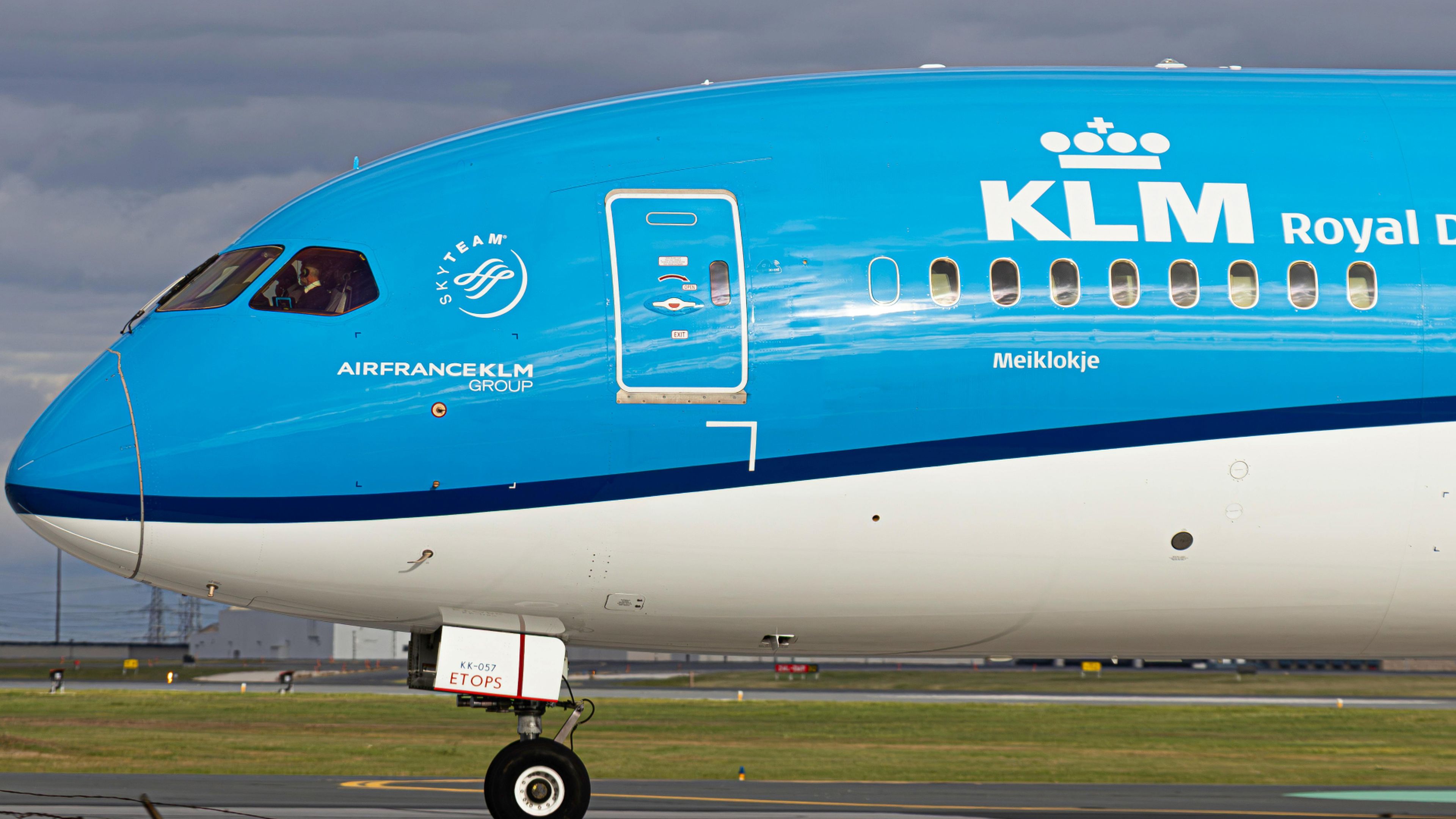
50+markets served via the scalable system we built for KLM

How to start without overwhelming yourself

The biggest mistake when building internal tools is starting too big. A system that solves everything costs more than it delivers, takes too long to build, and is rarely fully used.

The approach that works at Livewall:

Start with the pain point, not the vision. Identify the one manual process that costs the most time, causes the most errors, or generates the most resistance. Build a solution for that. Prove the value. Build further.

Design for the people who use it daily. Internal tools built by IT teams for marketers rarely work well. UX design for internal tools matters just as much as it does for consumer-facing products.

Keep the first version small. An MVP that genuinely solves one problem is worth more than a feature-rich tool that half-solves five. Start narrow, deliver fast, learn from use.

The organisations that benefit most from custom tooling are rarely those with the largest budgets. They are the teams that know most clearly what they need, and are willing to build in phases rather than all at once.

Livewall

Ready to build tools that fit the way your team works?

At Livewall, we build custom tooling for marketing teams that have grown beyond what off-the-shelf solutions offer. We start with your process, not a platform.

Get in touch with our team

What we do

Livewall builds brand experiences that people actually remember — interactive campaigns, loyalty platforms, digital products, and employer branding for ambitious brands.

Our work

We've worked with HEMA, Stabilo, Wehkamp, Efteling, 9292 and many others. Every project starts with the same question: what would make someone actually want to do this?

Talk to us

Working on something similar? We'd love to hear about it.

Contact Livewall →