


livewall
← All articles
Digital Products17 February 2026·Livewall

AI content tooling for brands: how to build a visual production system that stays on-brand

Generic AI image tools produce generic results. The brands winning at AI content production have built custom tooling that constrains the AI to their brand system. Here's how that works.

digital-productsweb-appscampaigns

Midjourney. DALL-E. Adobe Firefly. The tools exist, they are accessible, and they work. Until you hold the output next to your brand guidelines.

The problem with off-the-shelf AI image tools is not output quality. It is lack of context. They do not know your typeface, your colour palette, or the visual tone your photography has held for a decade. They generate images that look plausible but belong to no brand in particular.

For a quick social test or a throwaway mockup, that is fine. For a brand producing campaign imagery at volume, it creates a structural problem. Every output needs manual correction, and over time style inconsistencies accumulate across campaigns until nobody is sure what on-brand actually looks like anymore.

At Livewall, we are seeing more brands tackle this problem at the root, not by writing better prompts or briefing designers more carefully, but by building AI tooling that can only produce the right output.
Livewall perspective

Generic AI tools give every team the same capabilities. Custom tooling gives you an advantage others cannot easily replicate.

Why off-the-shelf AI tools do not work at brand scale

Standard AI image generators are built for breadth, not depth. They know millions of styles but they do not know your brand. That creates three concrete problems.

No guardrails. A standard tool produces what you ask for, including everything outside your brand style. Without trained constraints, every user becomes an unintended risk to brand integrity.

Inconsistent style. Even with careful prompting, output varies session to session. Lighting, composition, colour temperature, and mood are never locked down. Across a campaign, small variations accumulate into a visible lack of coherence.

No integration with existing systems. Off-the-shelf tools stand alone. They do not connect to your asset library, product catalogue, or CMS. Every image requires manual review, editing, and placement. The time saved by AI is largely cancelled out by the manual work surrounding it.

These are not bugs. They are features of tools built for everyone. A brand with a strong visual system needs something built for them.

What a custom AI content tool actually looks like

A well-built AI content platform for brand production has three layers.

Trained on brand assets. The tool is fed your style guide, photography library, colour palettes, and approved campaign imagery. That is the knowledge base. The AI does not learn what looks good in general. It learns what your brand looks like specifically.

Constrained outputs. Rather than an open prompting interface, the platform offers structured input fields. The marketing team selects a campaign type, a product, a mood. The AI generates options within those parameters. There is no way to produce output that falls outside the brand style because the boundaries are baked into the system.

Integrated into the production workflow. The platform connects to your CMS, your asset library, or your campaign management system. Images are ready to use immediately, no export, no manual upload, no loose files ending up in a folder nobody can find.

The result is a system where any member of the marketing team can produce on-brand visual content without depending on a designer at every step. The brand police are built into the tool itself.

AI-driven campaign content production at scale across multiple markets

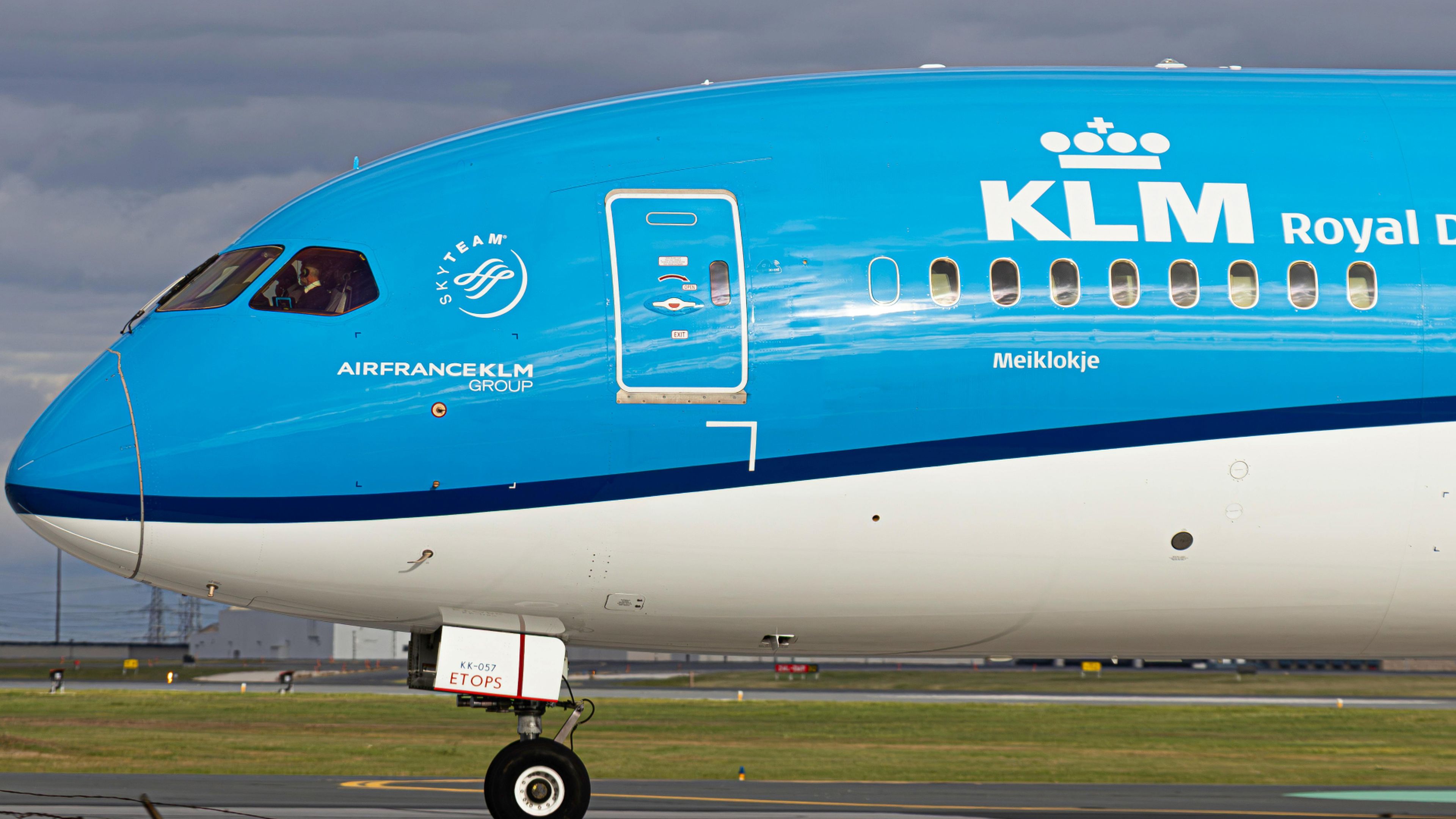
For KLM, we built an AI-driven workflow for campaign production across 50+ markets.

How to spec one

Building custom AI content tooling does not start with technology. It starts with a question: which content production processes are repetitive enough and brand-specific enough to justify structurally automating?

In our experience, the strongest candidates are:

  • Campaign imagery across multiple formats (social, display, print) from the same brief
  • Seasonal and local variants of an established campaign concept
  • Product visualisations at scale, showing a single SKU across multiple contexts
  • Brand-consistent illustrations and backgrounds used repeatedly across communications

From that list, you define the scope of the tool. What are the input parameters? Which decisions does the tool make, and which does a human keep making? How does the output connect to the existing workflow?

The right approach is the MVP model: start focused, validate with the team that will use the tool daily, and build out from there. A tool that solves one part of the process perfectly and gets used every day delivers more than an ambitious system too complex for daily practice. We apply MVP development thinking here as much as to any product build.

On the technical side, custom tooling for this use case almost always combines a brand-specifically trained or configured image model, an interface designed around the team's workflow, and API integrations with existing systems.

50+markets served through KLM's AI-driven campaign workflow
minutesinstead of days to generate on-brand campaign imagery at InShared
0manual style corrections needed when the AI works within brand parameters

What it enables

The immediate benefit is speed. Campaign imagery that previously required a multi-day design cycle is produced in minutes. But the strategic benefit goes further.

When content quality is no longer dependent on design team capacity, the nature of what that team does changes. Designers spend time building and maintaining the brand system rather than manually producing every campaign asset. Creative ambition rises because less time is lost to routine production.

Brands that do this well also produce more variants. They test more, personalise more, and respond faster to real-world moments. The constraint was always production capacity. Custom AI tooling removes that constraint without sacrificing brand control.

Mach8, our sister label within United Playgrounds, specialises in AI-in-product and automation at this level. Together with Livewall, we build systems that are not only fast but durably on-brand.

For brands serious about digital strategy, this is exactly the kind of infrastructure that makes the difference. Not as an experiment, but as a daily part of the production workflow.

The web application development that underlies these tools needs to be built to a production standard: maintained, updated, and extensible as the brand system evolves. A one-time build that nobody can update becomes a liability. We build these tools as living products.

Livewall

When the brand police are built into the tool, nobody needs to check whether every output is correct. The system handles that.

Livewall

Ready to make AI content production work for your brand?

At Livewall, we build custom AI tooling that fits your brand system and production workflow. From strategy to working product, in one team.

Get in touch with our team

What we do

Livewall builds brand experiences that people actually remember — interactive campaigns, loyalty platforms, digital products, and employer branding for ambitious brands.

Our work

We've worked with HEMA, Stabilo, Wehkamp, Efteling, 9292 and many others. Every project starts with the same question: what would make someone actually want to do this?

Talk to us

Working on something similar? We'd love to hear about it.

Contact Livewall →